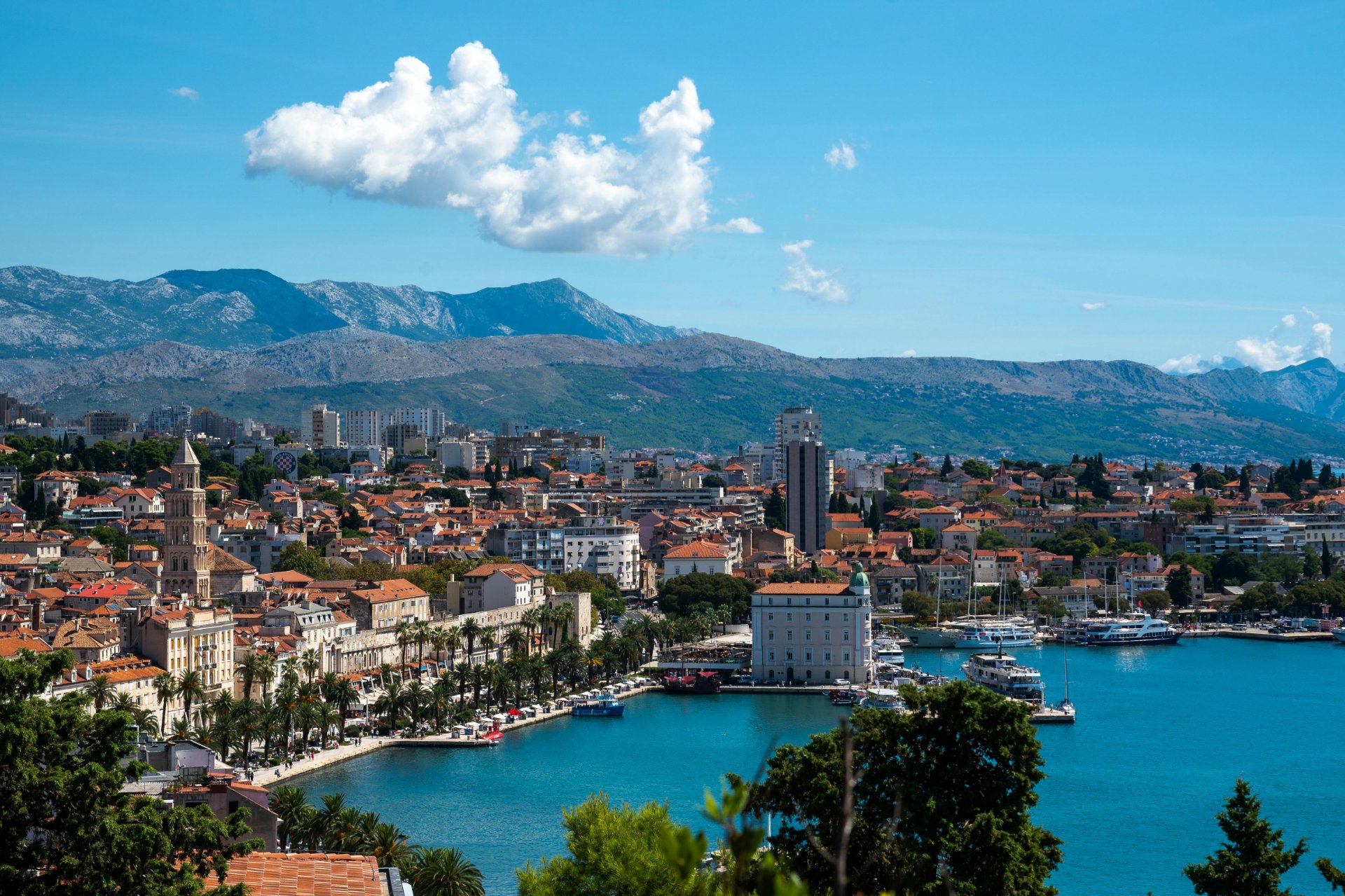
This two-day itinerary is your ticket to this architectural chameleon, where ancient history isn't confined behind the barriers of a museum, but instead teems with everyday southern life. On the first day, you'll cross the threshold into a monumental world where Roman emperors involuntarily shared space with later generations. You'll witness the fascinating contrast between the mighty ancient walls, the laundry drying between them, and the bustle of outdoor cafés, before seamlessly transferring to the bustling seaside boulevard in the evening. The second day will allow you to escape the hustle and bustle of the city and gaze upon this extraordinary urban labyrinth and the azure Adriatic Sea from the perspective of green, panoramic hills. It is also an unforgettable experience for Game of Thrones fans.
Plan details
- City: Split
- Number of days: 2
- Number of places: 30
Itinerary
Day 1
- Diocletian's Dream VR Museum

When archaeologists used LiDAR scanning beneath Diocletian's Palace in recent years, they uncovered corridors the city of Split had forgotten for over a thousand years — and those very discoveries became the foundation for the experiences offered at Diocletian's Dream VR Museum. The museum transports visitors back to Split at the turn of the third and fourth centuries, when Emperor Diocletian was raising his monumental retirement palace on the Adriatic shore. Virtual reality headsets reveal the complex in its original splendour — intact mosaics, vivid colonnades, a bustling harbour — before centuries of accumulated history buried it under stone and daily life. The narrative is grounded in current historical and archaeological research, which lifts this well above the level of a standard tourist attraction and gives it genuine intellectual weight. The museum sits within the old town itself, just steps from the very ruins you're about to see restored to their former glory through the headset. That juxtaposition — standing in a crumbling ancient space while simultaneously watching it rebuilt before your eyes — produces a quietly extraordinary sense of double time that's hard to replicate elsewhere. Tickets & info: Adult ticket approx. €15–18; experience duration approx. 30–45 minutes; open daily 9:00–21:00; free entry for children under 5; official website
Address: Zagrebačka ul. 1, 21000, Split, Croatia
- Gregory of Nin Statue (Grgur Ninski)
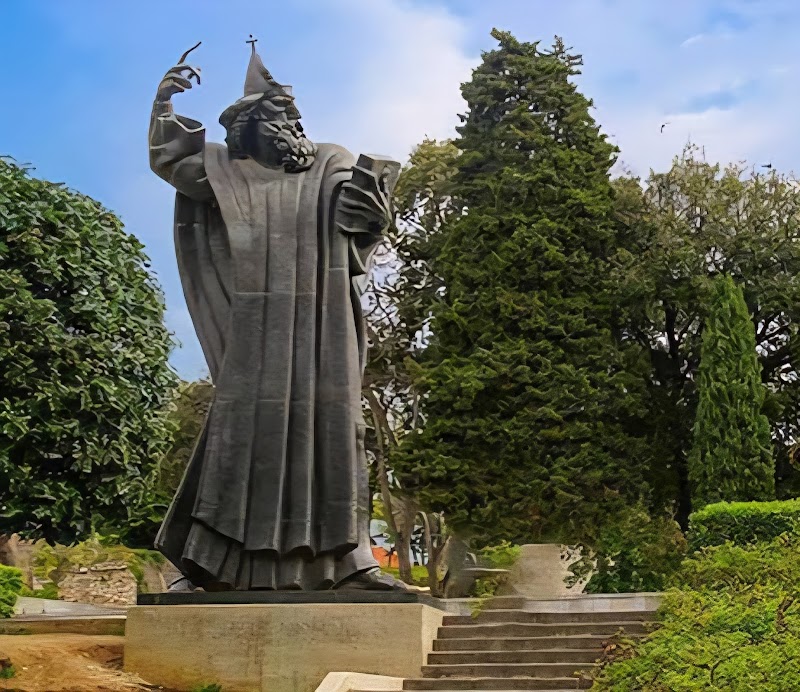
When the statue of Bishop Gregory of Nin was erected in Split, a legend rapidly took hold among visitors that rubbing his left thumb would bring good luck and grant wishes — so effective was this story that the thumb is now gleaming gold from millions of touches, while the rest of the bronze has aged to a deep verdigris, creating one of the most photographed contrasts in the entire Adriatic. The statue was unveiled in 1929 and is the work of Ivan Meštrović, Croatia's greatest sculptor and one of the most significant European artists of the twentieth century. It depicts Gregory, the tenth-century Bishop of Nin, who championed the right of Croatian clergy to celebrate Mass in the Old Church Slavonic language rather than Latin at the Synod of Split in 925 AD — a pivotal moment in the cultural and linguistic formation of Croatian national identity. Meštrović originally placed the statue on the Peristyle at the heart of the palace, but Italian occupation authorities relocated it in 1941 to its current position outside the Golden Gate, inadvertently giving it a far grander setting against the Roman walls. The nearly ten-metre bronze figure commands the approach to the north palace gate with extraordinary psychological intensity, its outstretched arm and upturned face conveying both defiance and conviction — a monument that works as history, sculpture, and living ritual all at once. Tickets & info: Free entry; accessible at all hours outside the Golden Gate (Porta Aurea). official website
Address: Ul. kralja Tomislava 12, 21000, Splitska, Croatia
- Golden Gate (Porta Aurea)
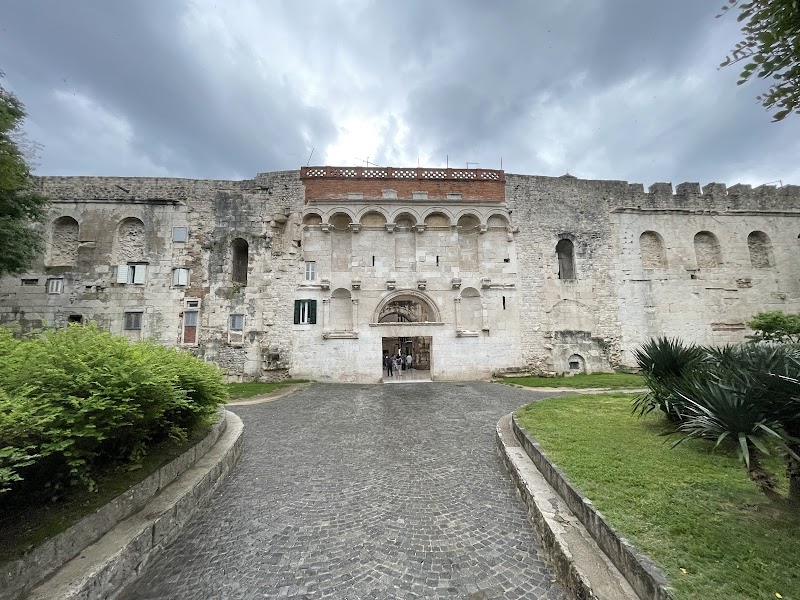
The Golden Gate has stood unaltered for over 1,700 years — and for much of that time it was literally buried, its outer facade hidden behind medieval buildings pressed up against the palace walls. Porta Aurea is the grandest and most ceremonially significant of Diocletian's Palace's four gates, positioned on the north side and once opening onto the main road leading to Salona, the provincial capital of Roman Dalmatia. Its facade reads as a textbook of late-antique military-ceremonial architecture: blind arcades flanked by columns, an upper gallery of open niches that once held statues of imperial deities and Diocletian himself, and a massive arched gateway flanked by two rectangular towers. The inner vestibule — the gate's guardroom passage — survives in near-original condition and is strikingly imposing in its austere, military monumentality. Just outside the gate stands the massive bronze statue of Bishop and chronicler Gregory of Nin (Grgur Ninski), sculpted by Ivan Meštrović in 1929. Local legend holds that rubbing the big toe of the bishop's left foot brings good luck — the metal there gleams with the touch of millions of hands. Entry to the gate and surroundings is free of charge; the area is accessible at all hours as part of the palace's public space. For more information: official Split tourism website.
Address: Dioklecijanova 7, 21000, Split, Croatia
- Split City Museum (Muzej Grada Splita)
When the interior of Diocletian's mausoleum was converted into the city treasury in 1700, nobody could have imagined that a few centuries later, within the same palace complex, a museum would be established to tell the entire story of Split — from the ancient settlement of Aspalathos to the modern city. The Split City Museum occupies the Gothic-Renaissance Papalić Palace, one of the finest surviving late-medieval urban palaces on the eastern Adriatic, built in the 15th century for one of Split's most powerful noble families. Within its rooms, visitors can trace the city's history from its origins as Emperor Diocletian's retirement residence through turbulent medieval centuries, Venetian and Napoleonic rule, and into modern times. The collection encompasses documents, maps, weapons, costumes, furniture, portraits, and everyday objects that together compose a richly layered portrait of an urban community across the centuries. Particularly noteworthy are the collections covering the Venetian period and a remarkable set of historic engravings and paintings showing Split as it changed over the centuries within the walls of Diocletian's palace. Tickets & info: Standard ticket approx. €4, concessions approx. €2; open Monday to Friday 9 a.m.–5 p.m., Saturday 10 a.m.–2 p.m., closed Sunday (hours may vary seasonally). official website
Address: Papalićeva ul. 1, 21000, Split, Croatia
- D16 Coffee
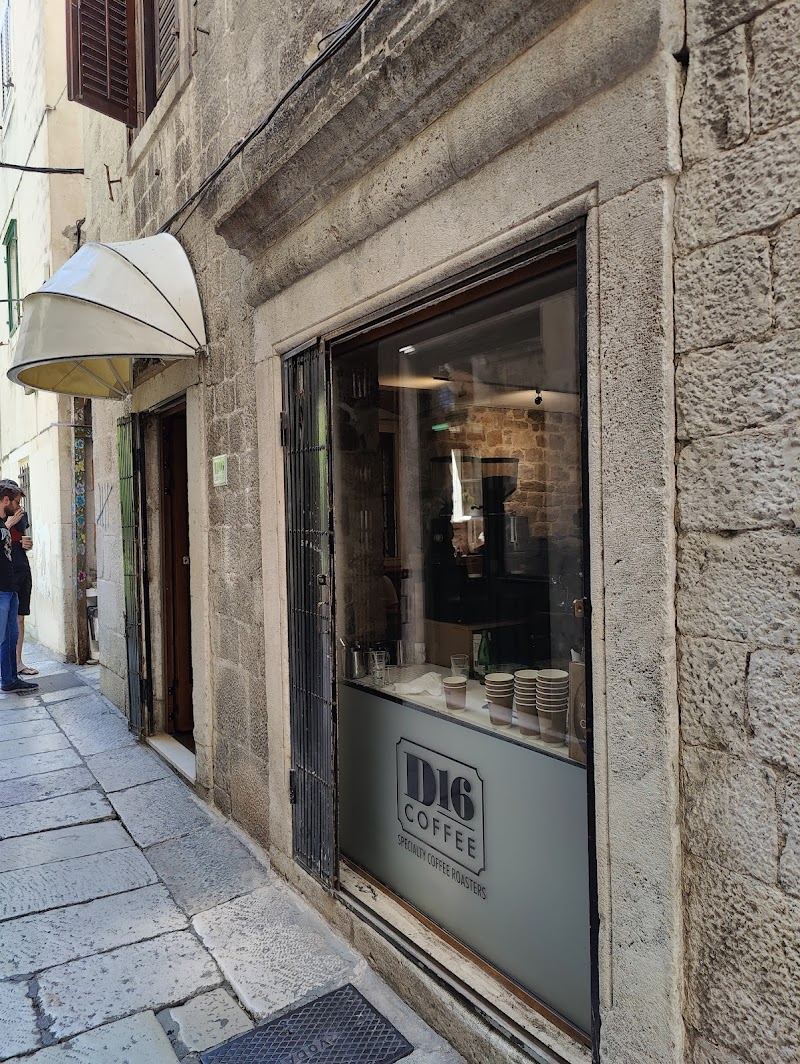
D16 Coffee opened as one of Split's early champions of specialty coffee culture — a small, independent café that bet on ingredient quality and brewing precision before either was commonplace along the Dalmatian coast. Run by people who genuinely know where their beans come from and why it matters, it became a natural gathering point for local baristas, remote workers and anyone who understands that great coffee is the result of deliberate choices. Order a pour-over filter coffee: the single origin changes regularly, and each selection comes with a tasting card detailing the flavour profile, region and producer; the café is open from morning through early afternoon, cups start at around €2, and you can find more details at the website.
Address: Dominisova ul. 16, 21000, Split, Croatia
- Temple of Jupiter
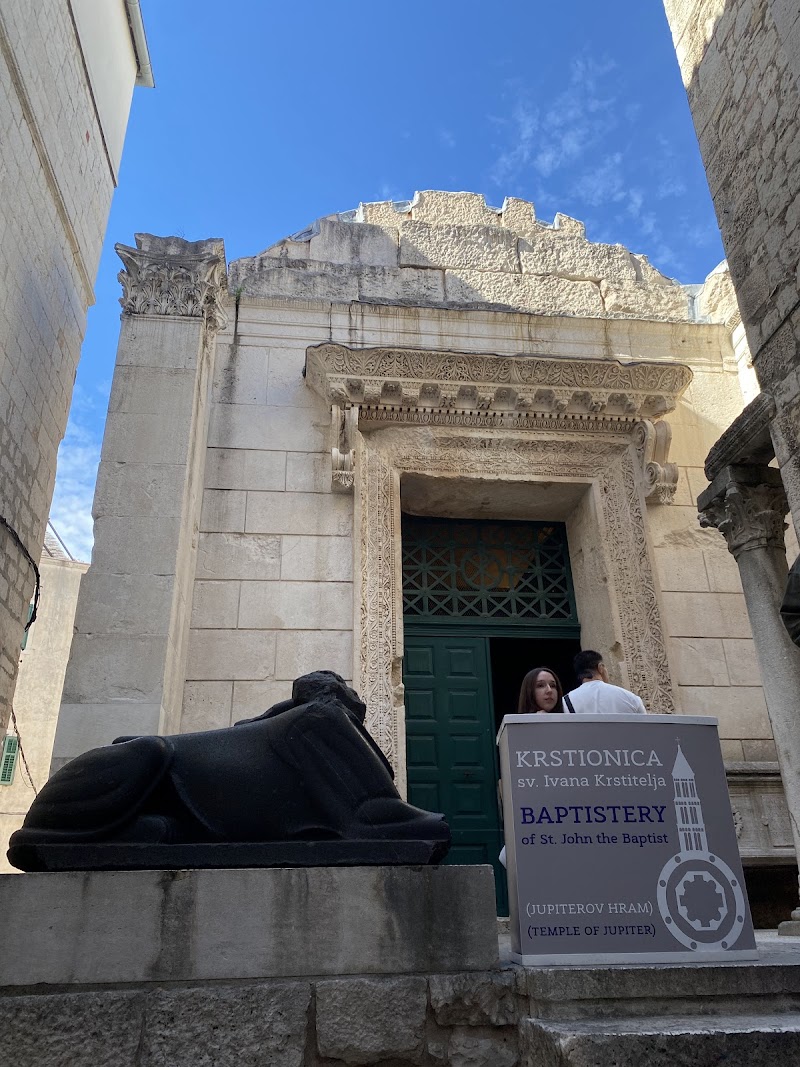
Visit the Temple of Jupiter in the early morning before crowds arrive — the narrow lane that frames it means the light falls directly on the carved frieze at that hour, throwing the coffered ceiling into dramatic relief. The Temple of Jupiter sits at the heart of Diocletian's Palace and ranks among the best-preserved examples of Roman religious architecture anywhere in the world. Built in the early fourth century as part of the imperial complex, it was dedicated to Jupiter, the deity with whom Emperor Diocletian closely identified himself, adopting the title Iovius. The temple's survival into the present day owes much to its medieval conversion into a Christian church and baptistery — rather than being dismantled for building material, its walls were maintained by successive generations of worshippers who simply replaced one faith with another while leaving the Roman shell intact. A remarkable footnote to the temple's history is that its original coffered ceiling has survived completely unrestored for over seventeen centuries, making it one of the rarest authentic Roman vaults in existence. An Egyptian sphinx guards the entrance — one of a set brought from Egypt by Diocletian himself, a tangible link to the imperial ambitions that preceded his quiet retirement in Split. Highlights:The original 4th-century coffered ceiling, one of the most intact Roman vaults in EuropeThe Egyptian sphinx at the entrance, imported by Diocletian himselfThe early medieval baptistery font with a carved relief of a Croatian rulerTickets & info: Entry approximately 3–5 EUR; often bundled with other palace monuments. Seasonal hours, typically 9:00–20:00 in summer. official website
Address: Ul. Kraj Svetog Ivana 2, 21000, Split, Croatia
- Iron Gate (Porta Ferrea)
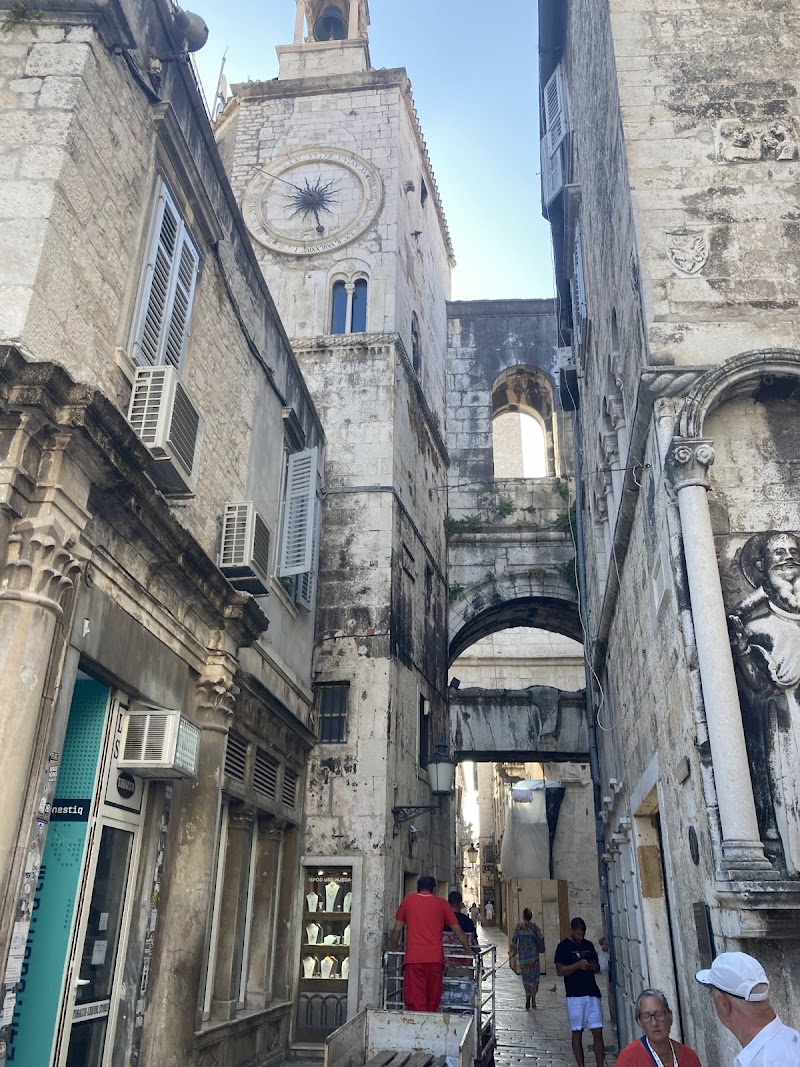
The Iron Gate is the one most visitors walk through without noticing — and yet it is one of the best-preserved elements of Diocletian's original structure. Porta Ferrea, the western gate, served in antiquity as an internal gateway rather than an external one, leading toward the sacred precinct and the ceremonial interior of the palace rather than out into the wider world. Today its arch crowns one end of Narodni trg (People's Square, locally called Pjaca), the heart of medieval and early-modern Split, which grew up for centuries on the western side of the palace walls. Passing through the gate is, in the most literal sense, crossing a border between two cities and two eras: on one side, the elegant stonework of a 15th-century Venetian loggia; on the other, late-antique walls from the 4th century. It's worth pausing directly under the arch and looking straight up: you'll see a section of original Roman vaulting in opus incertum — irregular stones laid without mortar, held in place by gravity and precision alone. It's a detail that most tourists miss entirely, yet it speaks more eloquently about Roman engineering than any information panel. The gate is part of the public realm and free to visit at all hours; bilingual information panels in Croatian and English are mounted in the passageway. official tourism website
Address: Ul. Ispod ure, 21000, Split, Croatia
- Narodni Trg (People's Square)
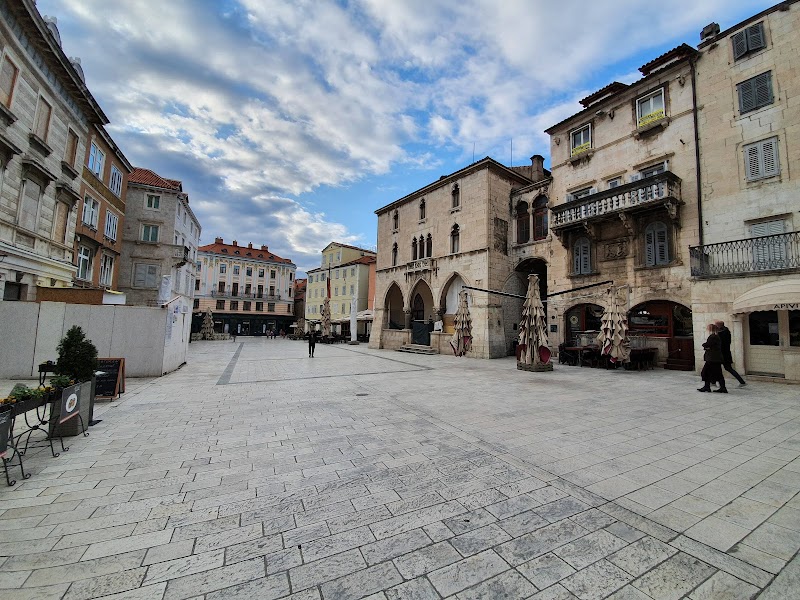
Narodni Trg, known to locals simply as Pjaca, developed as the city's main public square during the fourteenth and fifteenth centuries, when the centre of civic life began to shift beyond the walls of Diocletian's Palace and Split expanded as an independent commune. Built in stages under Venetian rule, its architecture is a clear expression of the Gothic and Renaissance influence that the Republic of Venice extended across its Dalmatian possessions. What sets Narodni Trg apart from other historic Adriatic squares is the remarkable density of original building fabric from multiple eras compressed into a very small space: a fifteenth-century Gothic clock tower stands next to a Renaissance city palace, and both buildings press directly against the walls of a structure more than a thousand years older. The square remains genuinely alive rather than merely preserved — elderly Split residents play cards at its tables, tourists drink coffee in the shade of stone arcades, and on summer evenings the Pjaca becomes a natural extension of the Riva promenade flowing in from the waterfront. The Gothic clock tower with its surviving sundial, the attic of the Old Town Hall bearing the coats of arms of Venetian rectors, and the view across the square toward the Silver Gate are three specific things worth seeking out on any visit. Tickets & info: The square is freely accessible at all hours. Some buildings on the square, including the Ethnographic Museum of Split in the Old Loggia, charge a small entry fee of approximately 3–5 EUR. official website
Address: 21000, Grad, Split, Croatia
- Plac Republiki Chorwacji
Plac Republiki — zwany przez mieszkańców Splitu „Prokurative" — to jeden z najpiękniejszych neorenesansowych placów w Chorwacji i zarazem jedno z tych miejsc, które robią wrażenie jeszcze zanim zdążysz się zastanowić, dlaczego. Trzy skrzydła budynku tworzą podkowiasty dziedziniec otoczony arkadową kolumnadą inspirowaną wenecką architekturą — nie bez powodu często porównuje się go do placu Świętego Marka. Otwarta strona południowa wychodzi w stronę portu i Rivy, zapewniając widok na Adriatyk, który zmienia charakter z godziny na godzinę.Budowę Prokurativy zainicjował w połowie XIX wieku Antonio Bajamonti, jeden z najbarwniejszych i najbardziej wpływowych burmistrzów w historii Splitu, który chciał zademonstrować bliskie kulturowe i polityczne związki miasta z Italią. Kolumnady, płaskorzeźby nad oknami i symetryczny układ całości miały mówić jasno: Split patrzy na Wenecję i Rzym. Na placu stanął też wielki teatr Bajamontiego — spłonął w pożarze, ale sama Prokurative przetrwała i do dziś jest scenerią najważniejszych miejskich wydarzeń. Odbywają się tu koncerty, festiwale muzyczne, projekcje filmowe pod gołym niebem i spontaniczne zgromadzenia mieszkańców wieczorami. W cieniu arkad mieszczą się kawiarnie i restauracje, przez cały rok przyciągając zarówno wrocławian, jak i turystów.Wstęp wolny, plac dostępny całą dobę. Kawiarnie pod arkadami czynne zazwyczaj od rana do późnej nocy.
Address: Prokurative, 21000, Split, Croatia
- Custom Location (43.5077, 16.4387)
- Bronze Gate (Porta Aenea)
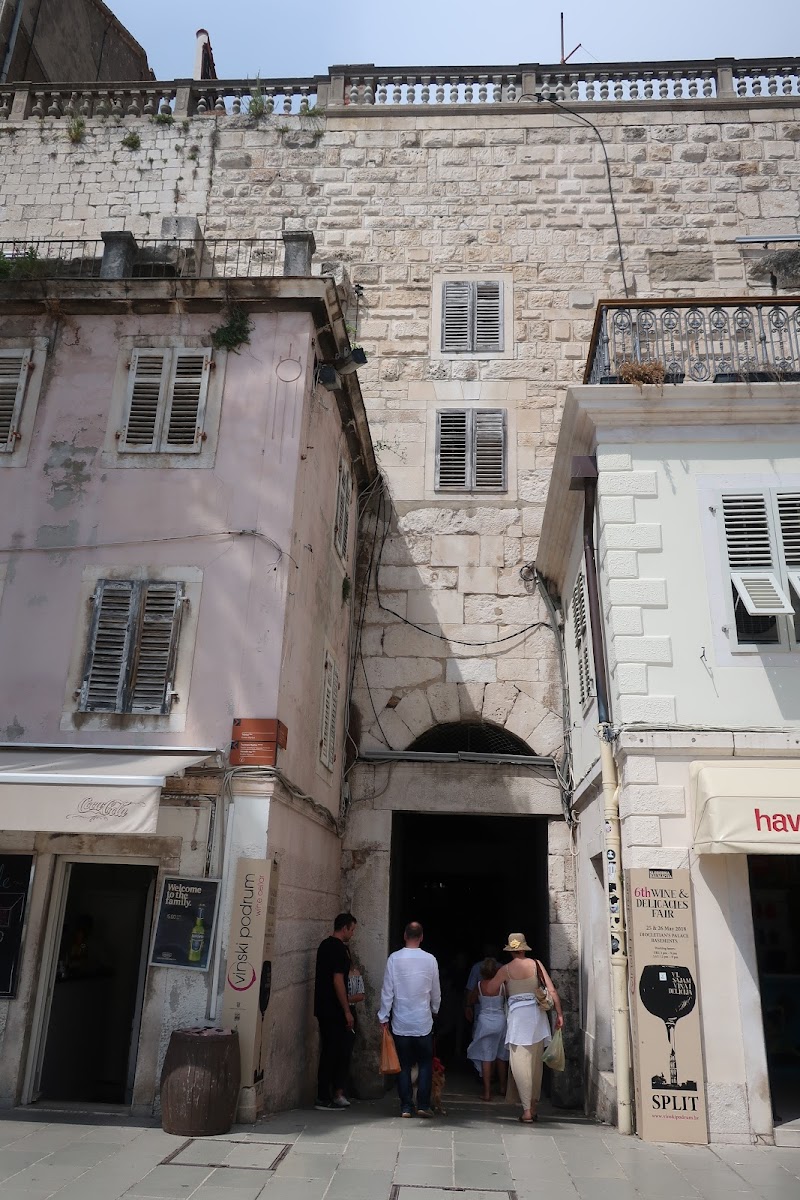
The Bronze Gate, or Porta Aenea, is one of the four original gates of Diocletian's Palace, built around 305 AD by the Roman Emperor Diocletian as his retirement residence on the Dalmatian coast. Facing the sea, it served as the principal entrance from the harbour side, granting direct access to the imperial quarters and the vast network of substructures beneath the palace. What sets Porta Aenea apart from the palace's other gates is its extraordinary state of preservation and its intimate relationship with the sea, which once lapped at its very threshold. For centuries, the living city of Split grew up around and over the palace, and this gate became woven into the urban fabric in a way that makes the boundary between ancient monument and everyday life almost invisible. Standing beneath its arch, you are simultaneously in a Roman emperor's residence and the middle of a modern Mediterranean city. The gate's original stone archivolt, the massive gate piers flanking the passage, and the sweeping view into the palace substructures below are among the three highlights no visitor should miss. Tickets & info: The gate itself is freely accessible at all hours as part of Split's public Old Town. Entry to the adjacent palace cellars costs approximately 7–10 EUR. More at official website.
Address: Obala Hrvatskog narodnog preporoda 22, 21000, Split, Croatia
- Diocletian's Cellars (Substructions)
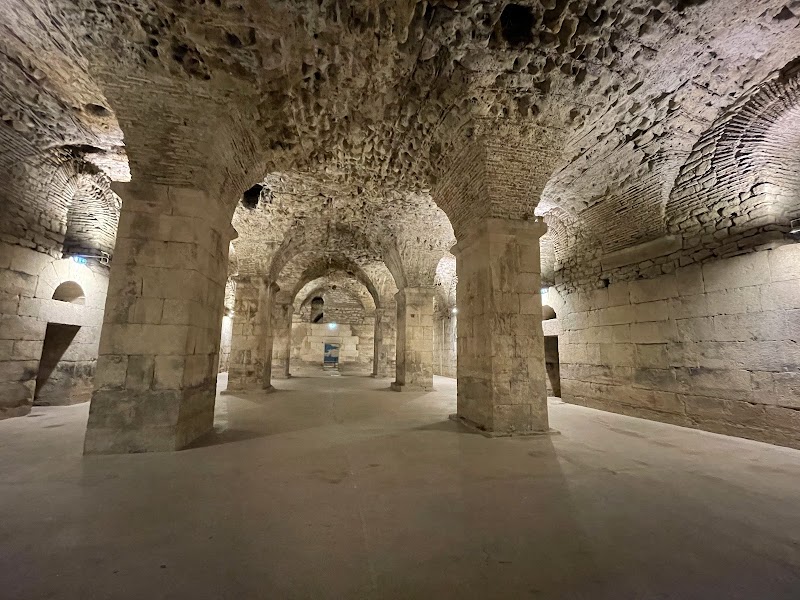
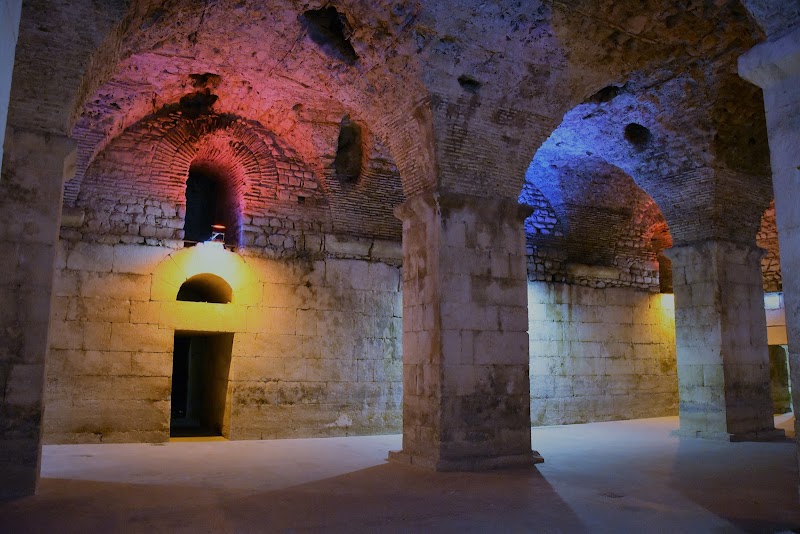
Diocletian's Cellars survived seventeen centuries in near-perfect condition largely because Split's residents used them as a rubbish dump for much of the Middle Ages — the accumulating layers of debris sealed the Roman walls and preserved them better than any conservation programme could have managed. The substructures were engineered in the early fourth century as a colossal supporting platform for the imperial apartments above. Diocletian's architects faced a sloping coastal site, and their solution was to build a grid of barrel-vaulted halls and corridors that levelled the terrain and created a stable foundation for the palace above. The layout of these underground rooms mirrors the arrangement of the vanished imperial quarters almost exactly, which is why archaeologists studying the cellars were able to reconstruct the floor plan of an entire Roman palace that had otherwise been absorbed into the medieval city. A more recent layer of fame came when the vaults appeared as the dragon pits of Meereen in Game of Thrones, introducing them to a global audience. Today the cellars host craft stalls and art installations beneath the original Roman vaults, and the central corridor leads straight up into the Peristyle, the palace's ceremonial courtyard. Entry costs approximately 7–10 EUR; the cellars open daily, with summer hours typically running from 8:30 to 21:00. Full details are available at the official website.
Address: Ul. Iza Vestibula 3, 21000, Split, Croatia
- Ethnographic Museum of Split
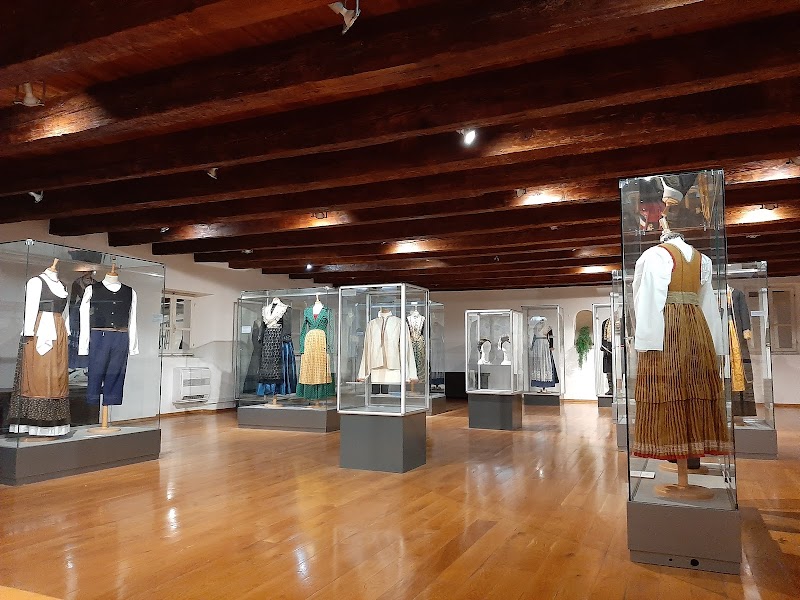
Stepping into the Ethnographic Museum of Split, housed in historic rooms at the heart of Diocletian's Palace, you are immediately wrapped in layers of time — stone vaulting over seven hundred years old, wooden furniture from Dalmatian villages, brocade textiles in the colours of sea and sun, and the quiet scent of old wood and stone. Cases filled with embroidered folk costumes, craftsman's tools, and ceramics speak a language of everyday life that pierces through the centuries with surprising clarity. Founded in 1910, the museum collects material evidence of the culture of Dalmatia, its islands, and the inland hinterland — from traditional wedding and baptismal garments to agricultural and fishing tools, devotional objects, and ritual artefacts. Its holdings document vanishing crafts and customs of communities that shaped the Adriatic identity over centuries. Particularly valuable are the exhibits relating to life on the Dalmatian islands — isolated communities that preserved archaic forms of dress, music, and ceremony long after mainland Europe had forgotten them. Highlights:Collection of traditional folk costumes from Dalmatia, the islands, and the Zagora region — including embroidered wedding and ceremonial dressCraft and fishing tool collections illustrating the old Dalmatian economyThe museum setting itself within the medieval rooms of Diocletian's PalaceTickets & info: Standard ticket approx. €3; open Monday to Friday 9 a.m.–2 p.m., longer hours in summer season; closed Sunday. official website
Address: Ul. Iza Vestibula 4, 21000, Split, Croatia
- Diocletian's Palace
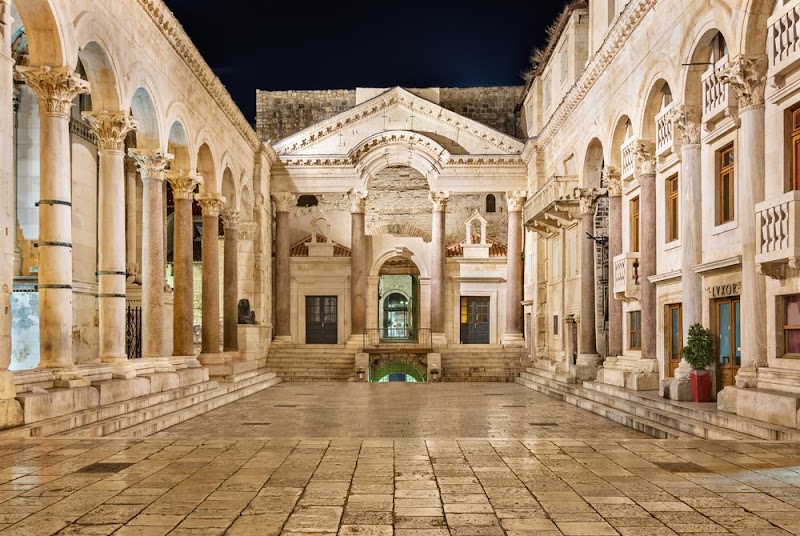
When Emperor Diocletian ordered his palace built at the end of the 3rd century AD, he wasn't constructing a residence — he was creating a city in miniature. Born near the town of Salona to a family of humble origins, the man who had ruled the entire Roman Empire chose to spend his retirement in a structure that continues to astonish architects and historians to this day. The palace covers nearly 3 hectares, has walls almost 2 metres thick, and is still inhabited — not as a museum, but as a living neighbourhood of modern Split. Walking through Diocletian's Palace, it's nearly impossible to separate ancient Rome from contemporary life. Amid columns standing for 1,700 years, you'll find cafes, boutiques, restaurants and private apartments. The underground halls (hypogeum) form a labyrinthine mirror of the imperial chambers above — and it was here that scenes from Game of Thrones were filmed. Four gates, corner towers and a grand sea-facing portico open up extraordinary perspectives on what Roman urbanism actually looked like from the inside. The entire complex has been a UNESCO World Heritage Site since 1979 and is one of the best-preserved late-antique structures anywhere in the world. Tickets & info: Entry to the palace's public streets and squares is free at all hours. Paid tickets apply to the underground halls (approx. 50–60 HRK / €7–8), the treasury and selected exhibitions. Underground hours: typically 9:00–21:00 during the summer season (April–October), reduced hours off-season. official tourism website
Address: 21000, Grad, Split, Croatia
- Bell Tower of Saint Domnius
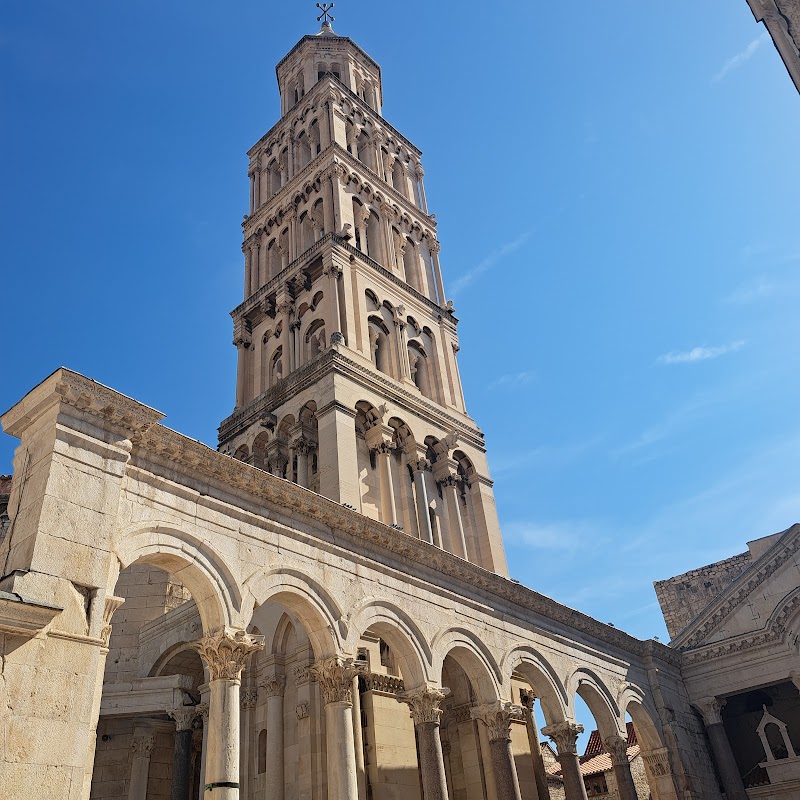
The bell tower of Split's cathedral took more than seven centuries to complete — construction began in the 13th century and was officially finished only in the 19th, though it was never truly done in between. This is not merely an architectural curiosity but a layered document of the city's history: each storey reflects a different style and era, from the Romanesque ground floor through Gothic and Renaissance middle levels to the neo-Romanesque crown added during restoration between 1880 and 1908 under Viennese architect Alois Hauser. At the summit, 57 metres above the Adriatic, one of Dalmatia's most breathtaking panoramas unfolds: a sea of terracotta rooftops, the blue expanse of the Adriatic, the silhouettes of the islands of Brač, Šolta and Hvar on the horizon, and the winding lanes of Diocletian's Palace laid out like a map directly below. The narrow staircase is a genuine workout, but the reward is entirely proportional to the effort. Not to miss: the Romanesque arcade of the lowest level with its intricate interlaced ornamentation, the Gothic biforate windows on the middle floors, and the rooftop terrace view — especially memorable at sunset. Tickets & info: Bell tower ticket approx. 35–45 HRK / €5–6; often sold as a combined ticket with the cathedral. Hours: typically 8:00–20:00 during summer season. official website
Address: Peristil ul. 2, 21000, Split, Croatia
- Cathedral of Saint Domnius
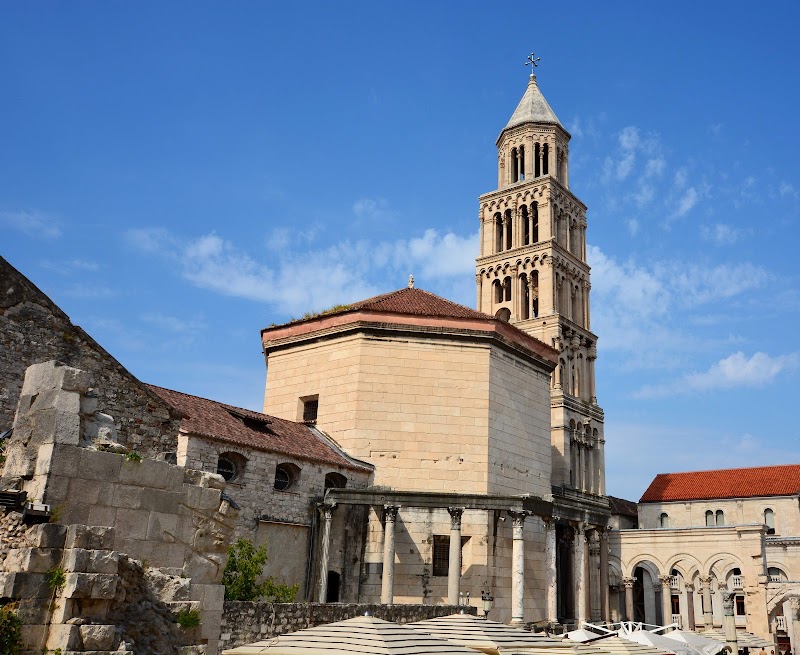
Stepping through the elaborately carved wooden doors of the Cathedral of Saint Domnius, it's difficult to believe you are standing in a space that served for centuries as the mausoleum of a pagan emperor. Diocletian — one of the most ferocious persecutors of Christians in Roman history — had this octagonal tomb built for himself, only for early Christians to reconsecrate it as a church honouring the very martyrs he had executed. It stands as one of the most strikingly ironic transformations in the history of sacred architecture. The cathedral preserves the octagonal shape of the original mausoleum, ringed by a colonnade of Egyptian granite and porphyry. Look up and you'll find a ceiling adorned with medallion portraits of Diocletian and his wife Prisca — the faces of a persecutor gazing down on Christian worshippers for fifteen centuries. The carved Romanesque choir stalls from the 13th century are among the finest in Dalmatia, while the entrance doors carved by master craftsman Andrija Buvina in 1214 depict 28 scenes from the life of Christ with remarkable detail and vitality. Highlights:Andrija Buvina's 1214 wooden doors — 28 carved panels depicting scenes from the life of Christ13th-century Romanesque choir stalls, considered the finest in DalmatiaOriginal mausoleum ceiling medallions portraying Diocletian and his wifeTickets & info: Admission approx. 35 HRK / €5 (often combined with bell tower ticket). Opening hours: typically 8:00–19:00 (summer season); reduced hours off-season. official website
Address: Ul. Kraj Svetog Duje 3, 21000, Split, Croatia
- Rimski Mozaik
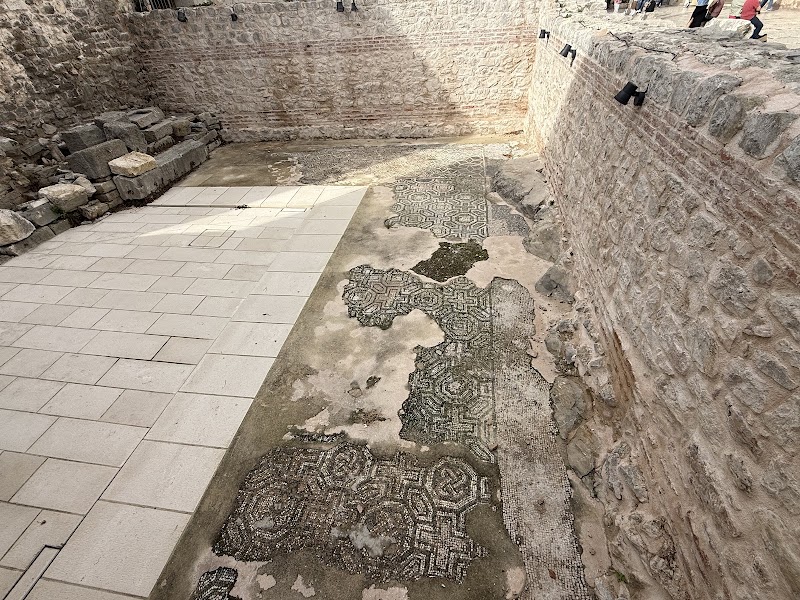
Pod stopami jednej z najbardziej ruchliwych ulic w sercu Dioklecjanowego Pałacu kryje się coś, o czym przez dekady wiedziało zaledwie kilku archeolozów — mozaikowe posadzki poznoantycznego dziedzińca z końca IV i początku V wieku, należące do jednych z cenniejszych odkryć w obrębie pałacu. Pierwsze fragmenty mozaik odnalazł na początku XX wieku chorwacki archeolog Frane Bulić, którego nazwisko nosi dziś ulica prowadząca do miejsca odkrycia. Wzory geometryczne — siatka sześciokątów i rombów, przeplatane wstęgi, motyw podwójnej siekiery — zdobią posadzki dawnego dziedzińca z portykami, rozciągającego się na południe od mauzoleum cesarskiego, które dziś znamy jako katedrę świętego Duje.Mozaiki można oglądać w przyziemiu Muzeum Etnograficznego przy ulicy Frane Bulića — po wieloletnich pracach konserwatorskich i rewitalizacyjnych prowadzonych przez Miasto Split zostały oficjalnie udostępnione zwiedzającym w 2025 roku. To jedno z tych miejsc, które wymykają się standardowemu szlakowi turystycznemu i nagradzają odwiedzających poczuciem odkrycia czegoś, czego większość turystów po prostu mija, nawet nie wiedząc, że istnieje. Wstęp do muzeum w godzinach otwarcia.
Address: Ul. Frane Bulića 5, 21000, Split, Croatia
- Silver Gate (Porta Argentea)
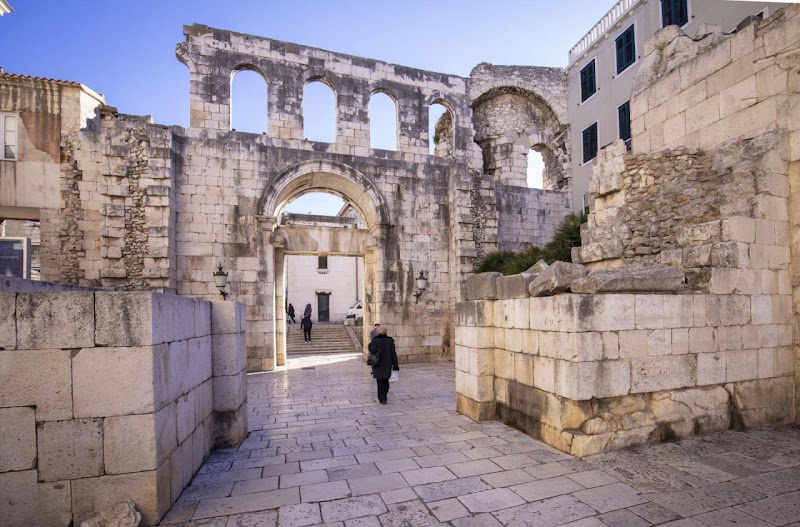
Without a sign, most visitors would walk past the Silver Gate without a second glance — and that, in a way, is precisely what makes it so interesting. While the Golden Gate on the north served for centuries as the palace's grand ceremonial face, Porta Argentea on the east opened toward the sea and the marketplace, serving the everyday life of residents and traders. This was the people's gate, not the emperor's. The eastern facade of the palace and the Silver Gate itself were swallowed for centuries by successive layers of urban construction. It was only in the 1950s and 1960s that Yugoslav conservation teams undertook a systematic programme of demolition, uncovering the original gate structure and the adjacent stretch of palace wall. The result is fascinating — the gate emerges from the dense urban fabric of the old town like a fossil brought back to the surface. Its form is simpler than the Golden Gate: a single arched passage flanked by blind niches and framed with restrained decoration, but the scale and weight of the masonry remain genuinely impressive. This is also where you step out into the Pazar market — the most colourful and unpretentious sight in the whole palace neighbourhood. Tickets & info: Free entry, accessible at all hours as public space. The gate leads to no ticketed attraction — it is an outdoor monument and transit point. official tourism website
Address: Poljana kraljice Jelene 5, 21000, Split, Croatia
- Split Port
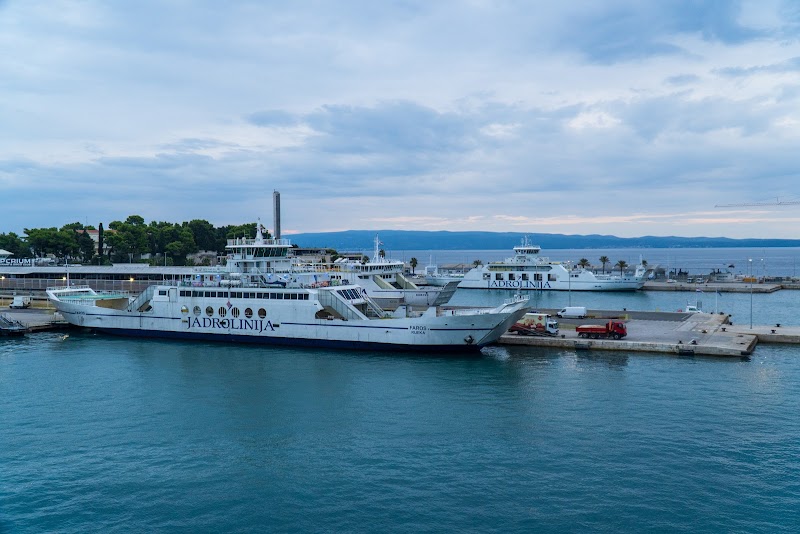
Address: 21000, Bačvice, Split, Croatia
- Nevera Tavern
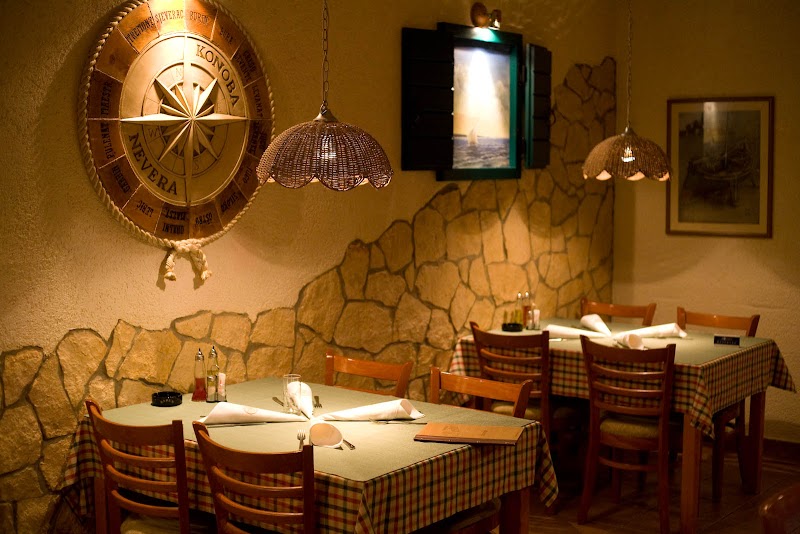
Konoba Nevera leży przy Put Firula 17, z dala od zatłoczonego centrum Splitu — w spokojnej, rezydencjalnej okolicy w pobliżu plaży Firule i kortów tenisowych, gdzie trafią głównie ci, którzy wiedzą, czego szukają. To właśnie ten brak turystycznej otoczki sprawia, że Nevera od lat cieszy się lojalnością miejscowych i rosnącą reputacją wśród przyjezdnych, którzy trafiają tu za czyjąś rekomendacją. Atmosfera jest kameralna i serdeczna, obsługa zna kartę na wylot i chętnie doradza — zwłaszcza jeśli po raz pierwszy stoisz przed wyborem między świeżo złowionym dennikowym a domowym makaronem z owocami morza.Na karcie króluje dalmacka kuchnia morska przygotowywana bez zbędnych udziwnień: zupa krem z krewetek, grillowana ryba dnia, miecznik, brancin — wszystko ze świeżych składników, w porcjach, po których trudno wstać od stołu. Absolutnym must-try jest makaruni z owocami morza serwowany dla dwóch osób — sos jest tak dobry, że goście regularnie wspominają go w recenzjach jako jedno z najlepszych dań, jakie zjedli w Chorwacji. Do tego kieliszek lokalnego białego wina i wieczór sam się układa.
Address: Put Firula 17, 21000, Split, Croatia
- Firule Beach
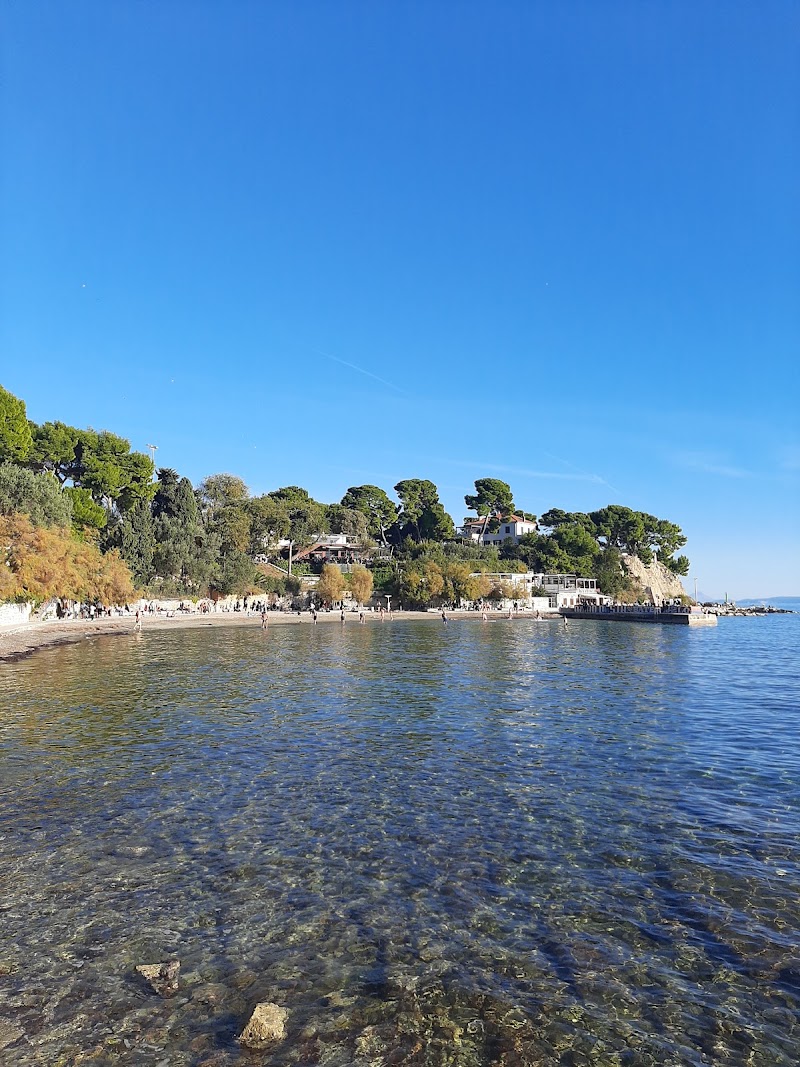
Plaża Firule leży niecałe dwa kilometry na wschód od centrum Splitu i jest jednym z tych miejsc, które miejscowi traktują jako swoje — mniej turystyczna niż sąsiednia Bačvice, spokojniejsza, a latem wyraźnie mniej zatłoczona. Wąski, około dwustumetrowy pas plaży zbudowany jest głównie z drobnego piasku z domieszką drobnych kamyków i betonowych płyt, a wejście do wody jest łagodne i stopniowe — bez nagłych skokowi głębokości. To sprawia, że Firule jest ulubionym miejscem rodziców z małymi dziećmi i wszystkich, którym zależy na spokojnym plażowaniu z dala od głównego nurtu turystyki.Bezpośrednie sąsiedztwo kortów tenisowych Firule — miejsca, na którym trenowali między innymi Nikola Pilić, Željko Franulović i Goran Ivanišević — nadaje temu zakątkowi Splitu wyjątkowy charakter. Na plaży dostępne są prysznice, leżaki, parasole oraz kilka barów i restauracji, w tym ceniony Dvor z tarasem z widokiem na morze. Plaża jest czynna sezonowo, wstęp jest bezpłatny, dojazd autobusem miejskim lub pieszo z centrum zajmuje około 20 minut.
Address: Firule Beach, Croatia
Day 2
- Café & Restaurant Lvxor
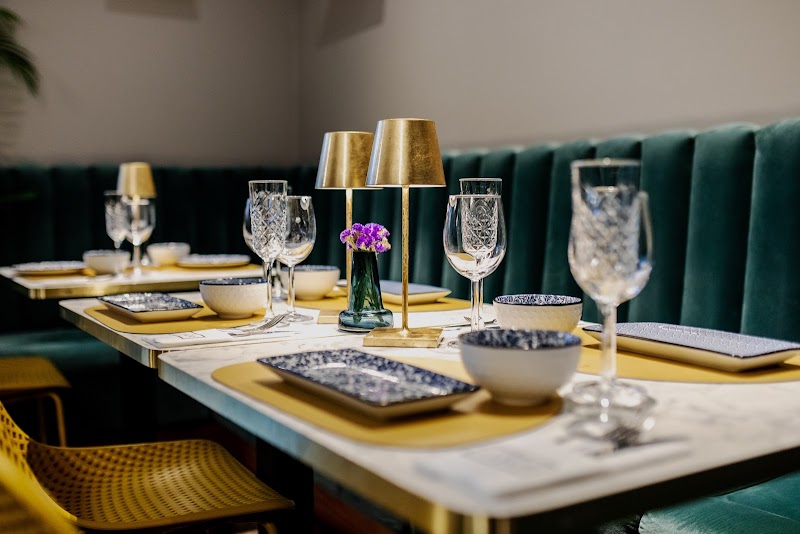
In the evening, as the sun drops behind the Kaštela bay and the café fills with a mix of Split's creative class and switched-on visitors, Lvxor's terrace offers one of the most cinematic views of Diocletian's Peristyle imaginable. Café & Restaurant Lvxor occupies a genuinely singular position in the old town's geography — its open terrace sits directly on the Peristyle, the central ceremonial square of the palace that has functioned as a public space for 1,700 years. Imperial audiences were held here; medieval travellers made camp here; in 1968, Split's students painted the ancient stone red in a gesture of protest that passed into urban legend. To sit at Lvxor with a coffee or a glass of wine is to take your place in a human gathering that has never really stopped. You must try:Coffee on the Peristyle terrace — the view alone justifies the visit, but the coffee is serious and served without hurry, befitting a place well aware of its own atmosphereA glass of local Plavac Mali red — Lvxor keeps a well-curated list of Dalmatian wines and is one of the better spots in the city centre to explore the region's viticulture properlySeasonal dinner dishes built around fresh fish and Dalmatian ingredients, served in a setting that has no real equivalent anywhere else in SplitHours & reservations: Open daily approx. 8:00–23:00; reservations recommended for dinner, especially terrace seating in summer; café prices €2–5 for coffee, dinner approx. €20–40 per person; website
Address: Ulica kraj svetog Ivana 11, 21000, Split, Croatia
- Vidilica Viewpoint
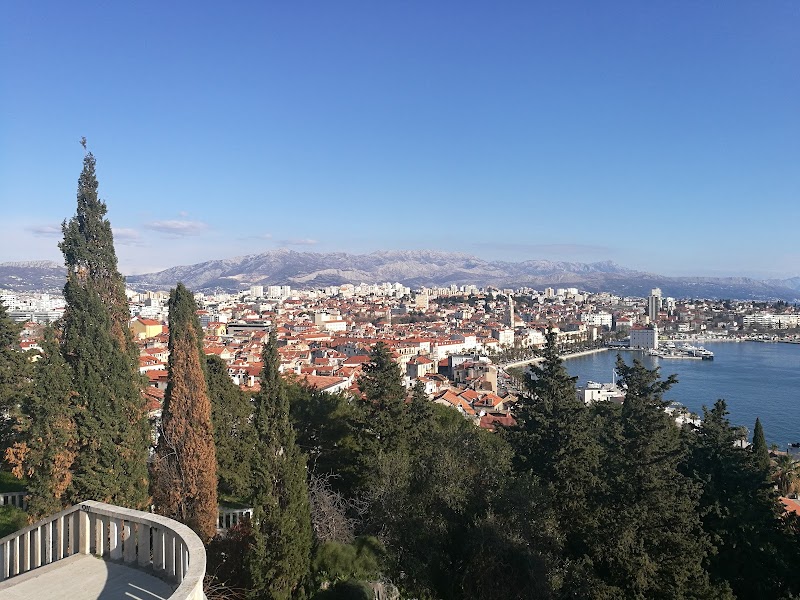
Perched 340 metres above the Adriatic, Vidilica Viewpoint delivers what many consider the finest panorama over Split and the Dalmatian islands. Set on the slopes of Mount Mosor just above the city, it draws both early-rising locals and adventurous travellers willing to earn the view with a bit of a climb. From here, the islands of Brač, Hvar, and Šolta float on a shimmering sea, and on particularly clear days the distant Pelješac peninsula emerges on the horizon. The hiking path leading up is a favourite among trail runners and nature lovers alike. The viewpoint rewards visitors differently depending on the hour — morning light wraps the city in a warm golden haze, while sunset turns the Adriatic into a canvas of deep orange and violet. The surrounding Mediterranean scrubland is fragrant with lavender, rosemary, and wild thyme, making the journey as rewarding as the destination itself. Entry is free and the viewpoint is accessible at any hour of the day or night. The most popular trail begins in the Mejdan neighbourhood and takes roughly 45 minutes on foot; sturdy shoes and a bottle of water are strongly recommended. For more details on trails and local attractions, visit the city's tourism portal at official website.
Address: Šetalište Luke Botića 3, 21000, Split, Croatia
- Sustipan Park
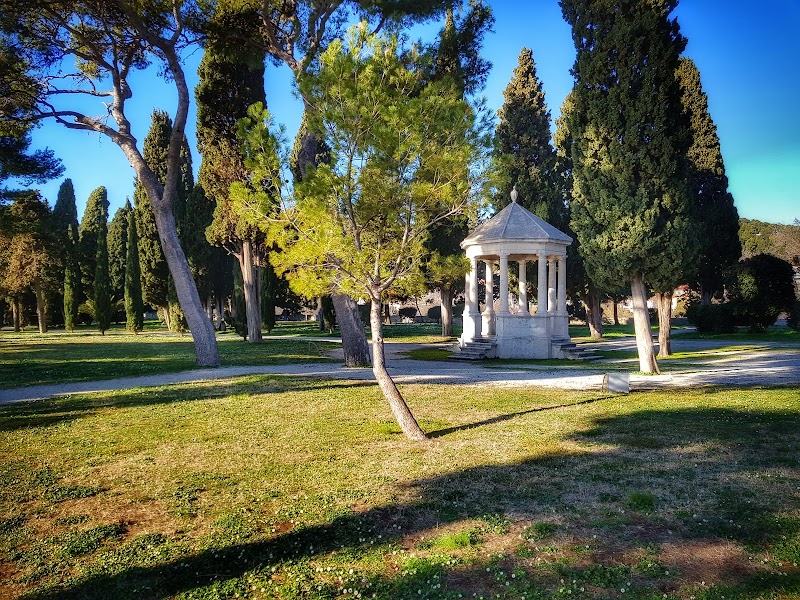
Sustipan Park offers something rare: the tranquillity of a shaded garden combined with the drama of cliffs dropping straight into the sea, all within a short walk of Split's historic centre. This small peninsula jutting into the bay west of the old town was home to a Franciscan monastery in the Middle Ages, then served as the city's main cemetery for much of the 19th and early 20th centuries — layers of history that give the park an atmosphere unlike anywhere else in Split. Many traces of the former cemetery survive and have been absorbed into the parkscape: ornate gravestones, weathered chapels, and carved stone monuments now stand amid Mediterranean pines, creating an oddly moving blend of the contemplative and the beautiful. Paths wind to the tip of the peninsula where benches face open water, offering views of yachts gliding into the harbour and the islands of Brač and Šolta on the horizon. At sunset, Sustipan is arguably the most quietly romantic spot in the city. Entry is free and the park is open year-round. It is an easy 15-minute walk from the Riva promenade along the waterfront. For more on Split's parks and outdoor spaces, visit official website.
Address: Sustipanski put, 21000, Split, Croatia
- Kašjuni Beach
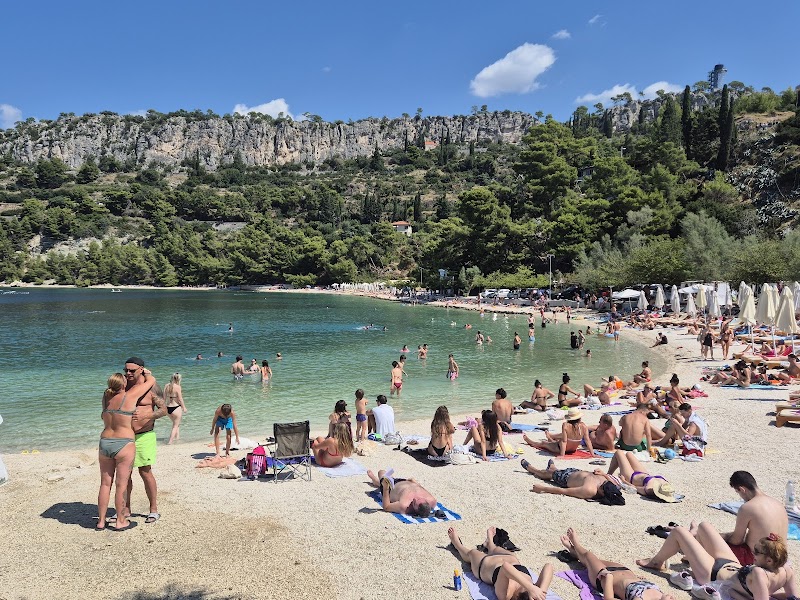
The walk down to Kašjuni Beach is an experience in itself — a narrow pine-shaded path descends through Marjan Hill's forest and the sea appears suddenly between the trunks, blue and still, as if discovered anew each time. This pebble cove tucked beneath the western slopes of Marjan is a favourite of locals who value its quieter atmosphere, clean Adriatic water, and the satisfying sense of having escaped the city — even though Split's centre is only a quarter of an hour away. Kašjuni sits at the foot of the Marjan Forest Park, Split's most precious green lung: 350 hectares of Aleppo pine and Mediterranean scrub that cool the city in summer and offer dozens of kilometres of walking and cycling trails. The view from the shore out toward open sea and the island of Šolta is particularly lovely in the afternoon, when the light softens and the water deepens in colour. Entry is free, and a seasonal beach bar operates here in summer. The beach is reachable on foot from the city centre in 30 to 40 minutes through Marjan Park, or more quickly via the Meje neighbourhood; a city bus also runs here during the season. More details at official website.
Address: Adriatic Sea, 21000, Meje, Split, Croatia
- Telegrin Peak Viewpoint
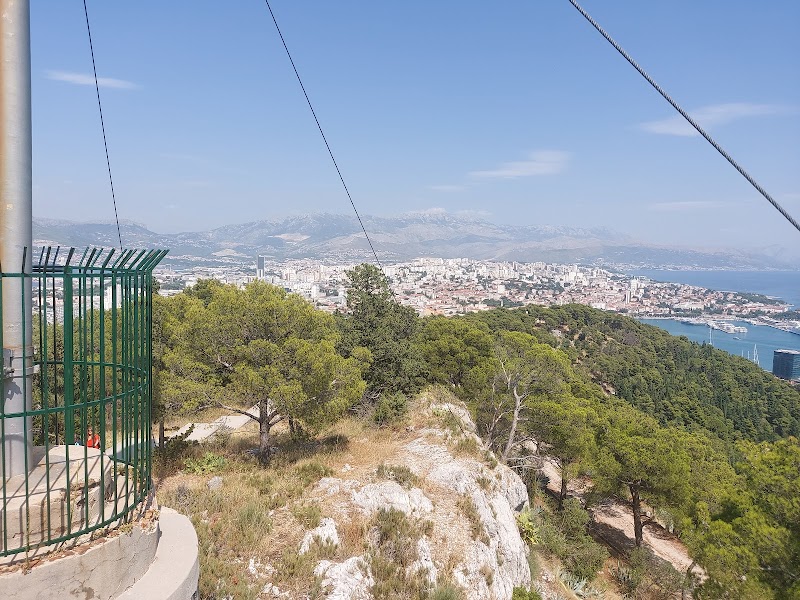
At roughly 430 metres above sea level, Telegrin Peak is the highest freely accessible viewpoint in Split's immediate surroundings — and uniquely, it offers simultaneous views of both sides of the peninsula, from the city and its bay to the open Adriatic beyond. The site held strategic importance as far back as Roman times, when it served as a watchtower guarding the approaches to Salona, once one of the largest cities in the entire Roman Empire on the eastern Adriatic coast. Today it is a place of wind, silence, and breathtaking vistas that can humble even seasoned mountain hikers. From Telegrin's summit, the panorama sweeps across Split, the central Dalmatian island chain, the wide arc of the Kaštela Riviera, and the rugged interior mountains of the Mosor massif. The trail to the top is demanding but deeply rewarding, passing through fragrant dry Mediterranean scrub and offering several smaller viewpoints along the way. Access is free, and trails begin near Klis or from the upper districts of Split, with hiking times ranging from 90 minutes to two and a half hours depending on the starting point. There are no facilities at the summit, so bring water, food, and a trail map. For hiking route information and broader regional tips, see official website.
Address: Marjanski put, 21000, Split, Croatia
- Marjan Hill Forest Park
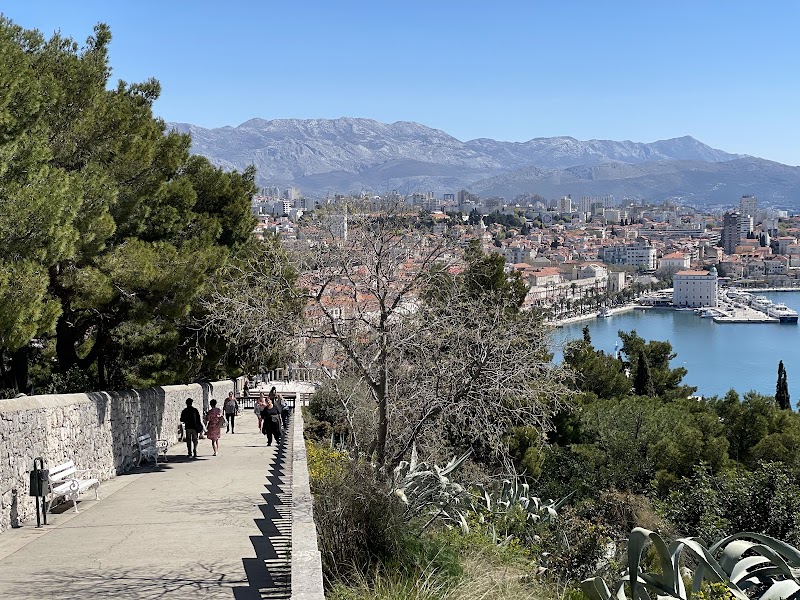
You can practise yoga at sunrise on Marjan Hill, scramble up to a medieval fortress chapel, swim from wild limestone rocks, and eat lunch beside an olive tree that is three hundred years old — all before most of Split's cafés have unlocked their doors. Marjan Hill is a forested peninsula that rises directly above the western end of Split, and it has served as the city's green lung and retreat from summer heat for as long as the city has existed. Aleppo pines, cypresses, and dense Mediterranean scrub cover kilometres of walking and cycling trails that lead to ancient rock-cut chapels, a fourteenth-century Jewish cemetery, and viewpoints where the Adriatic, the offshore islands, and the snow-dusted peaks of the Dinara mountains can all be seen simultaneously. The hill has been formally protected since 1964, when it was designated a forest-landscape park, and the residents of Split maintain a fierce civic attachment to it that has kept development firmly at bay. The trails are free and open year-round; the most rewarding approach is via the Marjanske stube staircase starting at the foot of the old Varoš quarter, where views over the bay begin to open up within minutes of climbing. The summit terrace at Telegrin, 178 metres above sea level, is the finest panoramic viewpoint in the entire city — full details about trails, events, and guided walks are available at the official website.
Address: Ul. fra Bonina 11, 21000, Split, Croatia
- Varoš Neighbourhood
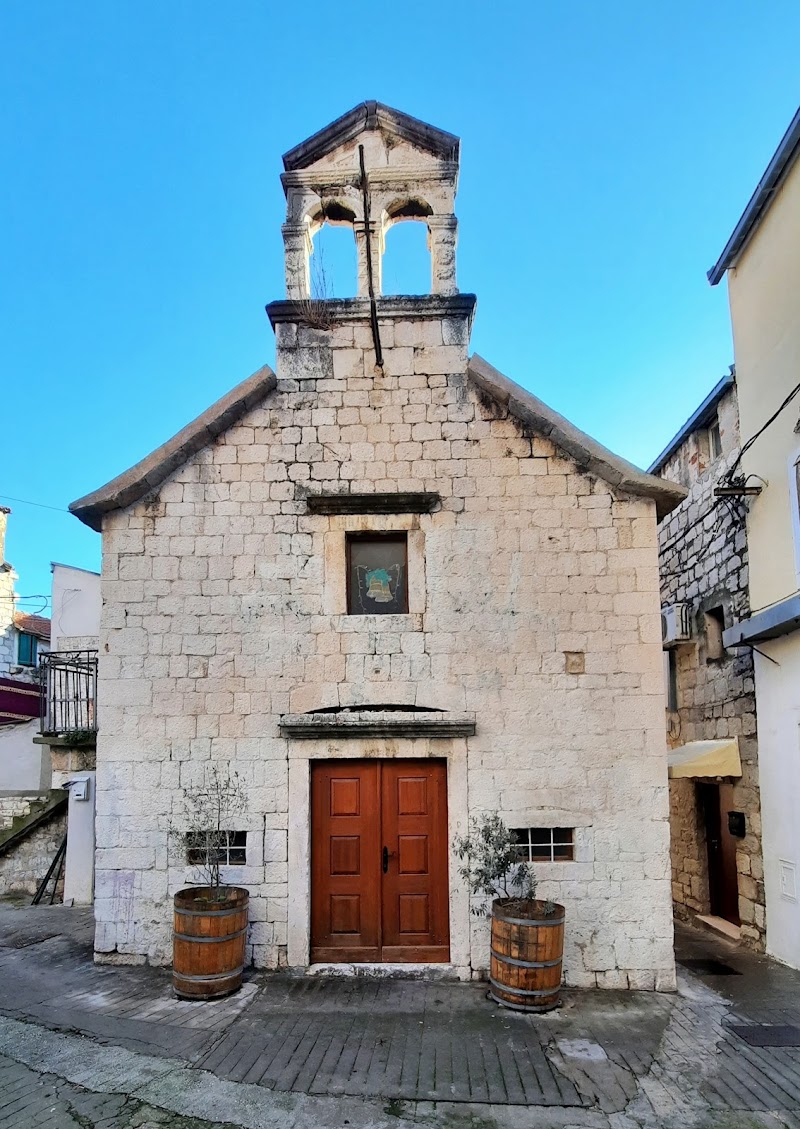
Address: 21000, Varoš, Split, Croatia
- Klis Fortress
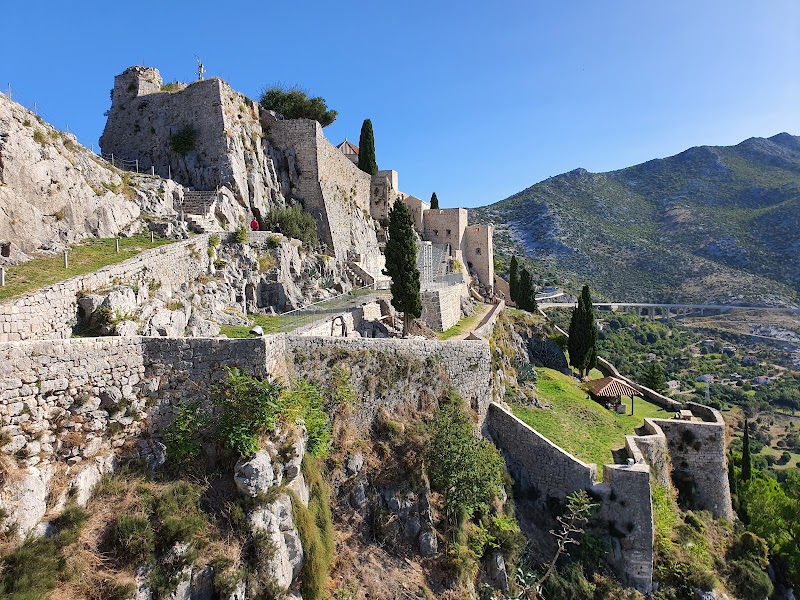
Arrive at Klis Fortress on a weekday morning before the tour coaches roll up from Split — the ramparts will be nearly yours alone, and the panorama across Dalmatia in early light is among the finest in the entire region. Klis has commanded the pass between Split and the continental interior since at least the fourth century, but its significance reached its peak in the sixteenth, when the fortress became the last major stronghold of Croatian resistance against Ottoman expansion. For over a hundred years its defenders — a fierce warrior community known as the Uskoks — waged relentless guerrilla warfare and repelled three full Ottoman sieges before the fortress finally fell in 1537 after a prolonged and desperate battle. It passed through Ottoman hands for more than a century before Venetian forces recaptured it in 1648, and the layered marks of every era are still legible in the stonework today. Modern visitors may also recognise it as the city of Astapor from Game of Thrones. Walking the towers and battlements rewards you with views in every direction: the city of Split, its offshore islands, and the broad sweep of the Adriatic to the west; the rocky ridges of the Mosor range rising sharply to the east. In summer, the courtyard hosts live historical performances featuring costumed swordsmen re-enacting the Uskok defence tradition — theatrical, yes, but genuinely well-staged. Highlights:The upper terrace with its sweeping panorama over Split and the Adriatic islandsThe former Ottoman mosque converted from an earlier church — a visible record of the fortress's layered historySummer historical performances with Uskok-era costumed fighters in the central courtyardTickets & info: Adult ticket approx. €7–10, children approx. €4; open daily 9:00–19:00 in summer, reduced hours in winter; official website
Address: Trg Mejdan 10, 21231, Klis, Croatia
- Cicibela food and wine bar (SPLIT)
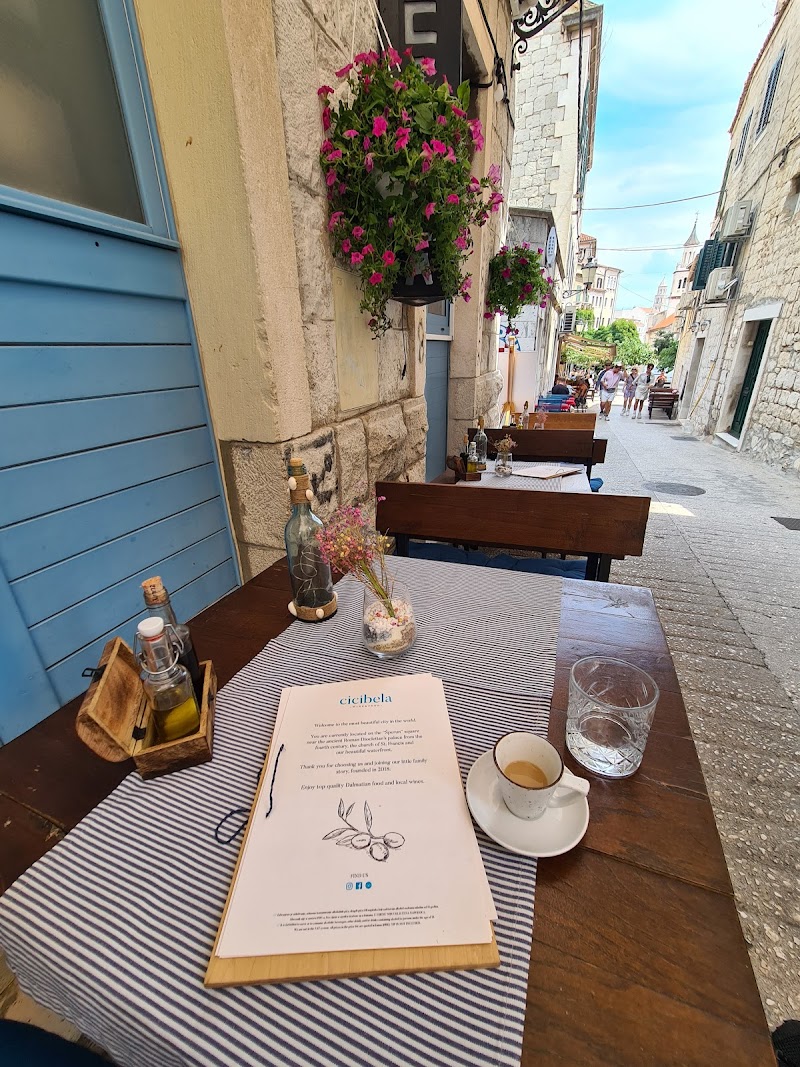
Cicibela to jedna z tych restauracji, do których trafia się przez rekomendację znajomego, a wraca z własnym entuzjazmem, który trudno powstrzymać przy opowiadaniu innym o Splicie. Mieści się przy Senjskiej ulicy 8 — jednej z najbardziej autentycznych uliczek starego miasta, zaledwie kilkaset metrów od Rivy i Pałacu Dioklecjana, ale daleko od turystycznego zgiełku. Lokal jest kameralny: kilka stolików w środku, kilka na zewnątrz, kuchnia otwarta na salę, co oznacza, że zamawiając danie, dosłownie obserwujesz, jak kucharz sięga po składniki i zabiera się do pracy. Ta bliskość kuchni i gości to część filozofii miejsca — rodzinnego baru wino-jedzenie, który stawia na lokalnych producentów i rzemieślnicze podejście do każdego talerza.Nazwa Cicibela nawiązuje do tradycyjnych małych łodzi rybackich charakterystycznych dla adriatyckiego wybrzeża Dalmacji — i ten szacunek dla morskiej tradycji czuć w każdym daniu. Na karcie dominuje dalmacka kuchnia morska: czarne risotto z kałamarnicą, carpaccio z białej ryby, makarony z owocami morza w sosie z czarnego czosnku, pašticada z tuńczykiem zamiast klasycznego mięsa, talerz dalmacki dla dwóch osób. Bezwzględnym must-try jest pistacjowe tiramisu — goście wymieniają je jako jeden z najlepszych deserów, jakie jedli w Chorwacji. Do tego staranny dobór lokalnych win, w tym domowy pošip.
Address: Senjska ul. 8, 21000, Split, Croatia
About this plan
Discover Split in 2 Days – Roman Empire, Seaside Promenade, and Dalmatian LifestyleSplit is the vibrant, sunny heart of Dalmatia, where the ancient history of Roman emperors seamlessly intertwines with the modern Mediterranean rhythm. Here, monumental, seventeen-century-old defensive walls adjoin a bustling seaside promenade, and narrow, stone-slicked streets lead straight to the bustling port, where ferries depart for the paradise islands of the Adriatic. From the majestic Diocletian's Palace to the verdant, Moroccan pine-scented Marjan Hill, the capital of Dalmatia dazzles with its vibrant colors, flavors, and sounds. This is a city where the vaults of a Roman residence conceal the secrets of antiquity, and the local coffee culture on the famous Riva is considered a ritual. To fully experience this unique atmosphere, balanced between ancient power and the philosophy of pomalo (slow living), you need a guide who will lead you straight to places with true soul.Your personal guide: intuitive logistics without wasting timeOur 2-day Split sightseeing itinerary is more than just a simple list of historical monuments – it's your recipe for a stress-free, highly satisfying, and tailor-made city break. We've designed the route to seamlessly transition from grand ancient symbols to intimate fishing spots, taking into account the optimal opening hours and the scorching midday sun. With us, you'll be taken directly to the best local konobas (Dalmatian taverns) hidden in the labyrinth of the old town and iconic spots serving the freshest seafood, avoiding tourist traps. Split's most important attractions – from temples dripping with history to charming squares – are arranged in a logical, walkable whole. You don't have to waste hours searching blogs and planning logistics. Our guide will lead you by the hand, allowing you to focus solely on absorbing the magic of the Adriatic atmosphere.Split and its surroundings are essential for Game of Thrones fansThe region served as a filming location across several seasons of the series and retains traces that every devotee of the show will immediately recognise. The underground halls of Diocletian's Palace stood in for the dungeons of Meereen, where Daenerys Targaryen chained her dragons — the genuinely cavernous, dimly lit chambers and corridors of this second-century structure proved ideal for the show's darker scenes featuring Rhaegal and Viserion. A short distance from the city centre, Klis Fortress played Astapor, the slave city on Slaver's Bay, where Daenerys acquired the Unsullied in the third season. Both locations can be visited in a single day — the palace cellars are an integral part of any Old Town visit, and Klis is reachable by car or bus in under twenty minutes.Flavors of Dalmatia: A Culinary Journey from the Fish Market to the Olive GrovesSplit is not only a feast for the eyes but also for the palate. With our itinerary, you will discover the gastronomic side of Dalmatia from a completely new perspective. We'll tell you which corner of the city to head to in the morning to experience the energy of the local fruit and olive oil market, where to dine on freshly caught fish surrounded by old stone houses, and where to go in the evening for a glass of authentic Croatian Plavac Mali wine. We combine tradition with modernity, showing you places beloved by Split's natives.Who is this itinerary for? Get the most out of Split!This itinerary was created for discerning travelers who value their time and want to experience authentic Split without the chaos and rush. If you dream of seeing breathtaking UNESCO World Heritage sites, want to experience the Mediterranean energy of Riva's outdoor cafés, and dine in a place with a unique atmosphere, this product is for you. You'll be sure not to miss any key sights, while still having room to unwind with a local ice cream overlooking the azure sea. It's the perfect weekend getaway, providing you with a complete travel kit. Invest in peace and quiet and experience your weekend in Split exactly as you deserve.
Gallery