Kraków is one of those rare European cities that time has treated generously — history here isn't preserved behind glass but woven into streets, courtyards, and churches that are still very much alive. A single day is enough to feel the weight of a royal past, to stand where the heart of old Poland once beat, and to return in the evening with the sense that the city has left something with you. The itinerary moves through the city's most essential places at a pace that leaves room to stop, look, and actually take it in — rather than simply tick boxes.
Plan details
- City: Krakow
- Number of days: 1
- Number of places: 15
Itinerary
Day 1
- Barbakan
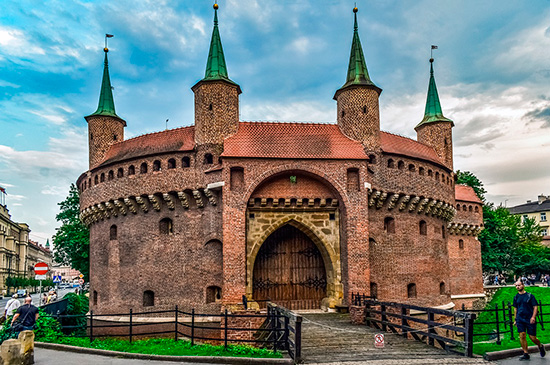
The Kraków Barbican greets you with the cool hush of thick brick walls that seem to swallow the noise of the modern city just outside. Seven cylindrical turrets crown the structure in a configuration that is at once intimidating and strangely graceful, their Gothic geometry casting long shadows across the cobbled yard below. Standing inside, it takes little imagination to feel the city pulling its gates shut against an advancing enemy. Built around 1498 in response to the growing Ottoman threat, the Kraków Barbican is one of only three such structures surviving in Europe and the finest preserved example of its kind. It once formed part of an elaborate defensive system: connected to the Florian Gate by a neck of walls, ringed by a moat, and positioned as the outermost line of the city's defenses. Today it belongs to the Historical Museum of Kraków and serves as a vivid monument to medieval strategic thinking. Highlights:Seven semicircular towers with original loophole arrangements — a perfectly preserved lesson in Gothic military engineeringTemporary exhibitions inside the structure covering the history of Kraków's fortifications and the long-demolished Kraków GateThe view across the Planty gardens toward the Florian Gate — one of the city's most iconic photo opportunitiesTickets & info: Standard ticket approx. 15 PLN, reduced approx. 10 PLN. Open seasonally: April–October. official website
Address: Basztowa, 30-547 Kraków, Poland
- Brama Floriańska
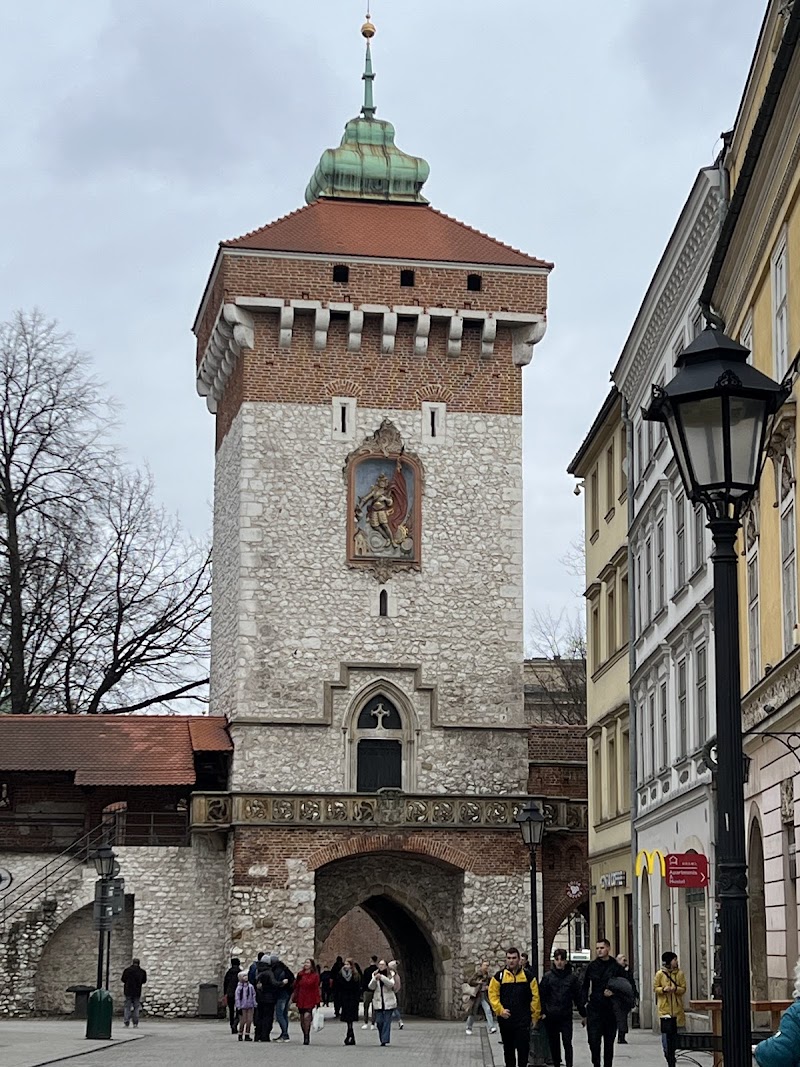
The Florian Gate was built in the fourteenth century as the principal entrance to Kraków's fortified city walls, and for centuries it served as the ceremonial threshold through which kings rode toward their coronations at Wawel Castle and merchants arrived with goods from across Europe. It remains today the only fully intact survivor of Kraków's original four main gates. What sets the Florian Gate apart from comparable medieval structures in Poland is the remarkable completeness of its surrounding defensive ensemble. Three neighboring towers — the Carpenters' Tower, the Archers' Tower, and the Painters' Tower — were each maintained by the guild whose name they bore, funded through civic obligation that helped preserve them to the present day. The gatehouse itself rises 34 meters and has walls up to three meters thick, creating a passage that feels less like a doorway and more like a portal. Walking through it from the Barbican side, the Royal Road stretches ahead toward the Main Market Square in a straight line unchanged since the medieval city plan. Three specific features worth seeking out are the original Gothic vaulting inside the gate passage, the adjacent guild towers with their varied architectural details, and the small exhibition within the tower tracing the evolution of Kraków's city walls. Tickets & info: Free to walk through the gate passage; tower exhibition approx. 10 PLN standard, 7 PLN reduced. Open seasonally. official website
Address: 30-001 Kraków, Poland
- Ulica Floriańska
Arrive before nine in the morning, when the shops are still shuttered and Floriańska belongs almost entirely to café owners setting out their first chairs and locals striding to work — that is when the street reveals what it actually is, stripped of its tourist performance. Floriańska Street forms the spine of Kraków's Royal Road, the ancient route connecting the Florian Gate to the Main Market Square that kings, envoys, and pilgrims have walked for centuries. The street's townhouses date mostly from the sixteenth to nineteenth centuries, though the foundations of many reach back into the medieval city. At number 45 stands Jama Michalika, a café that opened in 1895 and became the cradle of Kraków's cabaret tradition, its interiors still dressed in extraordinary Art Nouveau décor that has barely changed in a hundred years. Street musicians, painters selling their canvases, and the smell of fresh pastry from basement bakeries all compete for your attention along every stretch. Highlights:The "Pod Murzynkiem" tenement house (no. 19) — a superbly preserved Renaissance façade with seventeenth-century sculptural detailJama Michalika café (no. 45) — a living monument to Kraków's bohemian past, with original Art Nouveau interiors and the legacy of the "Green Balloon" cabaretThe perspective looking back toward the Barbican from the edge of the Market Square — a medieval urban axis almost perfectly intactTickets & info: Free access, open at all hours. Jama Michalika café: official website
Address: Floriańska, Kraków, Poland
- Café Camelot
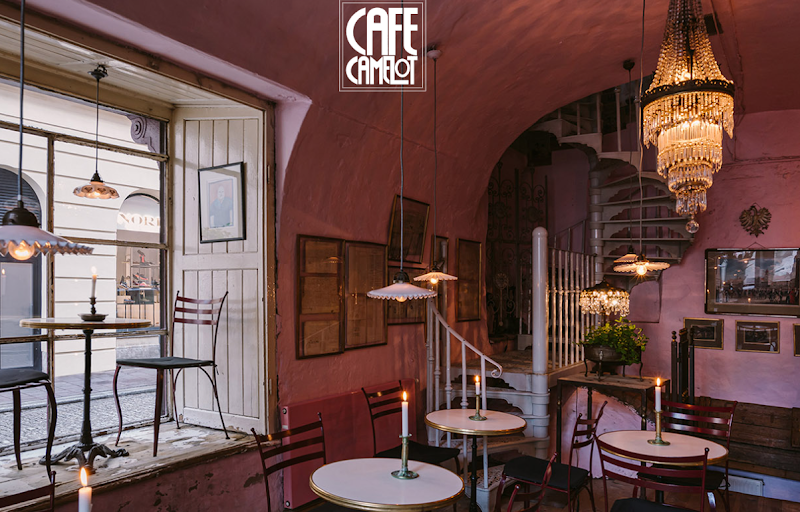
Late afternoon is the magic hour at Café Camelot, when light filters through stained-glass windows and casts warm colours across wooden furniture, old photographs, and vintage knick-knacks crowding every shelf. Tucked behind a heavy door on ulica Tomasza in Kraków's Old Town, this beloved café feels like stepping into a well-worn novel — dim, cosy, and utterly unhurried. It draws students, artists, and dreamy tourists alike, all perfectly content to nurse a drink for hours without anyone rushing them along. You must try:Kraków-style cheesecake — dense, vanilla-scented, served in a generous slice that rivals any in the cityHot chocolate — thick, velvety, and served in a stoneware mug that warms your hands as much as your insidesCinnamon apple cake — a seasonal favourite, best in autumn, often topped with a cloud of whipped cream Hours & reservations: Open daily approx. 9:00–21:00 (hours may vary); no reservations needed but expect a short queue on weekends; moderate prices around 15–30 PLN for coffee and cake; website
Address: Św. Tomasza 17, 31-022 Kraków, Poland
- Wieża Ratuszowa
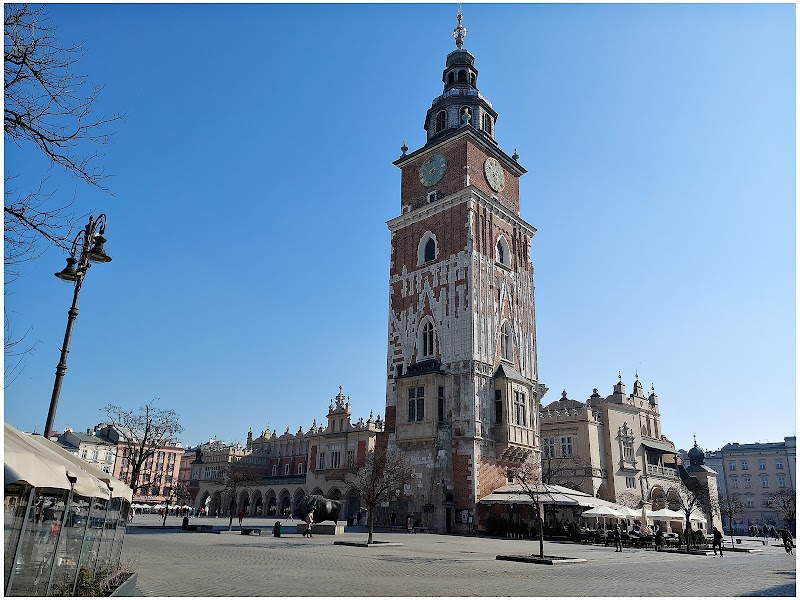
Few visitors realize that the tower presiding over Kraków's Main Market Square is actually the sole survivor of a full Gothic town hall demolished in 1820 — and that local residents fought the demolition so fiercely that workers had to halt their efforts until Austrian authorities agreed to spare at least the tower, leaving it standing alone as a monument to the city's stubborn attachment to its own past. The Town Hall Tower stands 70 meters tall and served for centuries in an entirely practical capacity alongside its symbolic one: its lower levels housed the city prison, while watchmen stationed at the summit scanned the horizon for fires and approaching enemies. The tower's visible lean — it tilts more than a meter from vertical — is the result of underground water slowly undermining its foundations over centuries, not any architectural conceit. Climbing to the top rewards visitors with one of the finest panoramas of the Market Square and the Old Town roofscape available anywhere in Kraków without a drone. Tickets & info: Standard ticket approx. 15 PLN, reduced approx. 10 PLN. Open seasonally (April–October), 10:00–18:00. Entrance from the Main Market Square. official website
Address: Rynek Główny 1, 30-001 Kraków, Poland
- Rynek Główny
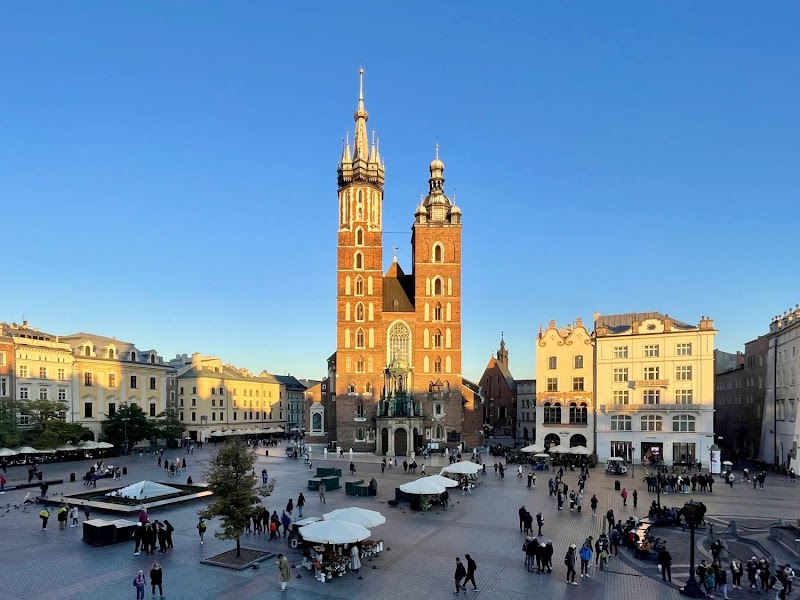
In 1241, Mongol forces under Batu Khan swept through Kraków and burned it nearly to the ground. Within just a few years, in 1257, Duke Bolesław the Chaste issued a new city charter that laid out the Main Market Square on such a bold scale that it remains to this day the largest medieval town square in Europe, covering almost 4 hectares — a deliberate act of defiance and rebirth. Walking across the square, it's almost impossible not to stop every few steps. The surrounding townhouses represent every architectural era in compressed form — Gothic, Renaissance, Baroque and Neoclassical facades stand side by side as if the centuries agreed to share a neighborhood. At the center stand the Cloth Hall, and above it all the twin towers of St. Mary's Basilica, from which the Hejnał trumpet call sounds every hour and stops abruptly mid-phrase — a tradition honoring a medieval trumpeter struck down by a Tatar arrow before he could finish the alarm. In the evenings the square transforms into something close to magical: lanterns shimmer on wet cobblestones, café terraces spill outdoors, and vendors sell the famous ring-shaped obwarzanki from their colorful carts. Tickets & info: Entry to the square is free and open around the clock. Main Market Square is the beating heart of Kraków's Old Town and the natural starting point for any visit to the city. More at: official city website
Address: Rynek Główny, Kraków, Poland
- Sukiennice
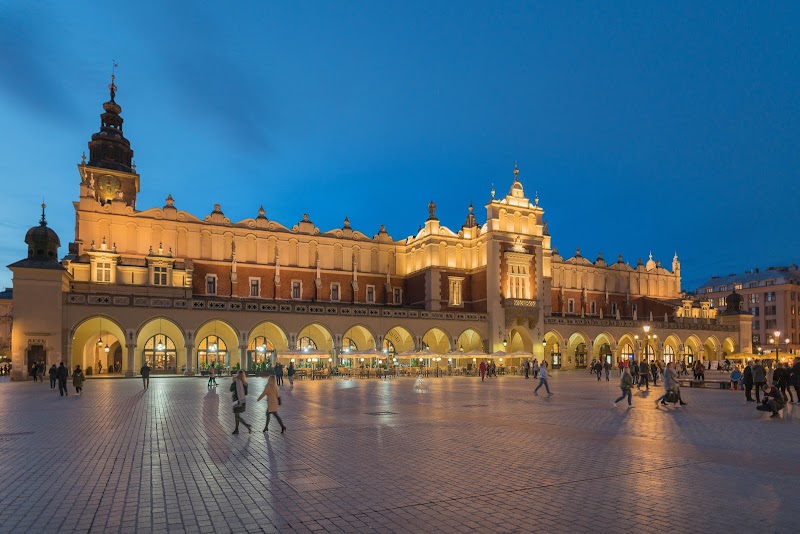
The Cloth Hall has stood at the center of the Main Market Square for over seven hundred years, making it one of the oldest shopping centers in the world still operating in its original purpose. The earliest records of a trading hall on this site date to 1257 — almost simultaneously with the founding of Kraków itself. Medieval merchants traded here in cloth, silk, and spices arriving along trade routes from the Orient, Flanders, and Ruthenia. The building's current Renaissance form dates from a 16th-century reconstruction that gave it its signature arcaded loggias and an attic parapet decorated with carved stone masks — a detail that has since become an emblem of the entire square. The upper floor houses the Gallery of 19th-Century Polish Painting, a branch of the National Museum, featuring celebrated canvases by Jan Matejko and Jacek Malczewski. The ground floor buzzes with commerce — mostly souvenirs, amber jewelry, and local crafts, though the spirit of an ancient marketplace still lingers, especially in the early morning hours before the crowds arrive. Tickets to the Gallery of 19th-Century Polish Painting cost approx. 15–20 PLN, with free entry on selected days of the week; the gallery is open Tuesday through Sunday — for current hours and details visit the National Museum in Kraków website. Entry to the ground-floor market stalls is free.
Address: Rynek Główny 3, 31-042 Kraków, Poland
- Kościół Mariacki
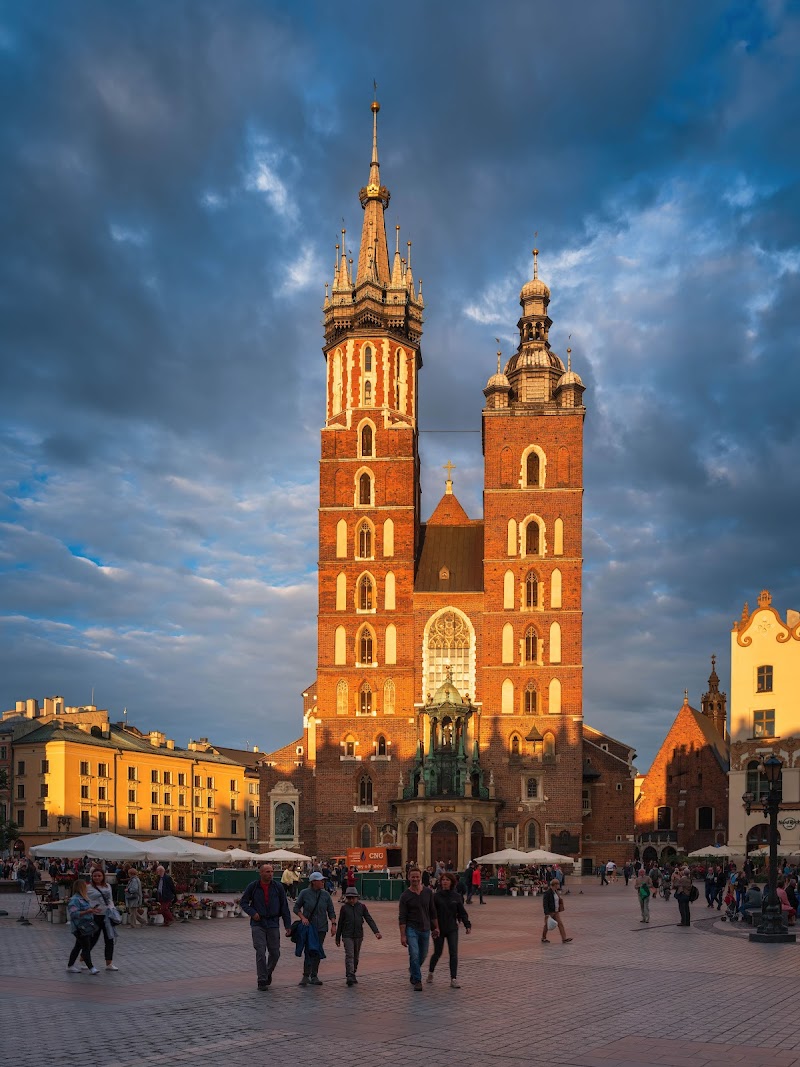
Come before eight in the morning, when the crowds are still asleep and the interior fills with quiet golden light streaming through medieval stained glass windows. St. Mary's Basilica is most famous for its trumpet call — every hour, from the taller of its two towers, a bugler plays a melody that stops abruptly in the middle of a phrase. The legend tells of a medieval watchman who managed to sound the alarm during a Tatar raid in the 13th century but was struck by an arrow before he could finish. That tradition has endured for over seven hundred years and is now inscribed on UNESCO's list of intangible cultural heritage. The basilica itself, built from the 14th century onward, is one of the most important Gothic churches in Poland — its famously asymmetrical towers (the taller at 81 meters, the shorter at 69) have for centuries been explained by a legend of two rival brothers who killed each other in jealousy over their competing work. Almost certainly apocryphal, yet the knife said to belong to one of them still hangs at the church entrance. Highlights:The Veit Stoss Altarpiece — a late-Gothic pentaptych completed in 1489, measuring 13 meters tall and 11 meters wide, considered a masterpiece of European wood sculptureThe 14th- and 15th-century stained glass windows in the chancel, flooding the interior with richly colored, diffused lightThe bugler's tower, open for visits on selected dates — the view over the Main Market Square from that height is unforgettableTickets & info: Tourist admission approx. 10–15 PLN; the basilica is open to visitors outside of Mass times. Free entry during services. Details at: official St. Mary's Basilica website
Address: plac Mariacki 5, 31-042 Kraków, Poland
- Park Planty
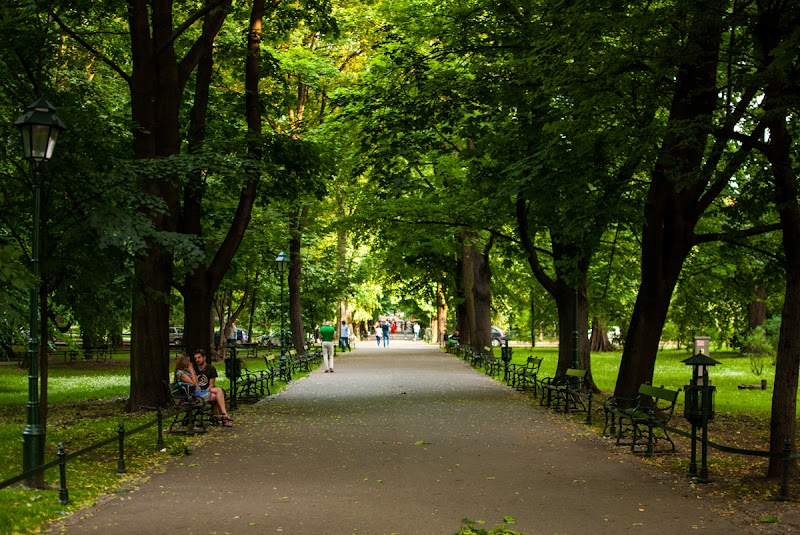
Kraków's Planty gardens offer one of the most enjoyable urban walks in Central Europe: a four-kilometer loop of shaded paths that traces the exact outline of the medieval city walls, circling the entire Old Town in a single, unhurried stroll. The park was laid out between 1822 and 1830 on the site of Kraków's demolished fortifications and filled-in moats. Rather than leaving a scar where the old walls had stood, the Austrian authorities made what turned out to be an inspired civic decision: they planted lime trees, chestnuts, and elms, laid winding alleys between lawns, and dotted the green ring with fountains and benches. The result is one of the finest nineteenth-century urban parks in Poland, a place where the city's social life plays out in public view — students reading under the chestnut canopy, elderly residents with their morning newspapers, tourists consulting maps, and children feeding pigeons near the fountain squares. The park is free and open around the clock throughout the year. The finest stretch runs from the Barbican southward toward Wawel, passing old towers, literary monuments, and vine-covered walls. For more about the park's history, visit the official City of Kraków website.
Address: 31-041 Kraków, Poland
- Katedra Wawelska
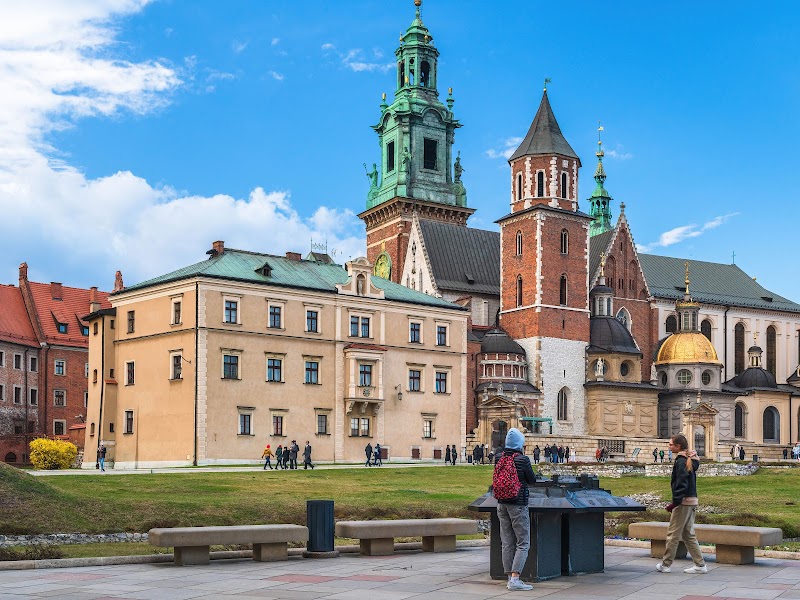
Wawel Cathedral, formally dedicated to Saints Stanislaus and Wenceslaus, was built in three distinct phases over more than four centuries — the current structure, consecrated in 1364, is already the third church erected on this site, and its foundations literally rest on the ruins of its predecessors. What sets Wawel Cathedral apart from hundreds of other Gothic churches across Europe is that it served simultaneously as the coronation church, the royal mausoleum, and the devotional heart of an entire nation. Nearly all Polish kings are buried here, in richly decorated chapels added by successive dynasties as private mausoleums. The Sigismund Chapel, built between 1519 and 1533 by Italian architect Bartolomeo Berecci, is considered the finest example of Renaissance architecture north of the Alps — its gilded dome gleams above the Wawel hilltop like a beacon visible from across the city. In the crypt below, alongside the royal tombs, rest the coffins of Tadeusz Kościuszko, Józef Piłsudski, and President Lech Kaczyński with his wife Maria. Three things absolutely worth seeking out are the Sigismund Bell in the tower — one of the largest bells in Poland, rung only on the most exceptional occasions — the breathtaking Sigismund Chapel, and the royal crypt beneath the chancel. Tickets & info: Entry to the main nave is free; tickets for the tower with the Sigismund Bell, treasury, and crypt cost approx. 12–20 PLN. Open daily, with hours varying by season and church services. Details at: official Wawel Cathedral website
Address: Zamek Wawel, 31-003 Kraków, Poland
- Wawel
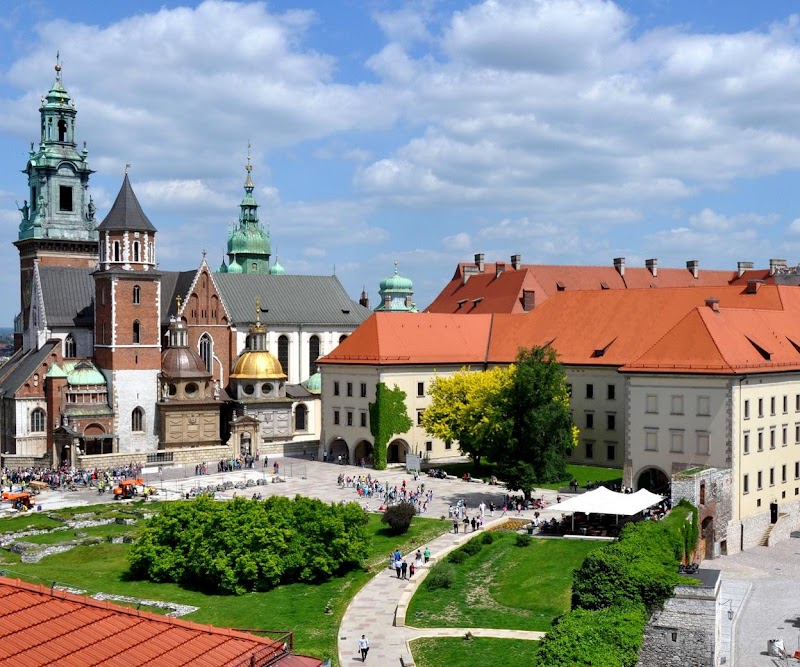
There is something arresting about the way Wawel rises above Kraków — literally and figuratively. The limestone hill, standing 28 meters above the Vistula, smells of damp ancient walls, resonates with footsteps on polished cobblestones, and overwhelms with sheer presence. This is not a single place but an entire city within a city, where every building conceals a different era, a different story, a different tragedy or triumph. For more than five hundred years Wawel served as the seat of Polish kings. It was here that rulers were crowned, dynastic alliances forged, and decisions made that shaped the fate of Central Europe. When the royal court relocated to Warsaw in the seventeenth century the castle fell into decline, and under the Austrian partition parts of it were converted into barracks. The restoration of Wawel became a symbol of Polish national identity — which is why the return of its famous tapestries or the repatriation of artworks has always carried an emotional weight far exceeding their material value. Highlights:The Royal Chambers, home to an extraordinary collection of Flemish tapestries commissioned by King Sigismund Augustus — one of the largest such collections in the worldThe Crown Treasury, housing remnants of the royal regalia including the 13th-century Szczerbiec, the coronation sword of Polish kingsDragon's Den, the legendary cave at the base of the hill, complete with a fire-breathing dragon sculpture at the entranceTickets & info: Ticket prices vary by exhibition (approx. 10–30 PLN each); the courtyard is free to enter. Ticket office hours are seasonal. Details at: official Wawel Royal Castle website
Address: Wawel 5, 31-001 Kraków, Poland
- Smocza Jama
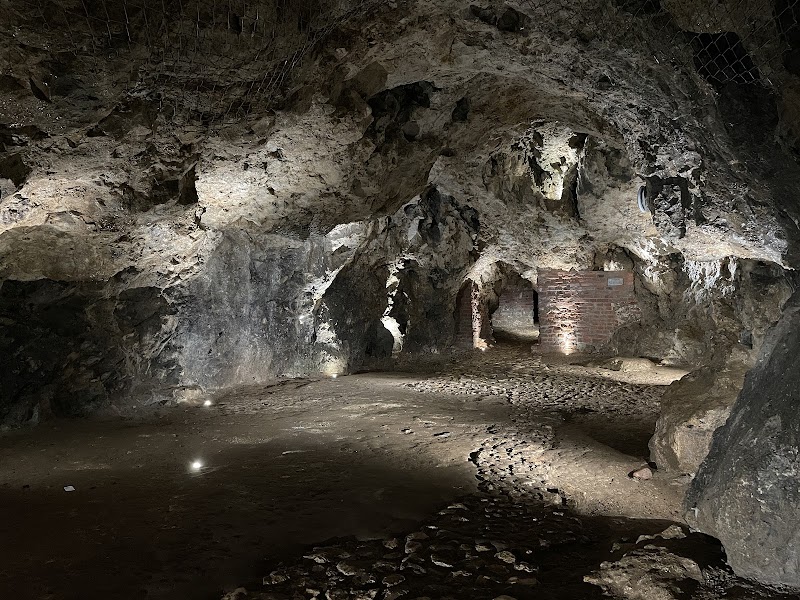
Smocza Jama — Dragon's Den — is a natural karst cave at the foot of Wawel Hill, formed by underground waters cutting through limestone over millennia. It has been documented since at least the Middle Ages, when it gave rise to Kraków's most beloved legend: the Wawel Dragon, slain not by a knight but by a clever cobbler's apprentice named Skuba who stuffed a lamb with sulphur. What sets this cave apart from similar natural attractions is its seamless fusion of geology and living mythology. The tunnels stretch over 270 metres, keeping a cool, constant temperature year-round, and the dim lighting enhances the sense of descending into something ancient and untamed. Over the centuries the cave served variously as a storage cellar, a shelter, and even a tavern — layers of history embedded in every rock face. The highlight awaiting visitors at the river exit is the fire-breathing steel dragon sculpted by Bronisław Chromy, which has become one of Kraków's most photographed landmarks. Don't miss the limestone formations in the tunnels, the sweeping Vistula riverside panorama from the terrace, and the dragon sculpture that breathes real fire every few minutes. Tickets & info: Entry is approximately 9 PLN (standard) and 7 PLN (reduced); the cave is open seasonally from April to November, roughly 10:00–17:00 (until 19:00 in peak summer). The dragon sculpture outside is freely accessible year-round. official website
Address: Wawel 5, 31-001 Kraków, Poland
- Wały Wisły (bulwary)
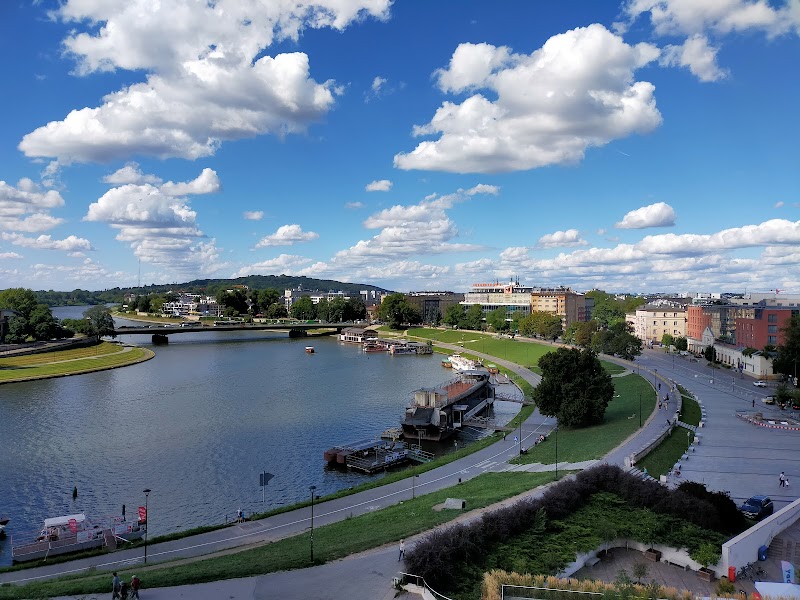
The Vistula Boulevards shift personality with every season — in winter a frost-quiet promenade with the mist-wrapped silhouette of Wawel hanging above the river; in spring filling almost overnight with runners and cyclists; in summer becoming an unofficial urban beach of container bars and sprawling picnic crowds; and in autumn returning to golden, unhurried afternoons. No other stretch of Kraków shows you so plainly what the Vistula means to the people who live alongside it — not backdrop, but centre of gravity. The riverside walkways running along both banks of the Vistula for several kilometres from Wawel toward Dębniki and Ludwinów have been gradually redeveloped since the early 2000s, but they remain, beneath their new cafés and amphitheatres and murals, what they always were: flood embankments. The great flood of 1997, which inundated much of Podgórze, reminded the city that the river has its own logic. That tension between engineered infrastructure and living waterway is still there if you look for it — in the low concrete walls, the gentle slope of the banks, the occasional memorial marker. On summer evenings, though, with barge cafés lit up and guitars playing somewhere nearby, the engineering disappears entirely. Practical info: open 24 hours, free access; best in summer and early autumn; walk from below Wawel Castle or cycle along the dedicated bike path on either bank; official website
Address: bulwar Czerwieński, 33-332 Kraków, Poland
- Miód Malina
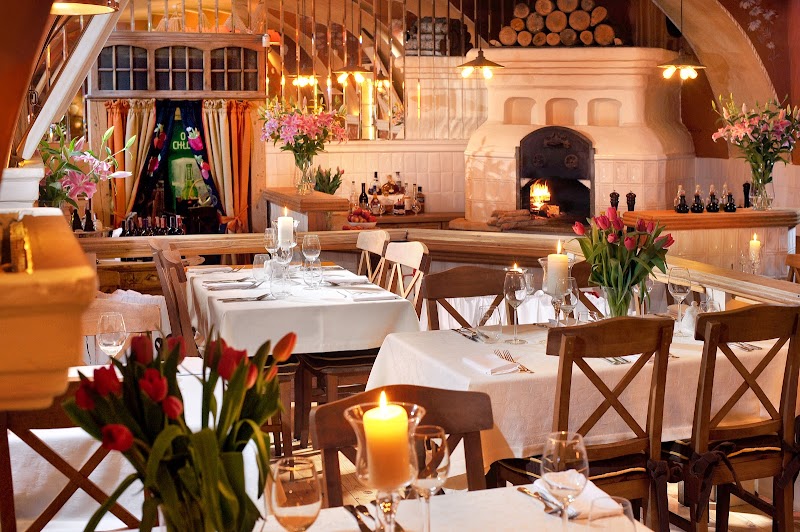
Miód Malina is best visited in the early evening, when warm amber light filters through the wide windows and catches the old timber beams overhead — the dining room on Grodzka Street feels like a Polish country inn that someone has tastefully refined, stripping away any kitsch and keeping only the charm. The mood is convivial and just a little intimate, with the hum of conversation at neighbouring tables adding life without overwhelming. You must try:Honey-and-raspberry pork ribs — the house signature, slow-roasted until falling tender with a glaze that balances sweet and smoky beautifully.Red borscht with dumplings — served with understated elegance, the kind of bowl that earns its place on a cold Kraków evening.The daily specials board — the kitchen follows seasonal produce closely, so it's always worth asking your server what's freshest.Hours & reservations: Open daily; reservations are strongly recommended on weekends and throughout summer; mid-to-upper price range — book a table and check current hours at the restaurant's website.
Address: Grodzka 40, 31-044 Kraków, Poland
- Pod Aniołami
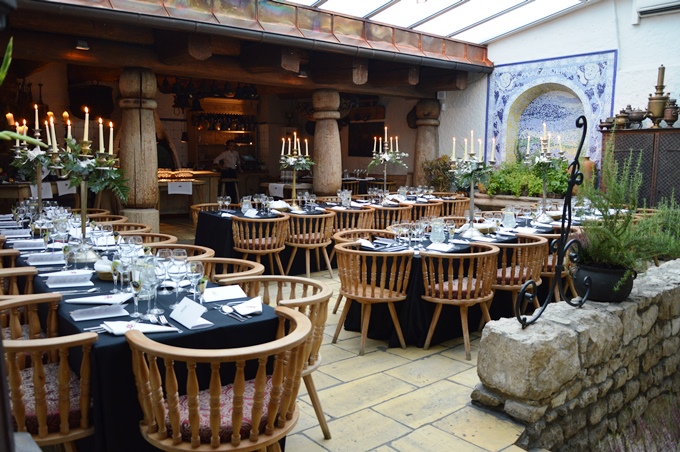
Pod Aniołami has been drawing guests to its address on ulica Grodzka for years, and it has earned its reputation the old-fashioned way — through consistency, atmosphere, and food that genuinely reflects its roots. The setting is extraordinary: vaulted Gothic cellars carved from stone, candlelit and cool, with the kind of hush that makes conversation feel more important. The family who runs the restaurant has spent decades shaping their own thoughtful version of Małopolska and Old Polish cuisine, and it shows in every detail of the experience. The menu is full of confident classics — żurek served inside a hollowed loaf of bread, duck breast glazed with plum sauce, beef tenderloin with a sharp horseradish cream — all prepared with technique that respects the original rather than reinventing it unnecessarily. Live folk music some evenings adds to the sense of a proper, unhurried feast. Reservations are strongly advised, particularly during peak tourist season; the restaurant is open daily from around 13:00 to 23:00, with prices running approximately 60–150 PLN per person — full details at the restaurant's website.
Address: Grodzka 35, 31-001 Kraków, Poland
About this plan
Kraków – a royal city that never lost its lustreKraków is one of those rare European cities that survived the centuries largely intact – and you can feel it at every turn. The medieval Main Market Square, Gothic churches, a Renaissance castle on the hill, and a dense web of historic streets create a place where history isn't a reconstruction but a living reality. For over five centuries the former capital of Poland was the country's political, cultural, and spiritual heart – and to this day it carries that legacy with natural dignity.How our plan helps you discover KrakówPlanning a visit to a city as rich as Kraków can quickly become overwhelming – too much to see, too little time, too easy to waste kilometres walking between poorly sequenced stops. Our one-day plan takes you through the city in a carefully considered order, cutting out wasted time and navigational chaos. Every attraction comes with a description that explains what you're looking at and why it matters – so you don't just see facades, but understand what lies behind them. The plan also includes hand-picked places to eat, shielding you from the tourist traps that cluster around the city centre.Who is this plan for?This plan was designed for people who want to experience Kraków properly – not just tick off a list. It's an ideal choice for visitors with a single day who don't want to leave feeling like they missed something important. If you value independence but also care about depth and making the most of your time, our plan will be your best companion for discovering one of the most beautiful cities in Europe.