A journey following the traces of the history of Poznań and the beginnings of the Polish state leads through the city’s space, where the oldest history of Poland meets the experiences of subsequent eras – from the early Middle Ages, through the partitions, up to the dramatic events of the 20th century. The route presents Poznań as one of the most important places in the country's history – a city where the Piast state was born, Polish culture developed under the partitions, and in modern times, the inhabitants repeatedly bore witness to the struggle for freedom.
Plan details
- City: Poznan
- Number of days: 3
- Number of places: 52
Itinerary
Day 1
- Ghiacci Cafe
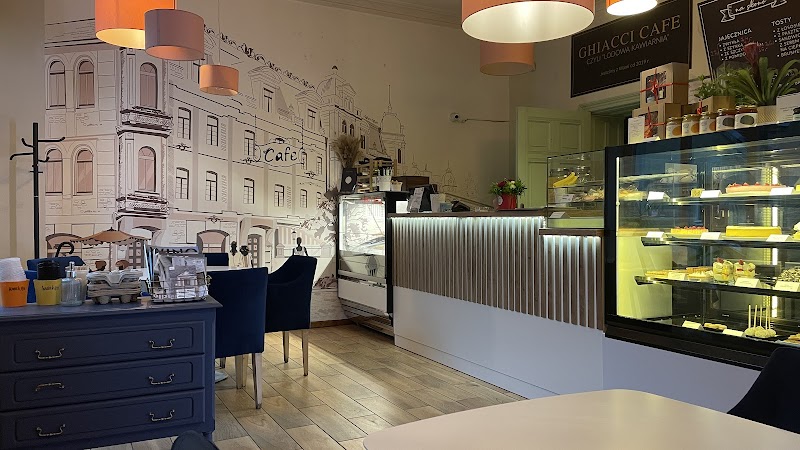
Address: Bydgoska 2, 61-127 Poznań, Poland
- Mural Śródka
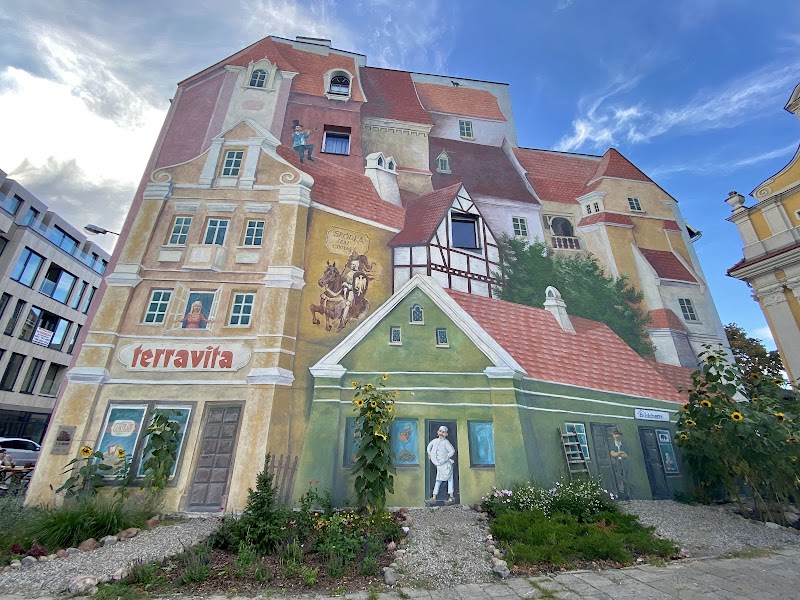
Śródka Mural is one of Poznań’s most iconic pieces of street art, located near Bishop Jordan Bridge in the Śródka district. Created in 2015, it depicts an illusion of historic townhouses and former residents of the area. Thanks to its striking 3D effect, the mural appears almost lifelike.Among the details, visitors can spot a trumpeter, a butcher, a cat sitting on a windowsill and various architectural elements from the past. The mural has become a symbol of Śródka’s revitalisation, transforming the district into a vibrant and artistic neighbourhood.
Address: Śródka 4, 61-125 Poznań, Poland
- Brama Poznania
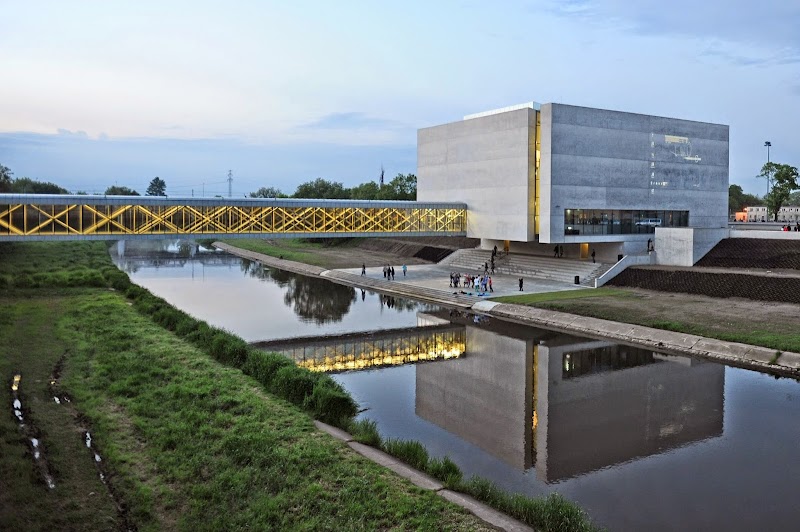
Brama Poznania ICHOT (Interactive Centre for the History of Cathedral Island) is a modern heritage interpretation centre that tells the story of the early Polish state and the history of Ostrów Tumski, Poznań’s oldest district and one of the most historically significant places in Poland. Instead of traditional museum displays, the centre uses multimedia, lighting, and audio guides to present history in an engaging and accessible way.The centre’s design frames views of Cathedral Island and the river, and the visit is divided into two parts: a multimedia exhibition inside the minimalist building and an audio-guided walk around the island and the cathedral, available in multiple languages.Throughout the year, Brama Poznania also hosts workshops, temporary exhibitions, educational events, and family programmes, making it a dynamic cultural venue that combines history, learning, and relaxation by the riverside.🎫 Tickets & Practical InfoEntry to the main exhibition is ticketed and scheduled in sessions approximately every 20 minutes; it’s recommended to book tickets online at 🌐 www.bilety.bramapoznania.pl.Tickets include options for adults, reduced (e.g., students, seniors), and family tickets; there are often Happy Hour discounted tickets later in the day.A ticket usually also entitles you to a free audio tour of Cathedral Island within 10 days of your visit.The centre accepts the Poznań Tourist Card for ticket discounts.Brama Poznania is generally open Tuesday to Sunday, with occasional planned closures for maintenance.
Address: Gdańska 2, 61-123 Poznań, Poland
- Cathedral Lock
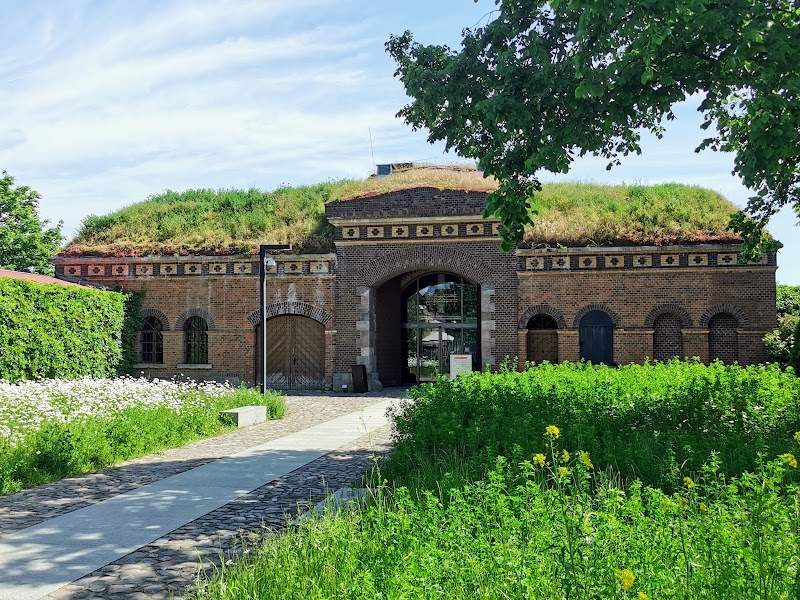
The Cathedral Lock (Śluza Katedralna) is a unique piece of military architecture and a key component of the Poznań Fortress, built by the Prussians in the 1830s. Originally, it functioned as a weir on the Cybina River, designed to flood the fortress's foreground during an attack to hinder enemy access. Today, it remains the best-preserved hydrotechnical military structure in the city. Following extensive revitalization, the lock now serves as a bridge between the modern ICHOT Gate of Poznań building and the historic Cathedral Island. Its raw brick interiors are used as an exhibition space where military history meets contemporary art and education.
Address: Dziekańska 1, 61-108 Poznań, Poland
- Most Biskupa Jordana
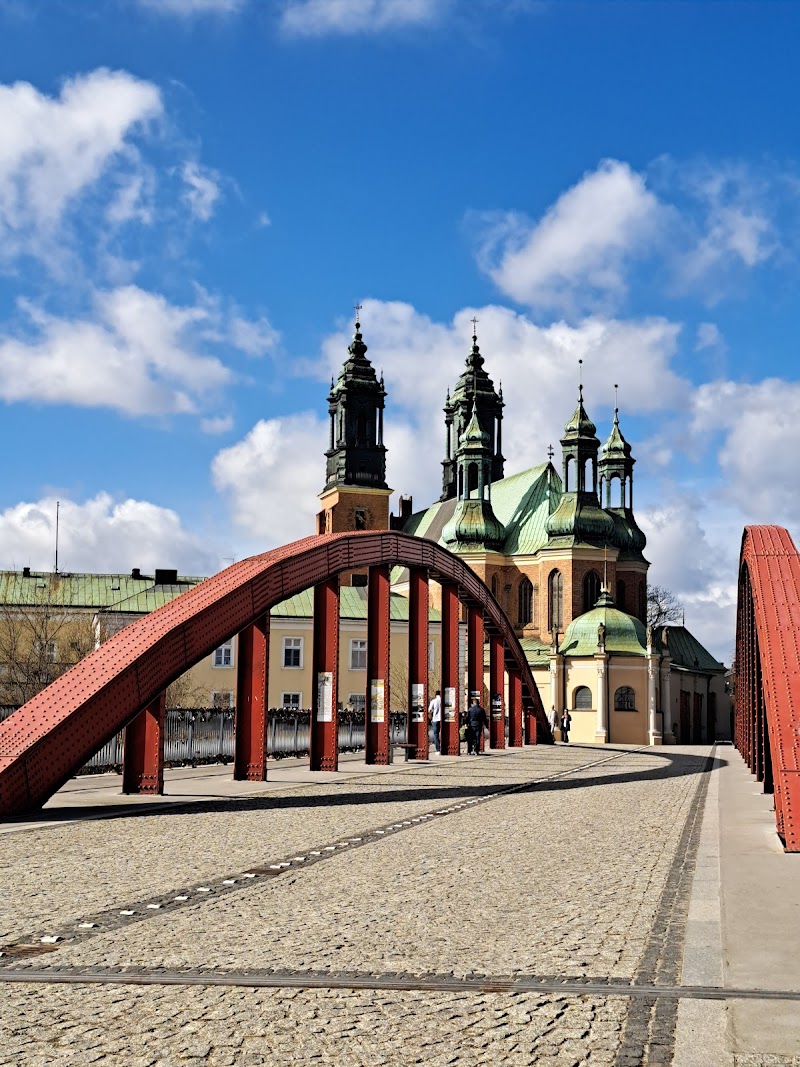
Address: most Biskupa Jordana, 61-001 Poznań, Poland
- Psałteria
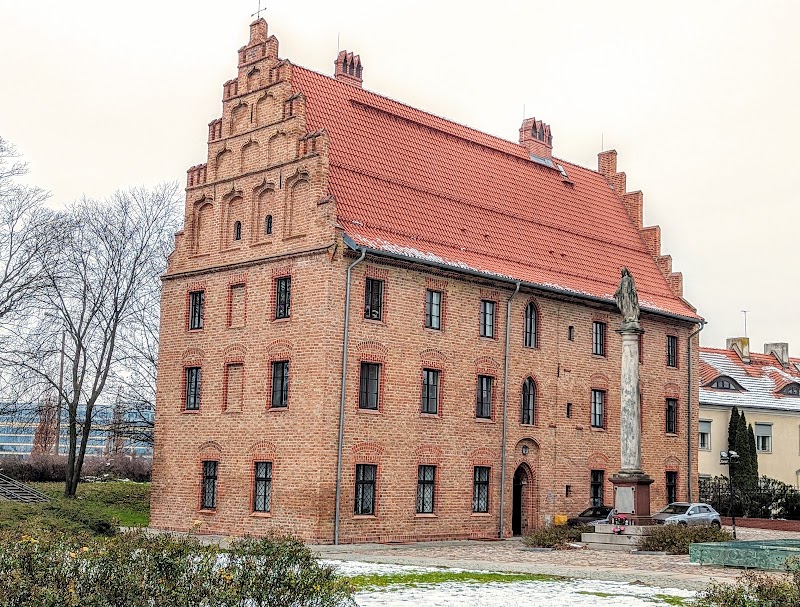
The Psaltery is an architectural gem of Ostrów Tumski, located opposite the Church of the Most Holy Virgin Mary. This brick building with its distinctive stepped gable was erected in the early 16th century, funded by Bishop Jan Lubrański. It originally served as a residence for the college of psalmodists – twelve clergymen whose sole duty was to continuously chant psalms in the cathedral, day and night. The building has survived numerous fires and wars, maintaining its raw, Gothic form, which continues to impress with its proportions and masterful brick decoration.
Address: Ostrów Tumski 9, 61-001 Poznań, Poland
- Bazylika Archikatedralna św. Apostołów Piotra i Pawła
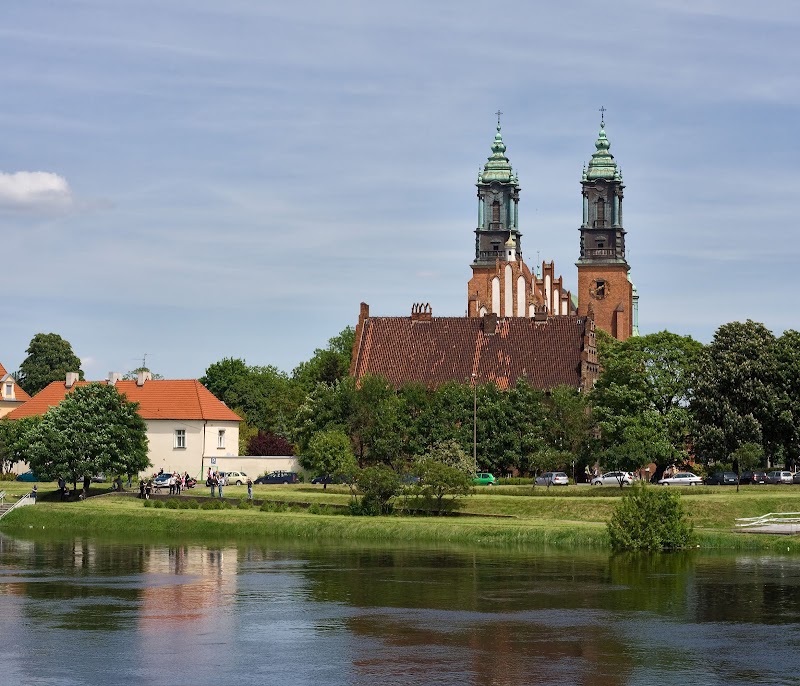
The Archcathedral Basilica of St. Peter and St. Paul in Poznań is the oldest cathedral in Poland, with origins dating back to around 968–970 AD, shortly after the establishment of the Polish state. It stands on Ostrów Tumski, a historic island where Poland’s first bishopric was established and where key early state structures emerged. Over more than a millennium, the cathedral underwent numerous reconstructions: from an early pre-Romanesque basilica to a Romanesque church and later a Gothic structure, much of which survives in the current building. After heavy damage during World War II, the church was restored incorporating surviving medieval Gothic elements. The cathedral played a significant role in Polish history, hosting royal coronations, ducal weddings, and stately burials. In the Golden Chapel are sarcophagi believed to hold relics of early Piast rulers, and archaeological excavations in the crypts have uncovered remains of Poland’s first rulers, including Mieszko I and Bolesław Chrobry. Inside, the basilica houses remarkable sacred art, including Gothic altarpieces, Renaissance tombs, Baroque altars, and colorful stained glass. In 1962, Pope John XXIII elevated the cathedral to the rank of a minor basilica in recognition of its religious and historical importance.
Address: Ostrów Tumski 17, 61-001 Poznań, Poland
- Archeological Reserve Genius Loci
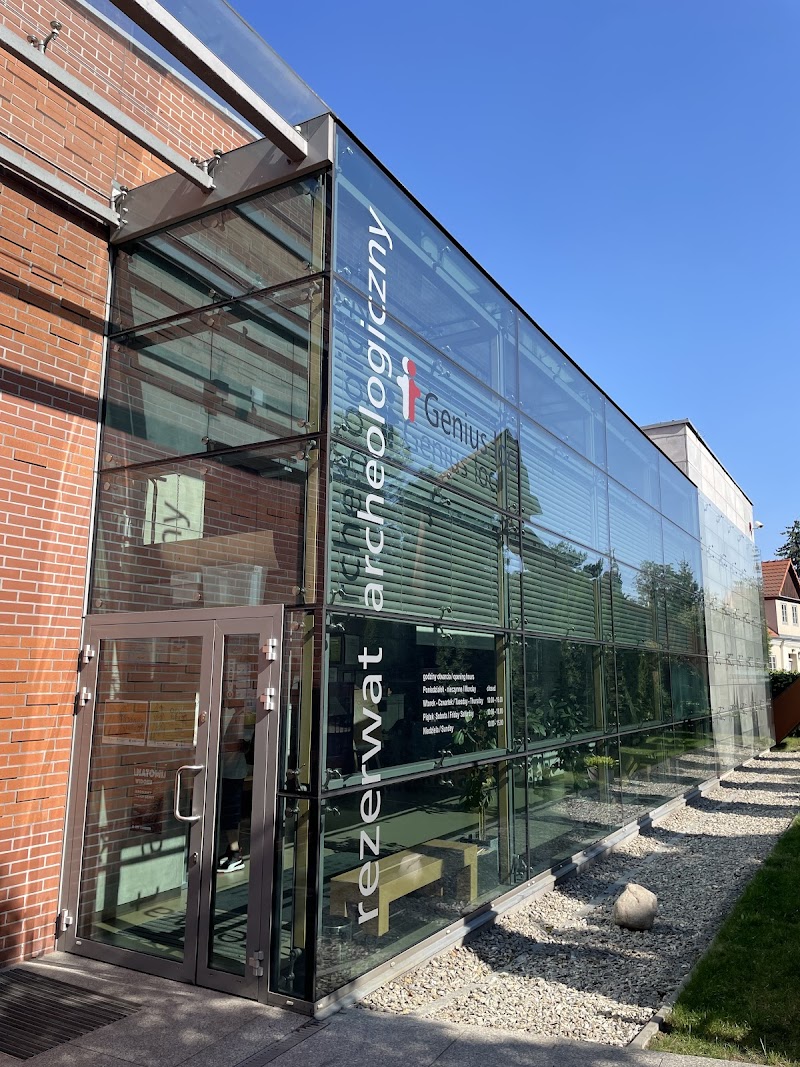
The Genius Loci Archaeological Reserve is a modern museum facility that showcases the best-preserved fragments of early medieval Poznań's fortifications. Built on the site where massive 10th-century ramparts of Mieszko I's stronghold were discovered, the museum combines authentic excavations with multimedia displays. It offers a deep dive into the construction techniques of the stronghold that served as a central hub for the emerging Polish state.Key HighlightsOriginal Stronghold Ramparts – a monumental wood, stone, and earth structure from the 940s. Its scale (11 meters high) reflects the power of the early Piast dynasty.Lubrański Wall – fragments of 16th-century brick fortifications showing the evolution of defensive systems over the centuries.3D Cinema – an introductory film detailing the history of Cathedral Island, providing context for the archaeological finds.Interactive Displays – holograms and multimedia kiosks that reconstruct the medieval stronghold and the daily lives of its inhabitants.Admission: Entry to the permanent exhibition is free on Sundays. On other days, paid tickets are available, often as part of a combined pass with the ICHOT Gate of Poznań.
Address: Księdza Ignacego Posadzego 3, 61-108 Poznań, Poland
- Nowa Synagoga w Poznaniu
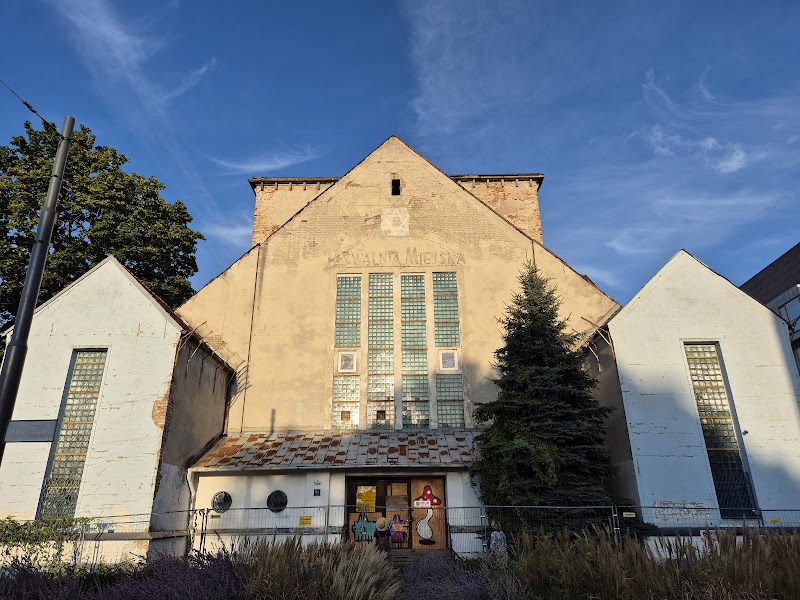
The New Synagogue on Stawna Street is one of Poznań's most distinctive yet tragic landmarks. Opened in 1907 as a monumental temple with a massive dome, it could accommodate 1,200 worshippers and symbolized the grandeur of the Poznań Jewish community. During WWII, the Nazis devastated the interior and converted the synagogue into a swimming pool for Wehrmacht soldiers, completely stripping it of its sacred character and original architecture. For decades after the war, the building continued to function as a municipal pool, becoming a painful symbol of the erased history of Poznań's Jews.Today, the building stands empty, stripped of its dome and original decorations, awaiting revitalization. While it is not open for regular tours, its stark silhouette remains a vital point on the city's map of memory, serving as a reminder of Poznań's multicultural past.What is worth seeingThe building's facade – though altered, it still reveals its former monumentality and Neo-Romanesque-Moorish style.Commemorative plaque – located on the wall, it details the building's original purpose and the fate of the city's Jewish population.District context – the synagogue sits on the edge of the former Jewish quarter, near the old city walls.Practical information The interior is currently closed to the public (projects for its future redevelopment are underway). It can only be viewed from the outside during a stroll around the Old Market Square and Stawna Street. It is a key stop on the Jewish heritage trail in Poznań.
Address: Wroniecka 17, 61-763 Poznań, Poland
- Proserpine Fountain
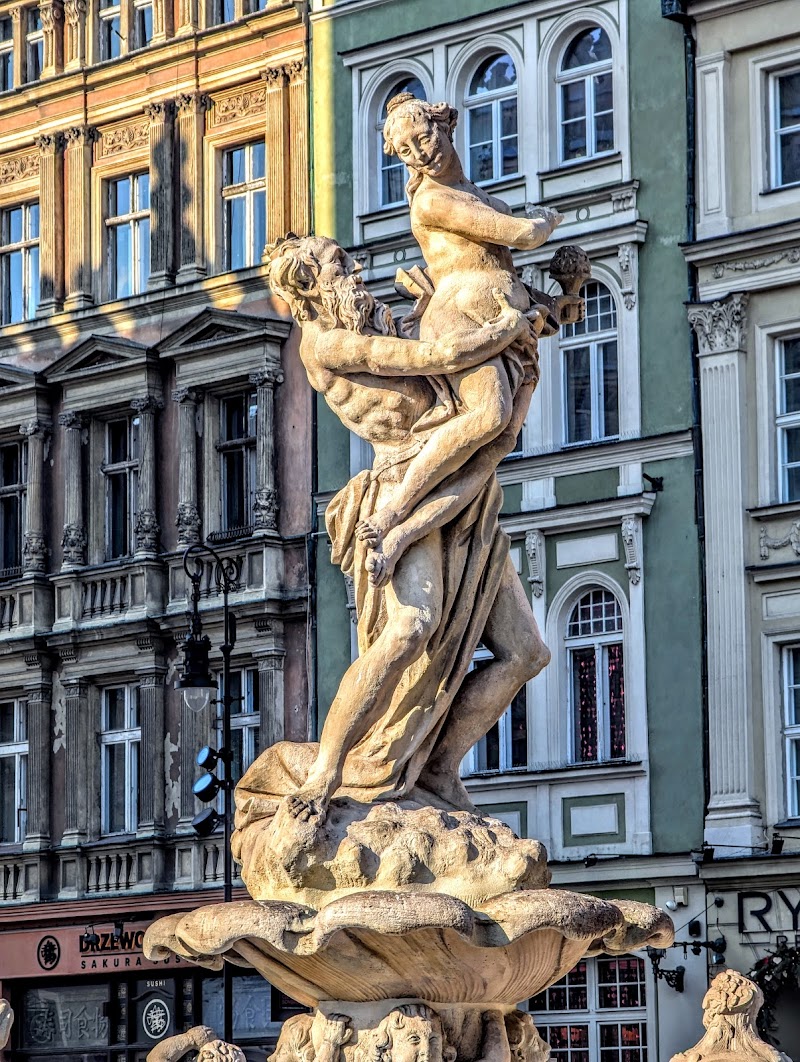
The Proserpina Fountain is located in the north-eastern corner of Poznań’s Old Market Square (Stary Rynek). It was unveiled in 2004 as the final element of the four corner fountains that revive the historic tradition of decorative municipal wells and introduce classical mythology into the market square.The sculpture was created by Marian Konieczny. The central figure is Proserpina (Persephone), the Roman goddess of vegetation, rebirth, and the cycle of the seasons. According to mythology, her annual descent into the underworld and return to the earth symbolized death and renewal, making her a powerful metaphor for nature’s continuous transformation.The statue stands atop an octagonal stone well, matching the visual style of the Apollo, Mars, and Neptune fountains. Compared to the other, more dynamic figures, Proserpina’s form conveys a sense of calm, balance, and cyclical harmony, adding a softer, contemplative tone to the Old Market Square.
Address: Stary Rynek, 60-101 Poznań, Poland
- Bamberka Monument
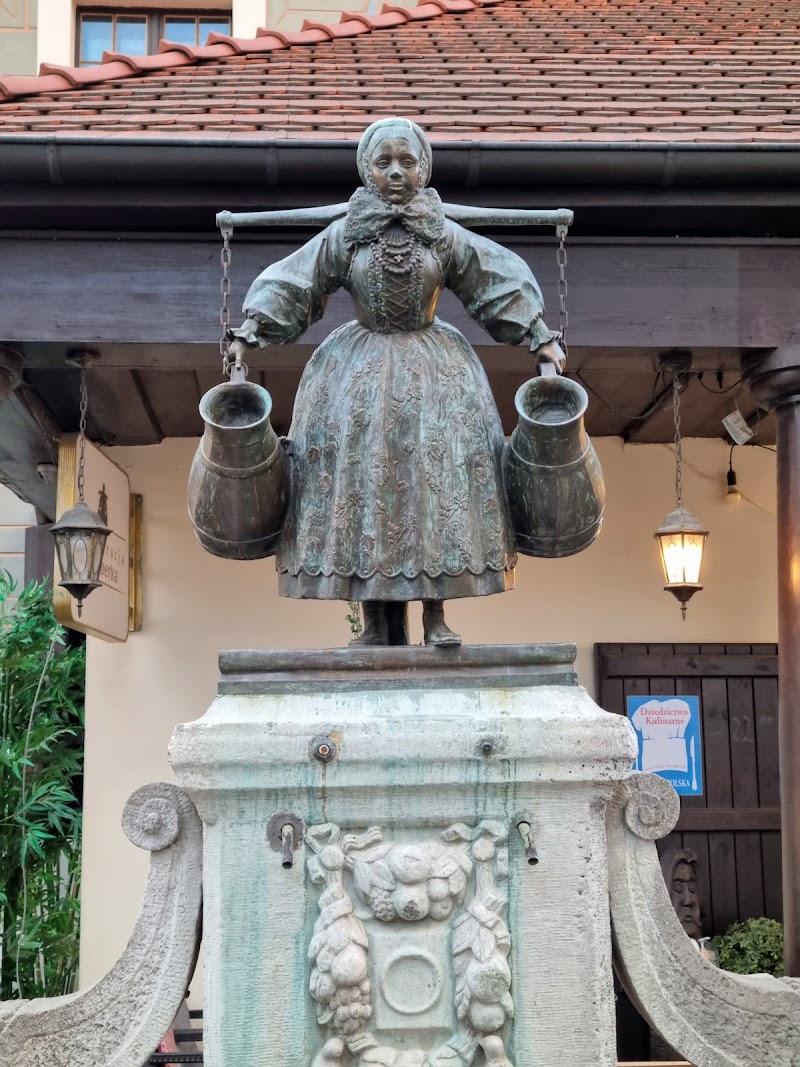
The Bamberka Well is a small but highly significant fountain-monument commemorating the arrival of settlers from the Bamberg region (known as the Bambrzy) to Poznań in the 18th century. The sculpture depicts a woman in traditional, colorful Bamberg attire, carrying two water yokes with containers (known as konwie) on her shoulders. The monument symbolizes the successful assimilation of the Frankonian settlers, who significantly influenced the city's agriculture and culture, becoming an integral part of Poznań's identity. Created in 1915 by Josef Wackerle, the model for the statue was Jadwiga Gadziemska, an employee of the Goldenring winery.
Address: Stary Rynek, 61-001 Poznań, Poland
- Restauracja Bamberka
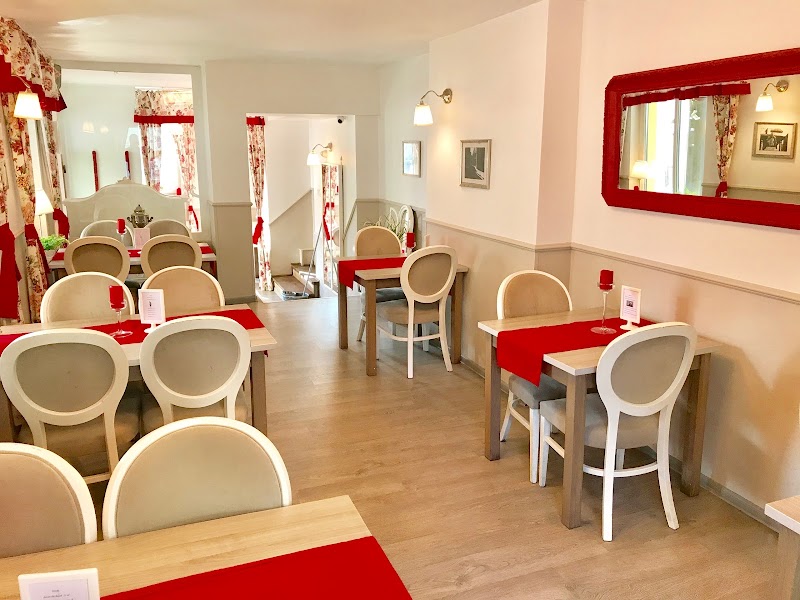
Bamberka Restaurant is a place with a rich tradition, operating continuously since 1972. The name and location of the restaurant are inextricably linked to the neighboring symbol of the city – the Bamberka Well. Located in the heart of the Old Market Square, next to the Town Hall, it offers guests an authentic journey through the flavors of Greater Poland. The interiors blend the atmosphere of old Poznań with modern touches – while the cellar maintains a traditional, slightly heavier decor, the ground floor is bright and contemporary. It is a perfect spot for both tourists wanting to try local cuisine and residents celebrating family occasions.What is worth eatingPoznań-style Duck – an absolute classic: roasted duck served with homemade yeast dumplings (pyzy) and red cabbage.Pyra z gzikiem – a simple yet iconic regional dish: boiled potato with seasoned cottage cheese.Bamber-style Sour Rye Soup (Żurek) – thick, aromatic soup served in a crispy bread bowl.Czernina with noodles – a traditional duck blood soup, rare to find, prepared here according to an old recipe.Grey Noodles with Cabbage – regional potato noodles served with fried sauerkraut.Website:www.bamberka.com.pl
Address: Stary Rynek 2, 61-772 Poznań, Poland
- Mars Fountain in Poznań
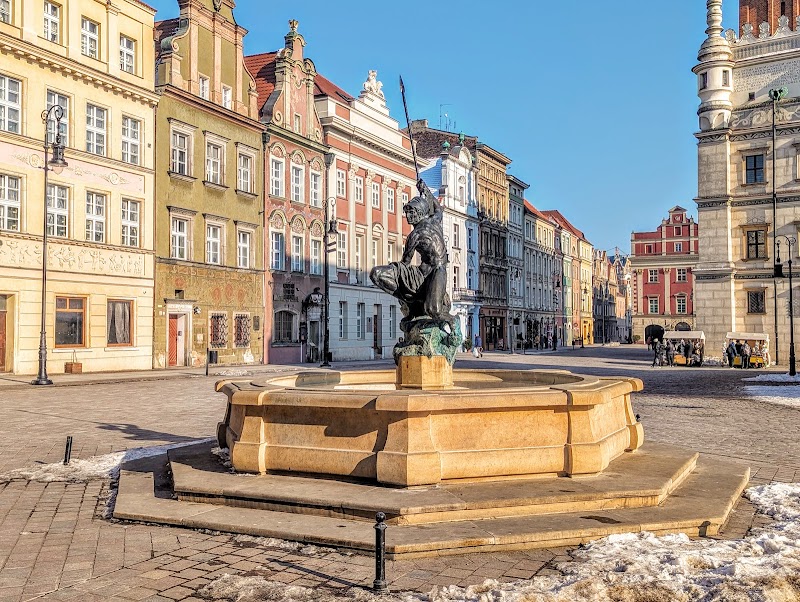
The Mars Fountain is located in the south-western corner of Poznań’s Old Market Square (Stary Rynek). It was unveiled in 2002 as part of a set of four corner fountains inspired by historic 17th-century wells that once served both practical and decorative roles in the market square.The fountain was designed by Marian Konieczny, a renowned Polish sculptor. Its focal point is a bronze statue of Mars, the Roman god of war, strength, and courage. The dynamic figure, depicted with a helmet and shield, symbolizes military power and bravery, while also reflecting Poznań’s long and often turbulent history shaped by armed conflicts.The statue stands atop an octagonal stone well, matching the design language of the other three market square fountains — Apollo, Neptune, and Proserpina. Together, they form a coherent artistic ensemble that blends classical mythology with contemporary urban sculpture.
Address: Stary Rynek, 60-995 Poznań, Poland
- Museum of the History of Poznań
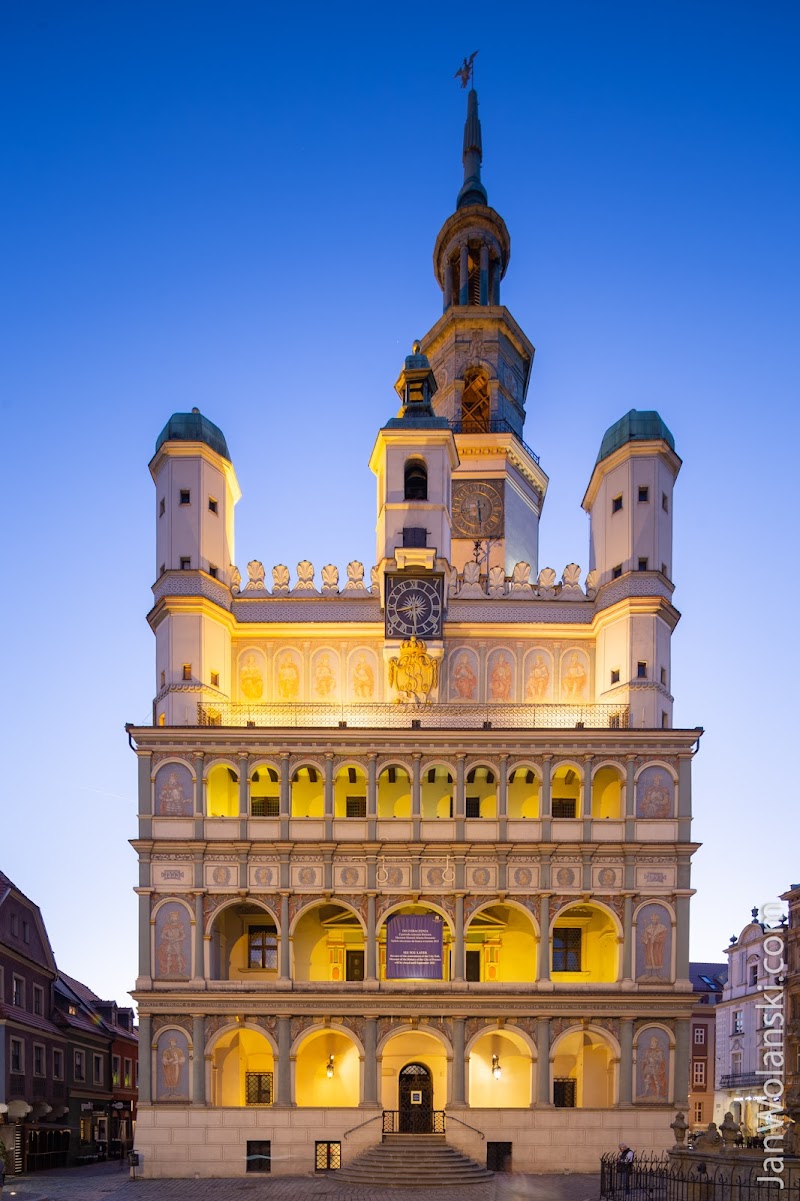
The Museum of the History of the City of Poznań is located in the very heart of the Old Market Square, within the interiors of the monumental Renaissance Town Hall. It is a place where the city's history comes alive amidst richly decorated halls, the most famous of which—the Great Hall (Renaissance Hall)—stuns visitors with its coffered ceiling dating back to 1555. The exhibition guides visitors through the history of Poznań from the Middle Ages to the present day, showcasing ancient crafts, mementos of burgher families, and a unique "behind-the-scenes" look at the famous clock with mechanical goats. A visit here is not just a history lesson, but above all, an encounter with world-class architecture that has survived for centuries as a symbol of the city's pride and wealth.What is worth seeingThe Great Hall – one of the most beautiful Renaissance interiors in Northern Europe, featuring original decorations.The Goat Mechanism – in the museum, you can see the historic mechanisms that once operated the famous Poznań mechanical goats.Entry to the museum is ticketed. On selected days (usually Tuesdays), admission to permanent exhibitions is free – it is worth checking the current schedule on the website: 🌐 www.mnp.art.pl
Address: Stary Rynek 1, 61-768 Poznań, Poland
- Merchants' Houses
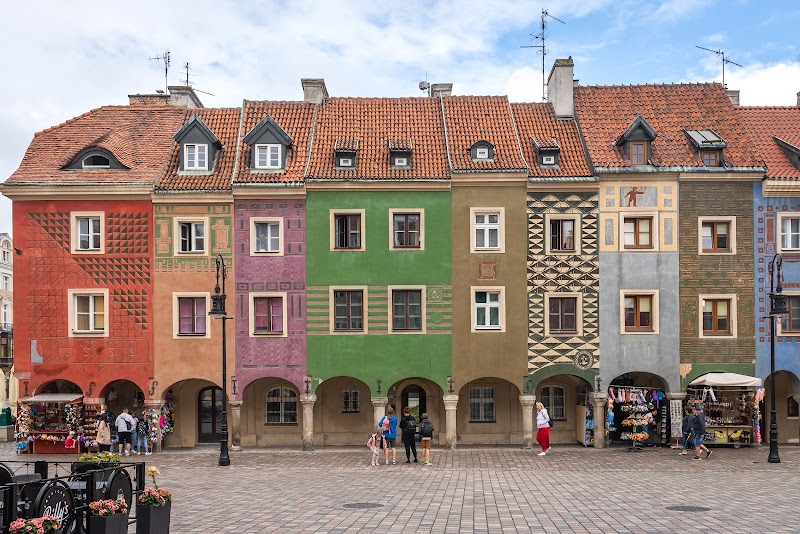
The Domki Budnicze are a distinctive and historically significant group of buildings on the Old Market Square (Stary Rynek) in Poznań, reflecting the city’s medieval commercial heritage. The site originated in the 13th century with simple wooden stalls where locals traded herring, salt, candles, torches, and other everyday goods.In the 16th century, these wooden booths were replaced by narrow brick townhouses featuring Renaissance-style arcades supported by slender sandstone columns, with living quarters above and shops below. One column on house no. 11 bears the date 1535, and the group of houses is closed to the south by a 1538 townhouse known as the City Chancellery or House of Scribes, historically the home of the city scribe until the 18th century.The buildings were heavily damaged during World War II, but post-war reconstruction restored their original appearance, including the arcaded facades and decorative polychromes. Today, the Merchants’ Houses form a charming and colorful section of the Market Square frontage. Under their arcades, local artists often display and sell artwork, continuing the square’s long tradition of trade and craft.
Address: Stary Rynek, 61-001 Poznań, Poland
- CAFE BAJKA - DESERY LODOWE / ŚNIADANIA / NALEŚNIKI
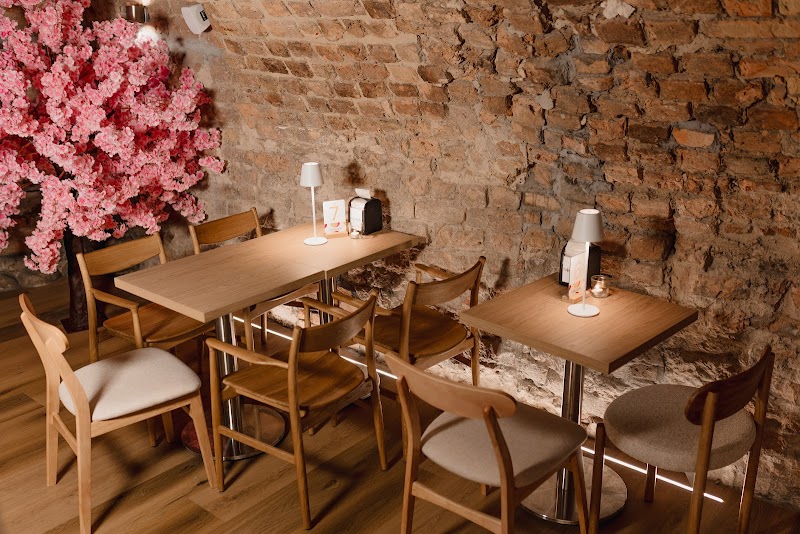
CAFE BAJKA is a warmly regarded café located right on Stary Rynek 25, in the heart of Poznań’s historic Old Town, just steps from the iconic Renaissance Town Hall. It combines a cosy interior and a welcoming atmosphere with a menu designed for relaxed visits throughout the day. The café serves a variety of offerings, including breakfast dishes, artisan ice-cream desserts, cakes, cocktails, and specialty coffee drinks. Especially in warmer weather, visitors often stop by for refreshing treats or a mid-day coffee break during sightseeing. CAFE BAJKA stands out for its socially minded approach: it is staffed in part by people with disabilities, creating an inclusive workplace that celebrates diversity and community engagement. This mission has earned the café wide support and warm feedback from customers.
Address: Stary Rynek 25, 61-772 Poznań, Poland
- Museum of the Wielkopolska Uprising of 1918-1919
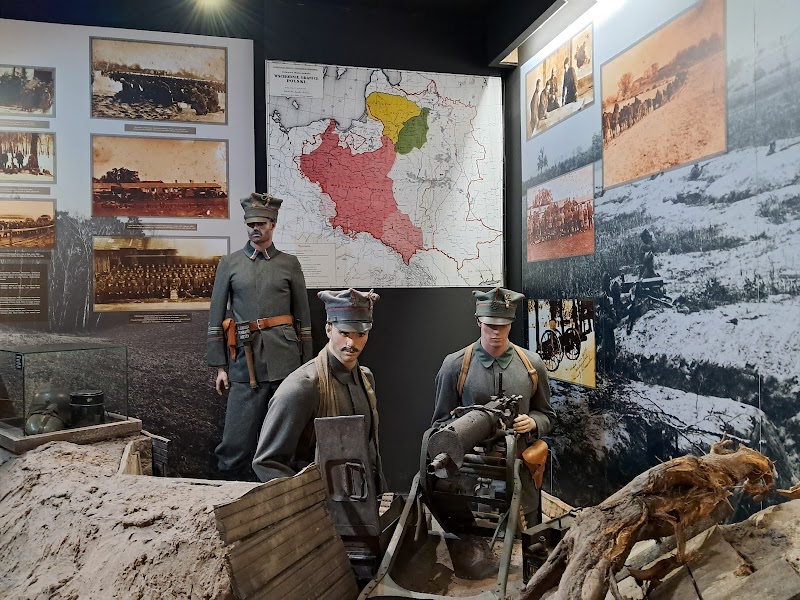
The Museum of the Greater Poland Uprising 1918–1919 is dedicated to one of the few successful independence uprisings in Polish history. It is located in the historic Guardhouse (Odwach) on the Old Market Square – a former city guard building that is a Neoclassical architectural gem in its own right. The exhibition presents the path of Greater Poland’s citizens toward freedom in a modern and accessible way, showcasing not only the military aspects of the uprising but also daily life during that period and the organizational effort that led to success. The collection includes authentic uniforms, weapons, banners, and numerous multimedia displays that allow visitors to feel the atmosphere of those pivotal days.The museum emphasizes the narrative of "victory through work and struggle," showing that freedom was won not only by the rifle but also through consistent civic action. It is a must-visit for anyone wishing to understand the region's character and the identity of modern-day Poznań.What is worth seeingOriginal armored train models and weapons – replicas and authentic insurgent equipment from the early 20th century.Trench reconstructions – multimedia elements of the exhibition that bring the frontline realities of the uprising to life.Exhibition on the commanders – biographies of Gen. Józef Dowbor-Muśnicki and Maj. Stanisław Taczak, the key figures of the uprising.Tickets and practical information Admission to the museum is ticketed. The facility offers discounts for students and seniors. Like other branches of the Greater Poland Museum of Independence, admission to the permanent exhibition is free on selected days (usually Tuesdays). Current opening hours and ticket prices can be found on the website: 🌐 www.wmn.poznan.pl. The museum honors the Poznań Tourist Card.
Address: Stary Rynek 3, 61-772 Poznań, Poland
- Apollo Fountain
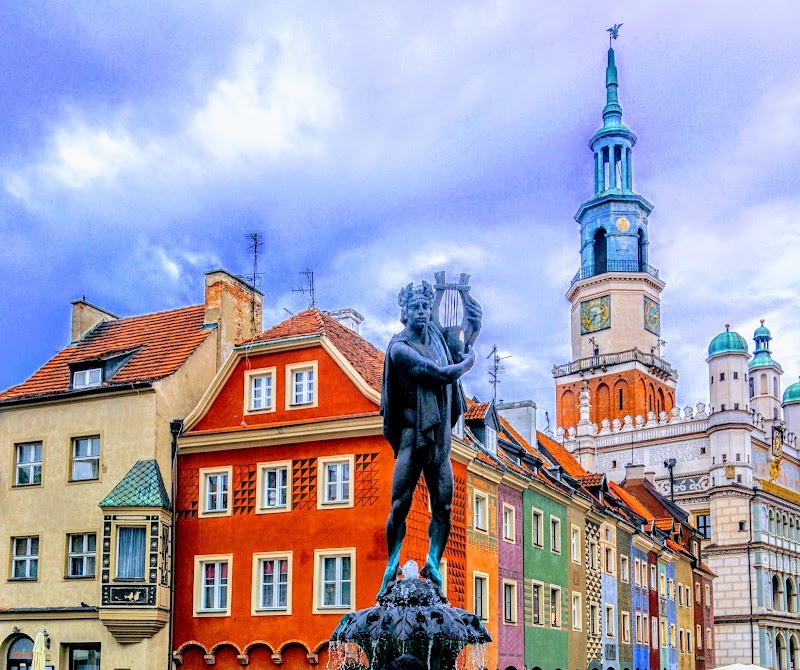
The Apollo Fountain is a decorative water feature located in the southeastern corner of the Old Market Square (Stary Rynek) in Poznań, at the junction of Świętosławska and Wodna streets. Its current form was unveiled in 2002 as a reconstruction of one of the historic wells that once supplied clean water to the city’s inhabitants and served as decorative landmarks on the square. Designed by renowned Polish sculptor Marian Konieczny, the fountain features an octagonal sandstone well topped with a bronze figure of Apollo — the classical god of light, arts, music, and prophecy from Greek and Roman mythology. The choice of Apollo reflects the long European tradition of incorporating mythological themes into public art. The Apollo Fountain is part of a set of four mythological fountains at each corner of the Market Square, alongside Neptune, Mars, and Proserpina fountains, continuing the historic decorative fountains tradition from the 17th century.
Address: Stary Rynek, 60-995 Poznań, Poland
- Neptune Fountain
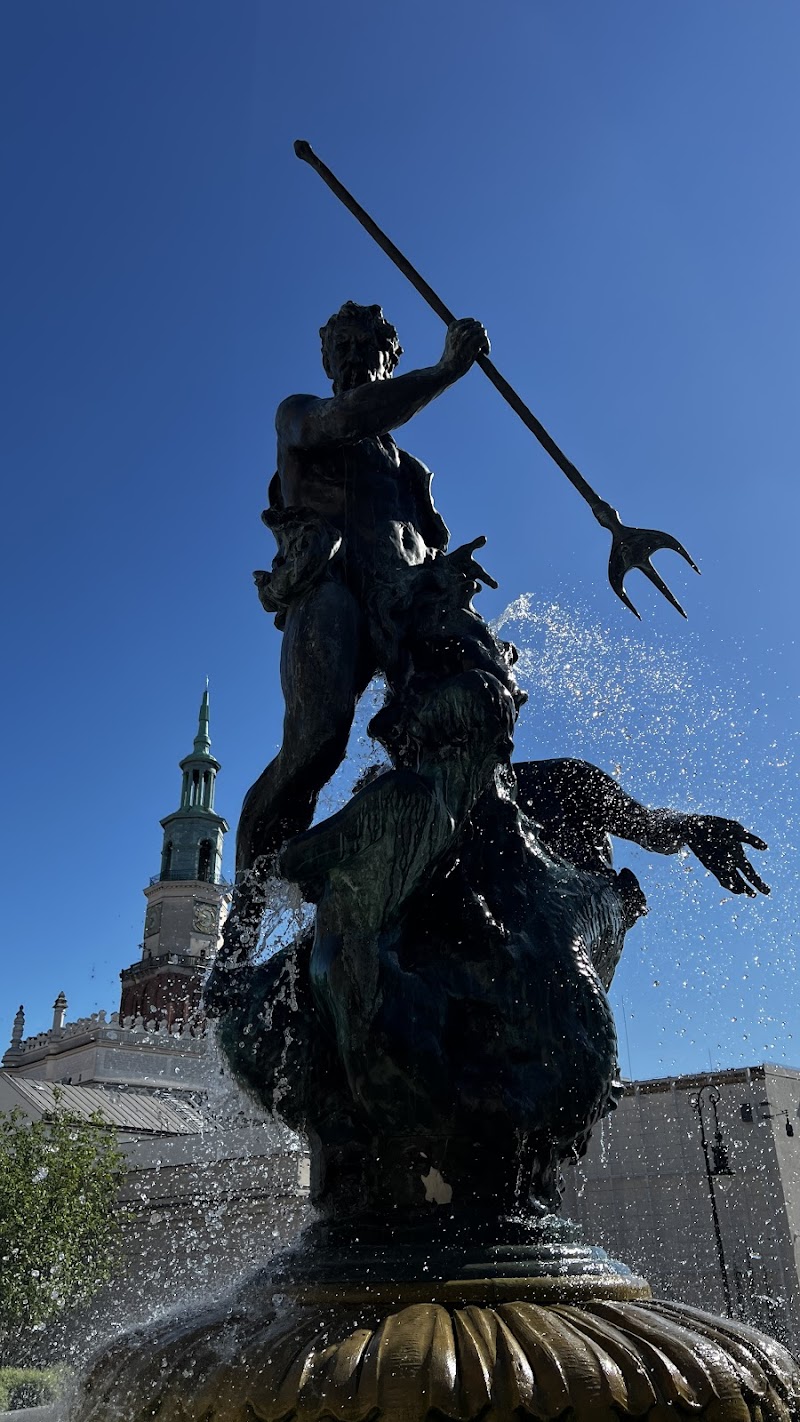
The Neptune Fountain is located in the north-western corner of Poznań’s Old Market Square (Stary Rynek). It was unveiled in 2004 as part of a group of four corner fountains inspired by historic municipal wells and the long tradition of mythological decoration in European market squares.The sculpture was created by Marian Konieczny. At its center stands a bronze figure of Neptune, the Roman god of seas and waters, depicted with his iconic trident, symbolizing dominion over the water element. Neptune’s presence in Poznań carries historical meaning, referencing the city’s commercial heritage and its long-standing trade connections with Baltic ports and international markets.The statue is set on an octagonal stone well, visually consistent with the other three Old Market Square fountains — Apollo, Mars, and Proserpina. Together, they form a cohesive artistic ensemble that enhances the historic character of the square
Address: 60-995 Poznań, Poland
- Poznań Goats Sculpture
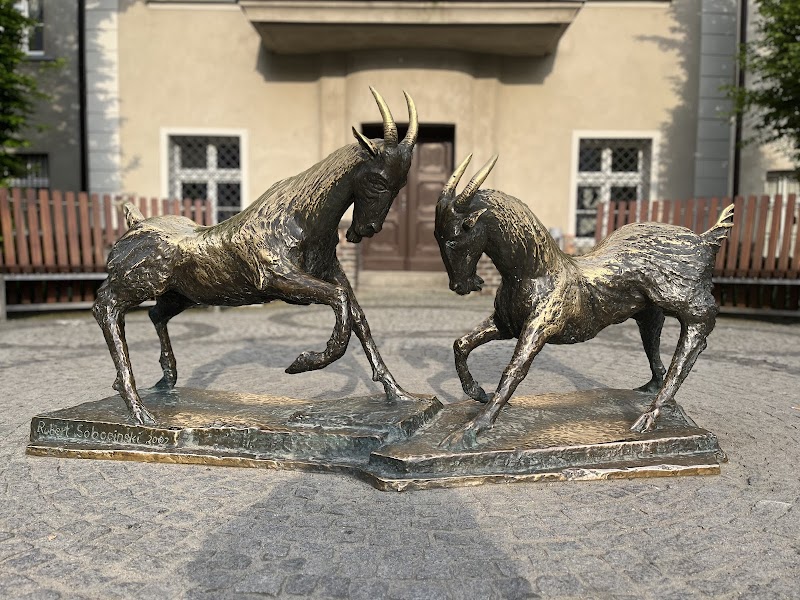
The Billy Goats Monument is a sculpture depicting Poznań's most famous symbols—two goats, known from the Town Hall tower, preparing to butt heads. Unlike the originals, which can be seen high up on the tower at noon, these on Kolegiacki Square are within arm's reach. Created by Robert Sobociński, the sculpture has become an unofficial symbol of the city and a mandatory photo spot for every tourist. Legend has it that rubbing the goats' horns brings good luck, which is why they are visibly polished by the hands of thousands of visitors.
Address: pl. Kolegiacki, 61-841 Poznań, Poland
- Bazylika kolegiacka Matki Bożej Nieustającej Pomocy, św. Marii Magdaleny i św. Stanisława Biskupa
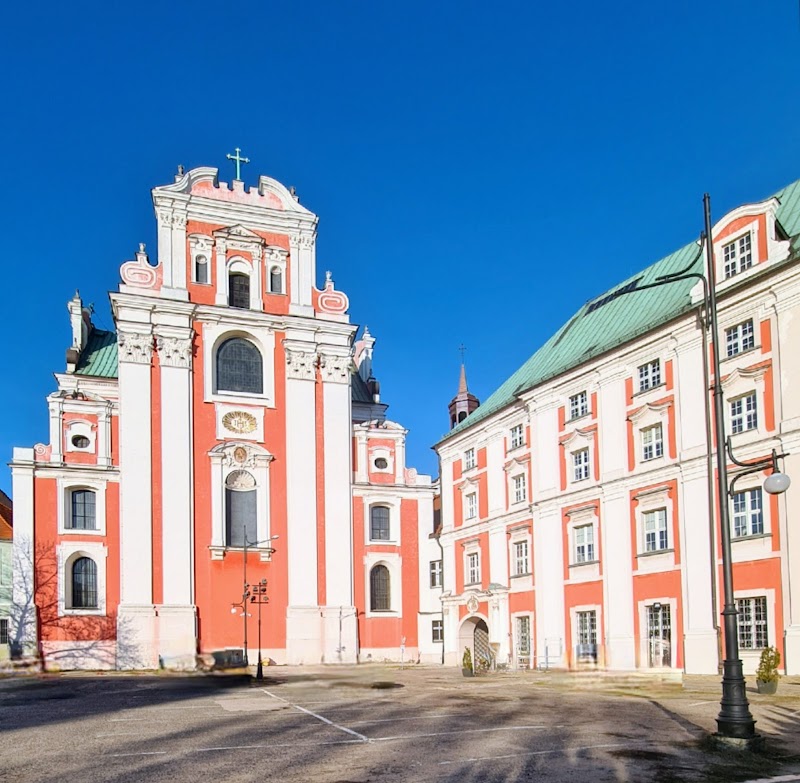
The Poznań Parish Church, commonly known as the Poznań Fara, is one of the finest Baroque churches in Poland and a major landmark of the city. Built in the 17th and 18th centuries as a Jesuit church, it impresses visitors with its monumental scale and exceptionally rich interior decoration. Located in the heart of the Old Town, it forms a natural focal point for exploring historic Poznań.The interior is a masterpiece of Baroque art, featuring grand columns, illusionistic frescoes, ornate altars, and a magnificent pipe organ. The overall composition creates a dramatic yet harmonious space, characteristic of Baroque architecture designed to inspire emotion and awe. The main altar and ceiling decorations are especially notable for their artistic quality and sense of movement.Throughout its history, the basilica played an important role in the religious and social life of the city. After the suppression of the Jesuit order, it became a parish church, and in 2010 it was elevated to the status of a minor basilica, recognizing its historical and cultural significance. Today, the church serves not only as a place of worship but also as a renowned venue for organ concerts and classical music events.
Address: Gołębia 1, 61-779 Poznań, Poland
Day 2
- Filter
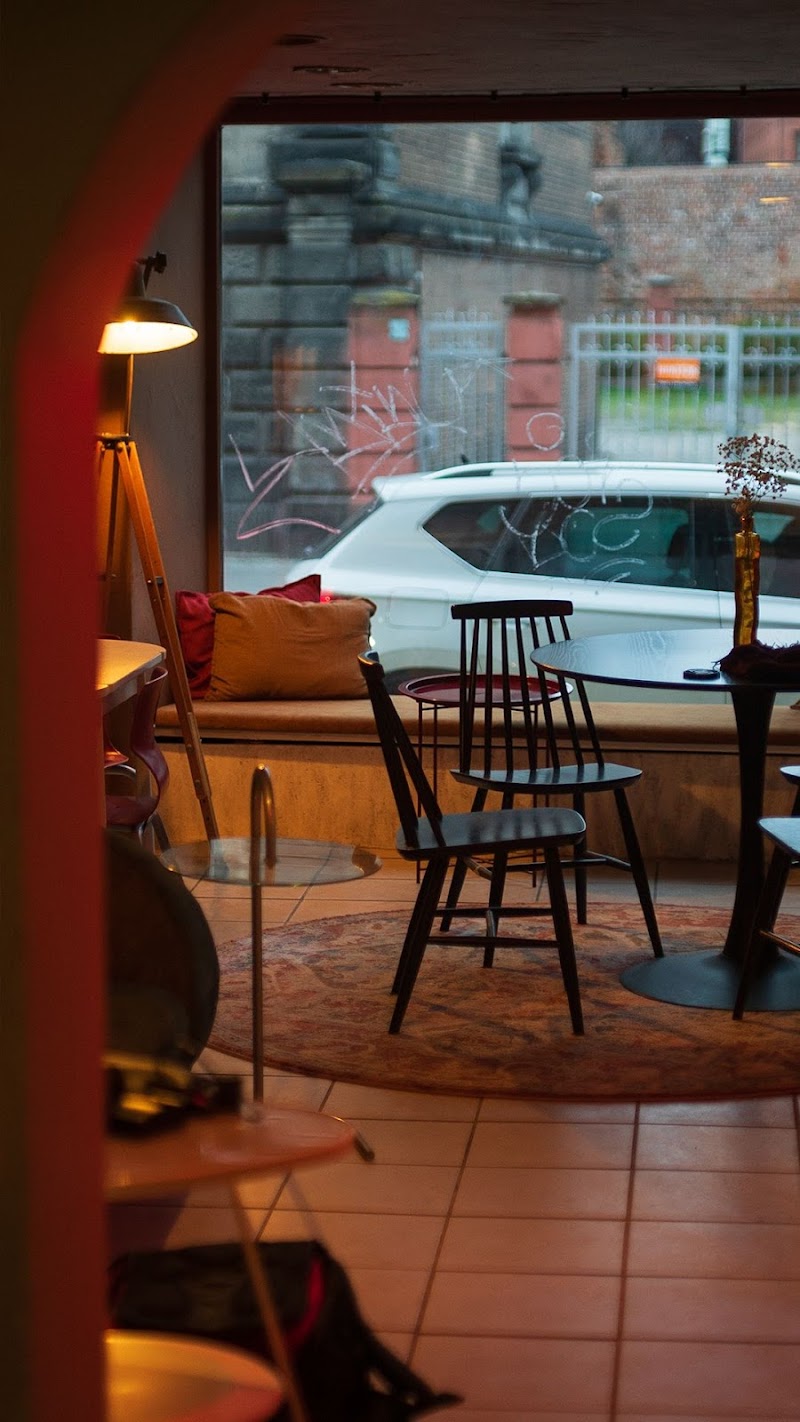
Address: Zamkowa 3, 61-768 Poznań, Poland
- Royal Castle
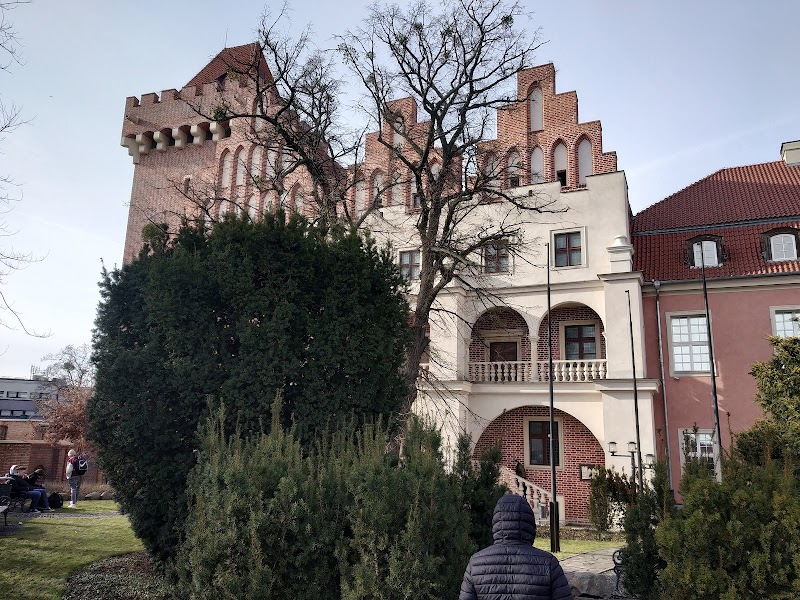
The Royal Castle in Poznań is one of the oldest royal residences in Poland, situated on the picturesque Przemysł Hill. The first stronghold was built here in the 13th century, and it was the place where the Polish national emblem—the White Eagle—was born. The current structure is the result of a major reconstruction completed in 2013, which restored the historic tower and the southern wing to the city's skyline. Today, the castle houses the Museum of Applied Arts and serves as a prime vantage point for visitors.Key HighlightsThe Castle Tower – standing at 43 meters, its observation deck offers the most stunning panoramic view of the Old Market Square and the entire city.Museum of Applied Arts – an extensive collection of furniture, textiles, glass, and jewelry displayed in modern galleries.The Legend of the White Eagle – exhibits dedicated to the national symbol and the history of King Przemysł II.
Address: Góra Przemysła 1, 60-101 Poznań, Poland
- Muzeum Narodowe w Poznaniu
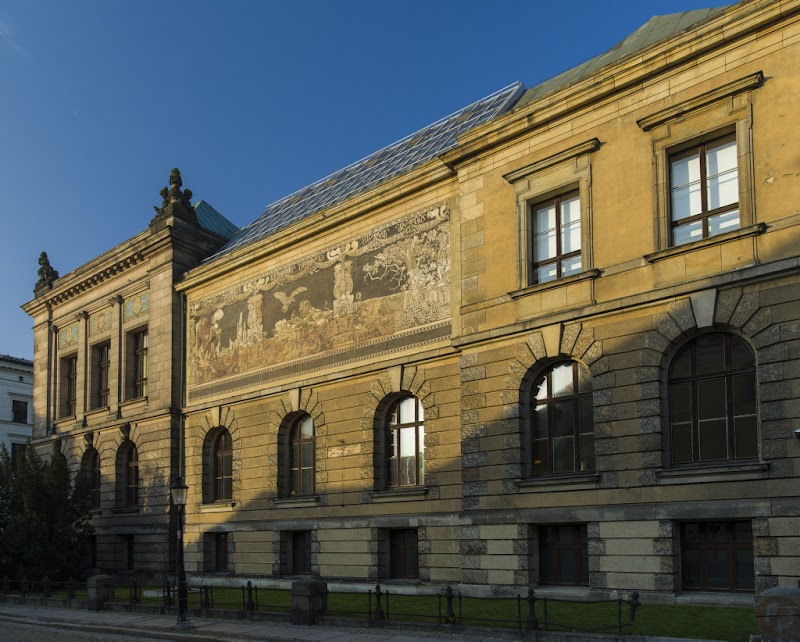
The National Museum in Poznań is one of the oldest and most significant cultural institutions in Poland, combining a historic early 20th-century building with a modern new wing. It is a true treasury of art, where visitors can admire works ranging from antiquity to the present day. The museum's greatest pride is Poland's only collection of Spanish paintings (including works by Zurbarán and Ribera) and the country's only painting by Claude Monet – "Beach in Pourville," which returned to the collection after a spectacular theft years ago. The exhibition also features rich collections of Polish painting, including works by Jacek Malczewski, Olga Boznańska, and Stanisław Wyspiański.Within the museum's walls, art history intertwines with modern education – the minimalist spaces of the new wing provide the perfect backdrop for temporary exhibitions and meetings. It is a place that allows for quiet contemplation of masterpieces right in the heart of the bustling city.What is worth seeing"Beach in Pourville" by Claude Monet – the only painting by this Impressionist master in Polish public collections.Gallery of Polish Painting – one of the best in the country, featuring an impressive collection of portraits and landscapes.Spanish Collection – a unique assembly of works by Baroque masters, unmatched in scale by any other Polish museum.Tickets and practical information Admission to both permanent and temporary exhibitions is ticketed. The museum offers standard, reduced, and family tickets, and on selected days (usually Tuesdays), admission to permanent exhibitions is free. It is recommended to check current opening hours and prices on the website: 🌐 www.mnp.art.pl. The museum is fully accessible to people with disabilities and honors the Poznań Tourist Card.
Address: Aleje Karola Marcinkowskiego 9, 61-745 Poznań, Poland
- Fontanna Wolności
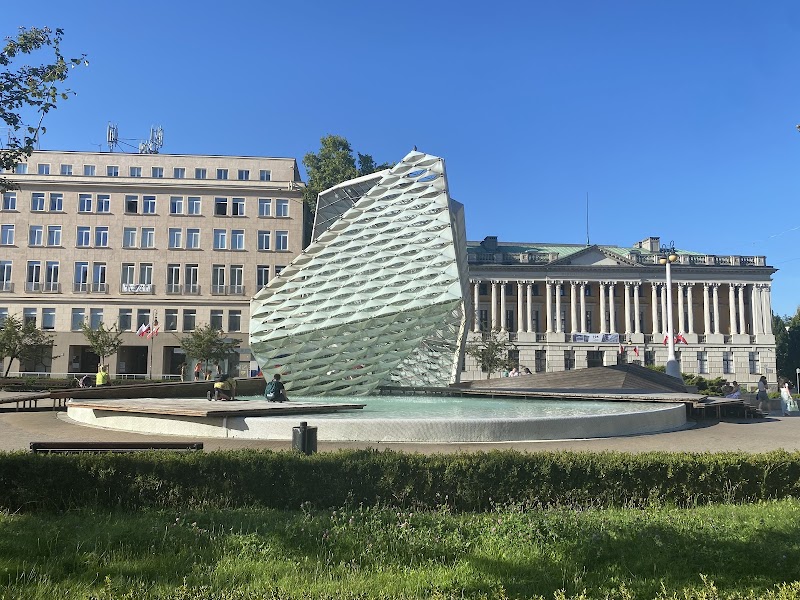
The Freedom Fountain is located at Plac Wolności (Freedom Square), one of the most prominent public spaces in the heart of Poznań. It was opened in 2012 as a modern urban feature designed to combine visual appeal, recreation, and symbolic meaning.The fountain is a ground-level, multimedia installation, with water jets emerging directly from the pavement and forming dynamic patterns enhanced by LED lighting. Without a traditional basin, the square remains fully accessible, and during warmer months the fountain becomes a popular place for relaxation and playful interaction, especially for children.Its name and setting are deeply symbolic. Freedom Square has long been associated with public gatherings, demonstrations, and civic events, and the fountain reinforces the idea of freedom, openness, and shared urban space. In summer, it often complements cultural events, concerts, and festivals held on the square.
Address: plac Wolności 18, 61-738 Poznań, Poland
- Plac Wolności
Freedom Square (formerly Wilhelm Square) was established at the beginning of the 19th century as the center of a new, prestigious district laid out by the Prussian authorities. It was here that the most important historical events took place – in 1918, the outbreak of the Greater Poland Uprising was announced here, and in 1919 soldiers took solemn oaths here. Today, the square is the site of numerous cultural events, concerts, and fairs (including the Bethlehem of Poznań).
Address: 60-101 Poznań, Poland
- Centrum Szyfrów Enigma
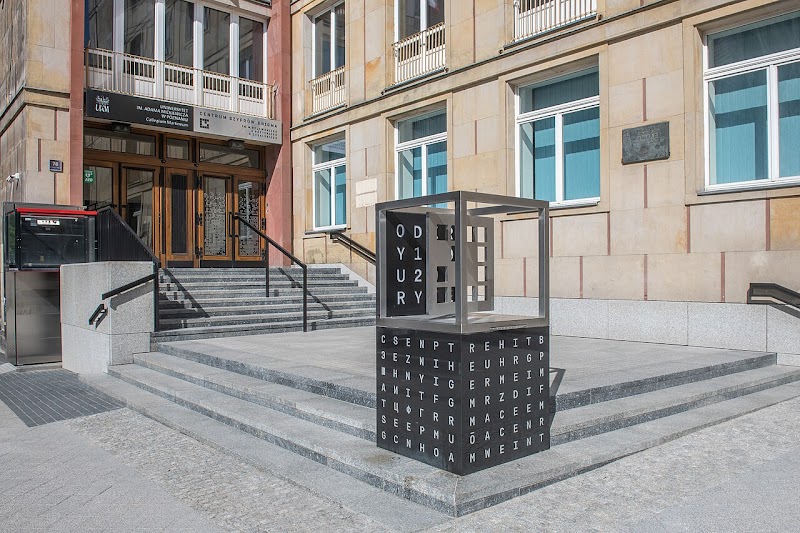
The Enigma Cipher Centre is a cutting-edge museum and interactive exhibition dedicated to the art of cryptography and the story of cracking the Enigma code, closely tied to Poznań’s history. It blends historical narrative with technological engagement, from ancient encoding techniques to the legacy of the Enigma breakthrough and its impact on the digital age.Visitors explore the development of ciphers across time and learn about the pivotal contributions of Polish mathematicians Marian Rejewski, Henryk Zygalski, and Jerzy Różycki, who first decrypted the German Enigma cipher in the 1930s. The exhibition features multimedia displays, historical cipher machine models, and hands-on stations where you can encrypt and decode messages yourself.🎫 Tickets & practical infoVisit duration: about 2 hours recommended to see most of the exhibition.Timed entry: tickets are bought for specific time slots; entries occur every ~15 minutes for groups of up to 15.Typical prices: adult ticket ~35 PLN, reduced ~29 PLN, family ticket ~75 PLN; discounts available with the Poznań Tourist Card and other local passes.Tickets can be purchased on site or online via the museum website: 🌐 http://csenigma.pl/The exhibition offers audio guides in several languages and is designed to be engaging for a wide audience, from history buffs to families and puzzle enthusiasts.The Centre also hosts special events, workshops, and educational programmes, making it a dynamic destination for both learning and fun.👉 Visiting the Enigma Cipher Centre is a unique opportunity to experience firsthand how cryptologists worked and to understand how their achievements influenced World War II and modern communications.
Address: Święty Marcin 78, 61-809 Poznań, Poland
- Monument to cryptologists
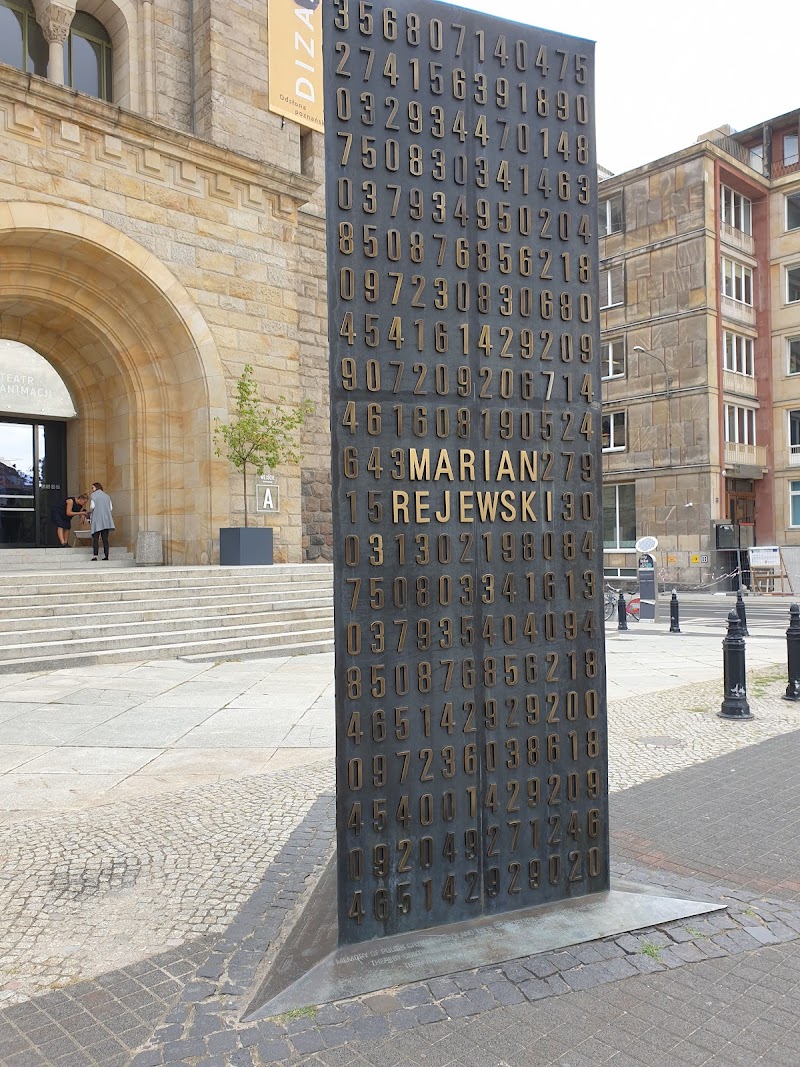
The Cryptologists Monument is a distinctive, three-sided obelisk made of patinated bronze, dedicated to three brilliant Poznań mathematicians: Marian Rejewski, Jerzy Różycki, and Henryk Zygalski. They were the first to break the code of the German Enigma cipher machine while working in Poznań. The monument's surface is densely covered with strings of digits, among which the names of the heroes are hidden, giving the monument an enigmatic and intellectual character. It stands in a symbolic location – adjacent to the Imperial Castle, where a branch of the Polish General Staff's Cipher Bureau was located before the war.
Address: Tadeusza Kościuszki, 60-995 Poznań, Poland
- Muzeum Powstania Poznańskiego - Czerwiec 1956 w Poznaniu
Address: Święty Marcin 80/pok. 205, 61-809 Poznań, Poland
- Kaferdam
Address: Grobla 30, 61-854 Poznań, Poland
- The Imperial Castle in Poznań
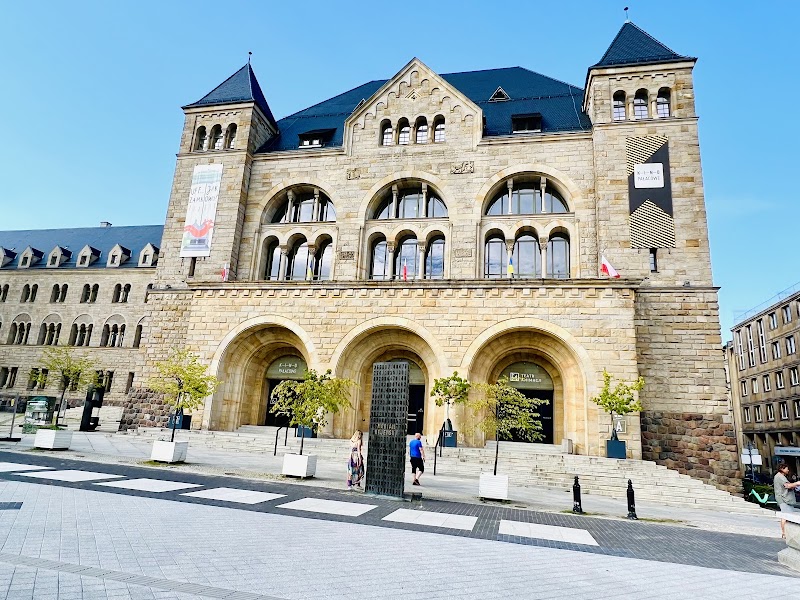
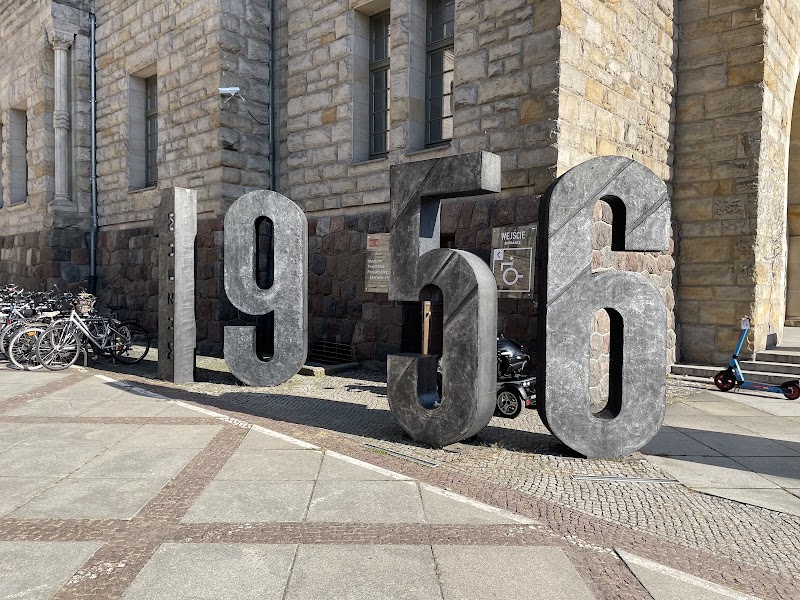
ZAMEK Culture Centre is one of Poland’s leading cultural institutions, housed in the historic former Imperial Castle on Święty Marcin Street in central Poznań. Built between 1905 and 1910 for German Emperor Wilhelm II in a neo-Romanesque style, the castle was meant to symbolize the region’s importance within the German Empire. After Poland regained independence, the building served various state and academic roles and, since the 1960s, has been dedicated to cultural use, being formally established as the Cultural Centre ZAMEK in 1996. Today, CK ZAMEK hosts over 2,500 events a year, making it a vibrant hub of arts and culture. Its programme spans visual arts, theatre, film screenings, music, literature, workshops, festivals and educational activities, and features both established artistic formats and experimental, interdisciplinary projects. The Centre partners with cultural organisations throughout Poland and abroad and offers concerts, exhibitions, film events, and creative community initiatives. Beyond its cultural programme, the building itself is a highlight: its impressive neo-Romanesque architecture and historical interior merge tradition with contemporary cultural spaces. ZAMEK also houses a palace cinema, art galleries, and resident institutions including the Teatr Animacji (Animation Theatre), Centre for Children’s Art and the 1956 Poznań Uprising Museum.
Address: Święty Marcin 80/82, 61-809 Poznań, Poland
- Monument to the Victims of June 1956
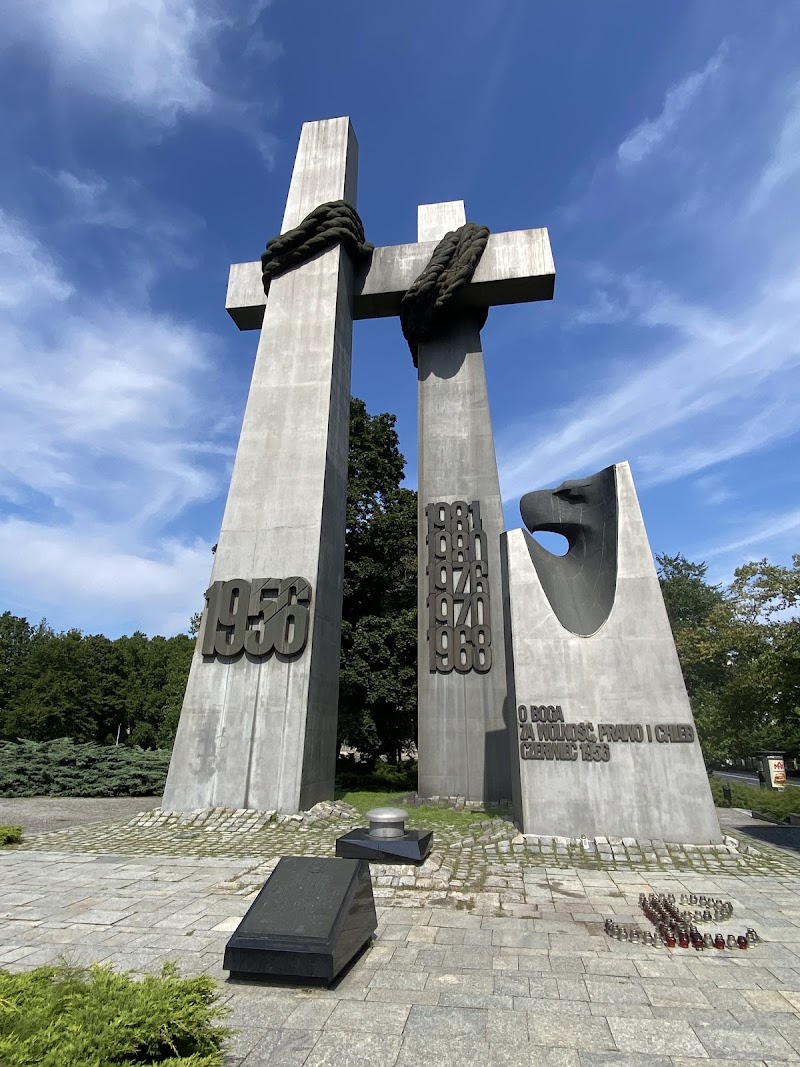
The Poznań June 1956 Victims Monument, commonly known as the Poznań Crosses, is one of the most poignant and recognizable symbols of the city. It commemorates the first mass workers' protest in post-war Poland against the communist regime. The monument consists of two massive steel crosses, 19 and 21 meters high, joined by a single bond, symbolizing national unity. The crosses bear the dates of subsequent freedom uprisings: 1956, 1968, 1970, 1976, 1980, and 1981. Next to the crosses stands an eagle sculpture, and the pedestal carries the inscription: "For freedom, law, and bread" – the slogan shouted by workers on the streets of Poznań. Built in record time and unveiled on the 25th anniversary of the events in 1981, it immediately became a site of reverence and a symbol of the struggle for sovereignty.
Address: Święty Marcin, 61-001 Poznań, Poland
- Adam Mickiewicz Park
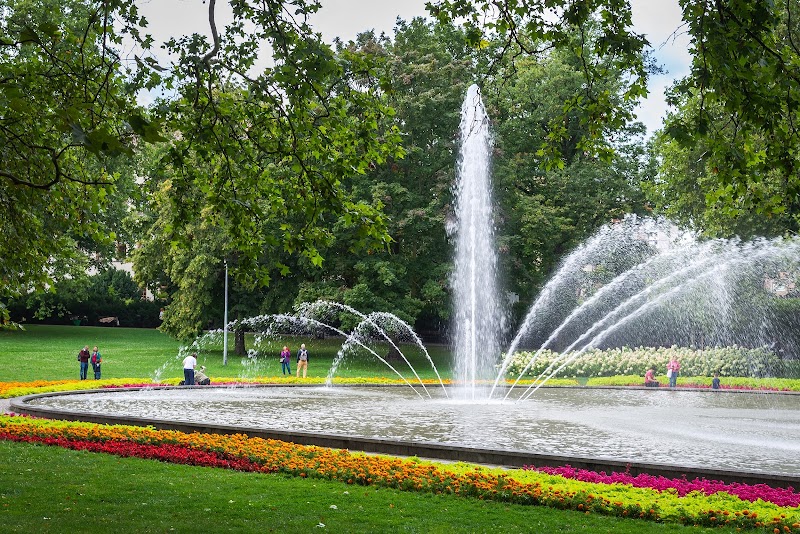
Adam Mickiewicz Park is the centerpiece of Poznań’s Imperial Quarter, surrounded by the monumental architecture of the Grand Theatre, Collegium Minus, and the Imperial Castle. It is a classic-style park that impresses with its symmetry, manicured lawns, and a grand central fountain, which serves as a favorite photo backdrop for locals and tourists alike. The park features a monument to the national poet Adam Mickiewicz and the poignant Poznań June 1956 Monument (the "Crosses"), commemorating the first mass workers' protest in communist Poland. It is a place where grand history and politics meet the everyday tranquility of students and strollers.What is worth seeingThe Fountain and Opera House view – one of the most beautiful urban vistas in Poznań, especially striking when illuminated at night.Poznań June 1956 Monument – the monumental "Crosses," a symbol of the struggle for freedom and dignity, located on the adjacent Mickiewicz Square.The Grand Theatre steps – a popular meeting spot offering a view over the entire park’s layout.Practical information Entry to the park is free and open 24/7. Numerous cafes are located in the immediate vicinity (Fredry St. and św. Marcin St.). It is worth visiting the Cat Cafe on Fredry Street for a coffee in the company of cats or the nearby Imperial Castle for an art exhibition. The park is an ideal starting point for a walk through the Castle District.
Address: Fredry 7, 60-101 Poznań, Poland
- Grand Theatre, Poznań
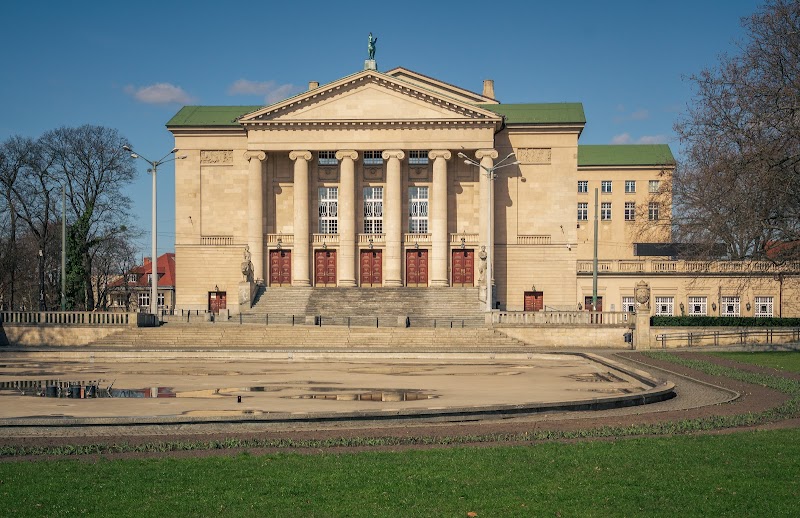
The Grand Theatre in Poznań (Teatr Wielki), named after Stanisław Moniuszko, is one of the most important and prestigious opera houses in Poland. This monumental Neoclassical building was designed by Max Littmann and opened in 1910. Its facade is dominated by six massive Ionic columns and crowned by a distinctive sculpture of Pegasus. The theatre is home to the Poznań Opera and Ballet, renowned for its high artistic standards and innovative productions. The interior features a lavishly decorated auditorium that can seat nearly 900 spectators.Key HighlightsPegasus on the Facade – the sculpture of the winged horse at the top has become a symbol of the theatre and artistic inspiration.Interiors and Foyer – crystal chandeliers, marble staircases, and classical decorations create an atmosphere of elegance and high art.Mickiewicz Park Setting – the theatre is beautifully integrated into the surrounding greenery and nearby fountain, making it one of the most photographed buildings in the city.
Address: Fredry 9, 61-701 Poznań, Poland
- Pomnik Polskiego Państwa Podziemnego w Poznaniu
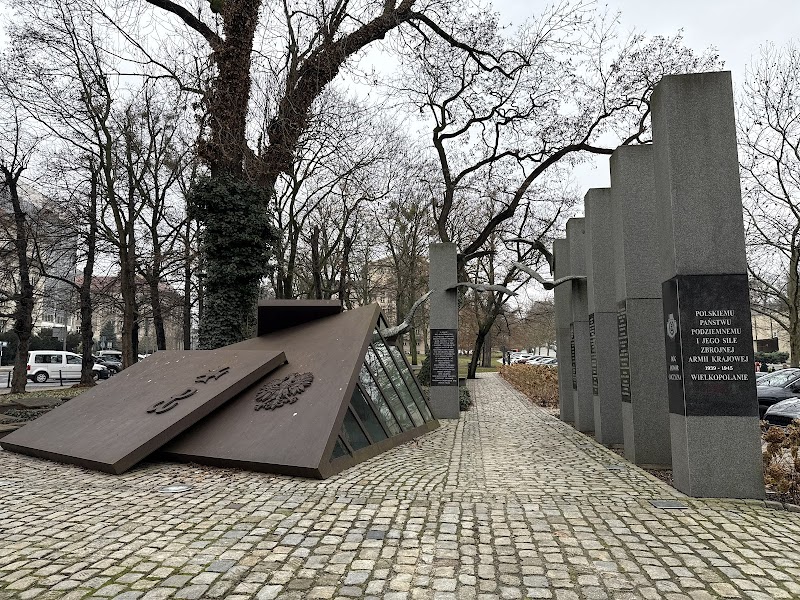
The Monument to the Polish Underground State and the Home Army is one of the largest and most symbolic monuments in Poznań. Located in Wieniawski Park, it takes the form of a monumental wall-gate, symbolizing the secret state structures that operated during the Nazi occupation of WWII. The raw concrete construction is punctuated by narrow gaps, giving it a dramatic feel, while the central section features a sculpture depicting a group of soldiers and civilians involved in the resistance. The monument honors not only the armed struggle but the entire phenomenon of the underground state’s civilian structures, which maintained education, justice, and administration despite the occupation.
Address: Al. Niepodległości 15, 61-713 Poznań, Poland
- Plac Adama Mickiewicza w Poznaniu
Adam Mickiewicz Square is one of the most important commemorative sites in Poznań, having witnessed key events in the city's history. This vast square, surrounded by the grand buildings of Adam Mickiewicz University and the Imperial Castle, dominates the western part of the city center. It is home to two symbols of Poznań with very different meanings: the monument to the national poet Adam Mickiewicz and the monumental Poznań June 1956 Monument. These powerful, steel "Crosses" commemorate the first workers' uprising against communist rule in post-war Poland. The square is a traditional venue for state ceremonies, demonstrations, and gatherings, blending pride in national culture with the memory of the struggle for freedom.What is worth seeingThe Poznań June 1956 Monument – distinctive, intertwined crosses featuring dates of workers' uprisings and an eagle sculpture, symbolizing courage and resistance.Adam Mickiewicz Monument – a classic monument to the university's patron, erected on the site of a former Bismarck monument to symbolize the return of Polish identity to the city.Architectural Panorama – the square offers views of the Neo-Renaissance Collegium Minus and the Neo-Romanesque Imperial Castle.Practical information The square is an open public space, accessible for free 24/7. It is located directly adjacent to Mickiewicz Park and numerous public transport stops (Most Teatralny, Zamek). It is worth visiting at sunset when the surrounding buildings are beautifully illuminated. Nearby, on św. Marcin Street, you should try traditional Poznań pastries at one of the local bakeries.
Address: Święty Marcin, 61-809 Poznań, Poland
- Pomnik Adama Mickiewicza
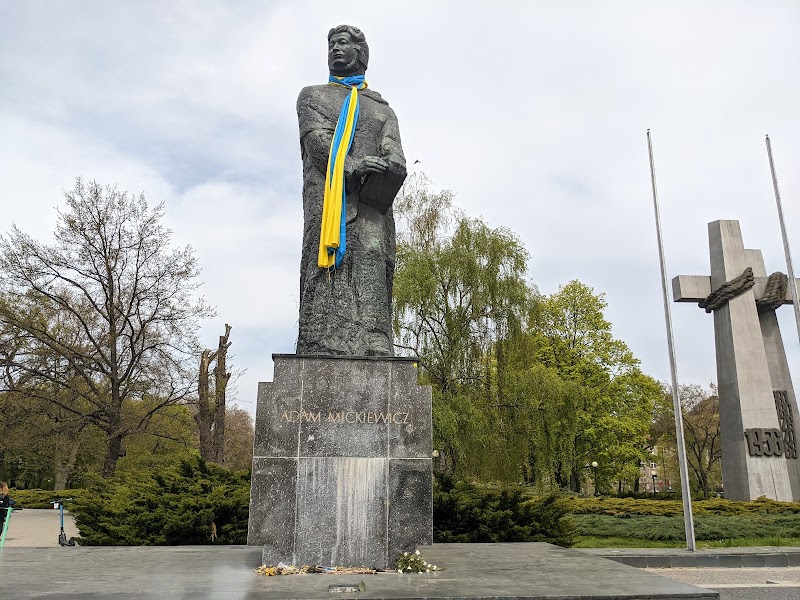
The Adam Mickiewicz Monument is one of the most significant symbols of Polish identity in Poznań. The monument, depicting the national bard in a proud, standing pose, was unveiled in 1960, replacing an earlier statue destroyed during the war. Its location carries deep symbolic meaning – it stands on the exact spot where Prussian authorities once erected a monument to Otto von Bismarck, making today’s monument a sign of cultural victory. The figure of the poet towers over the square, serving as a silent witness to the most important demonstrations and ceremonies in the city’s history. It is a traditional meeting spot for locals and a place where students from the neighboring university celebrate their graduation.What is worth seeingThe Bard's Silhouette – a classic, monumental bronze sculpture set on a tall granite plinth.The Monument's Surroundings – the view of the Neo-Renaissance facade of Collegium Minus, which creates one of the most dignified urban panoramas in the city.The Inscription – a simple but powerful dedication: "To Adam Mickiewicz – The Nation," highlighting the nationwide significance of the tribute.Practical information The monument is located on Mickiewicz Square, right next to Mickiewicz Park and the famous Poznań Crosses. Access to the monument is free and available 24/7. Numerous tram and bus stops are located in the immediate vicinity. After your visit, it is worth taking a short walk to the nearby Imperial Castle or for a coffee on św. Marcin Street.
Address: 60-101 Poznań, Poland
- Modra Kuchnia
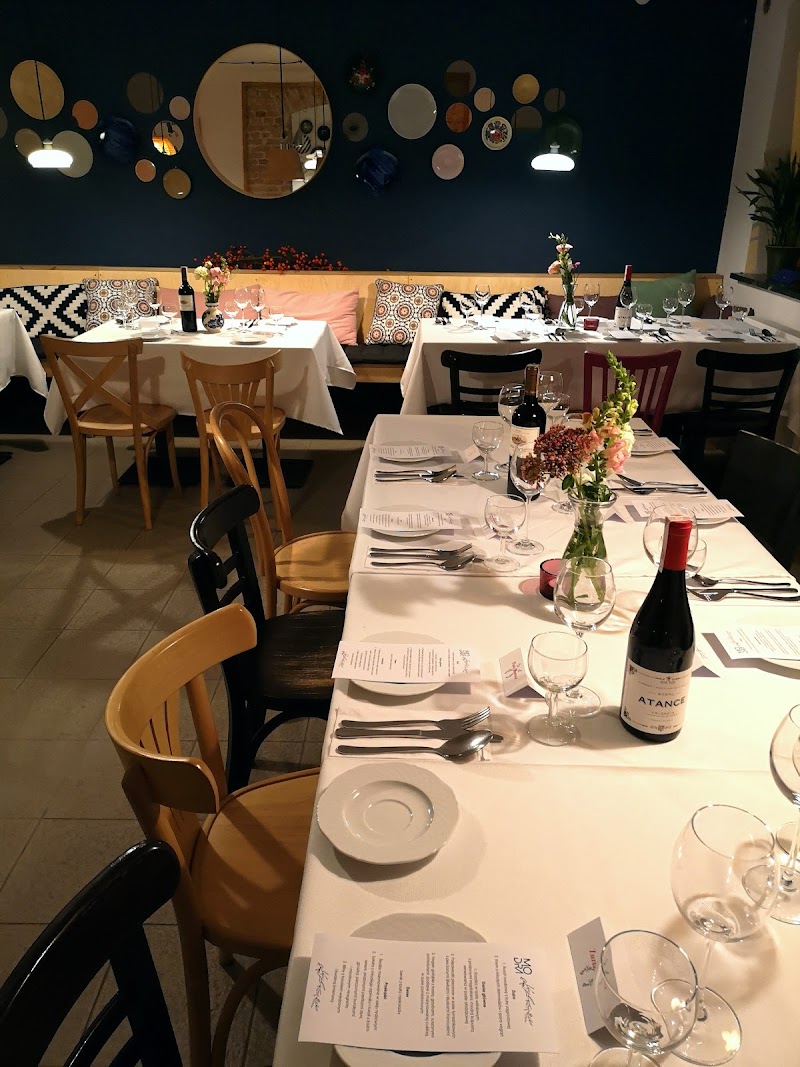
Modra Kuchnia is one of Poznań’s most recognised restaurants, known for its modern interpretation of Greater Poland and traditional Polish cuisine. Located in a quiet part of the city (Sołacz/Jeżyce district), it attracts guests looking for authentic regional flavours presented in an elegant, contemporary style.The menu is based on seasonal, locally sourced ingredients, with classic recipes reimagined in refined compositions. Recommended dishes often include:duck served in various creative versions (frequently accompanied by red cabbage – “modra kapusta”),traditional Greater Poland dumplings and potato dishes,seasonal soups and goose specialties,signature desserts made with local fruits.The name “Modra” refers to the traditional regional term for red cabbage, a classic element of Greater Poland cuisine. With its stylish interior and intimate atmosphere, the restaurant is ideal for both business dinners and special family occasions.
Address: Adama Mickiewicza 18/lokal 2, 60-834 Poznań, Poland
Day 3
- Kawiarnia bardzo
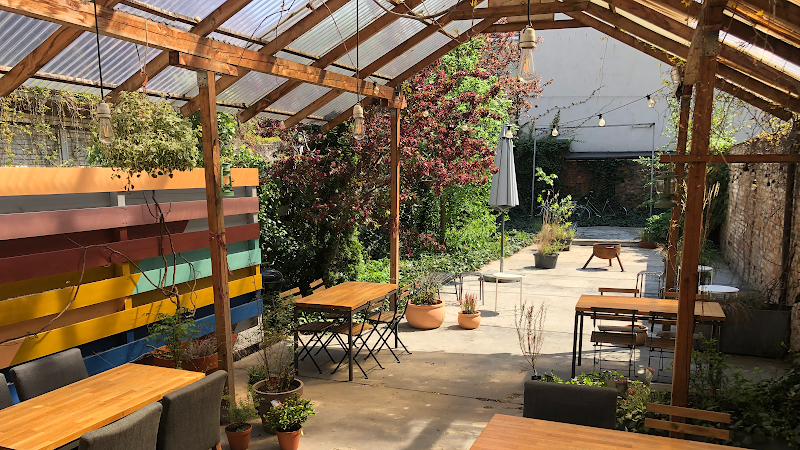
Address: Żydowska 29, 61-761 Poznań, Poland
- Pomnik Armii Poznań
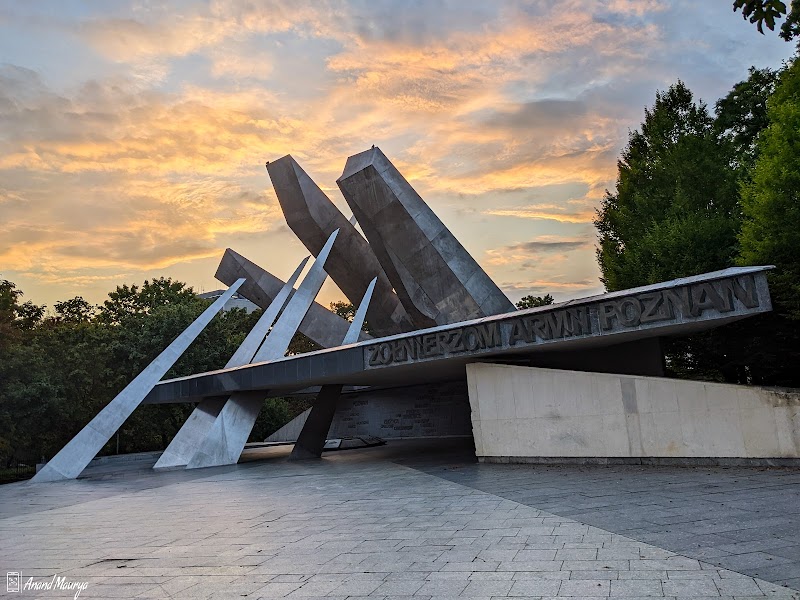
The Monument to the "Poznań" Army is a massive, modernist sculptural composition commemorating the heroism of soldiers who fought in the Battle of the Bzura in 1939. The monument consists of tall, irregular pylons symbolizing bayonets and dynamic sculptural groups depicting soldiers in attack. The raw concrete and sharp architectural lines reflect the drama of defensive combat and the steadfastness of the Greater Poland units. Situated at a strategic point at the crossroads of major city arteries, it serves as a gateway leading toward Cytadela Park. It is a significant site for veterans and residents alike, honoring the immense sacrifice made at the beginning of World War II.What is worth seeingThe "Bayonets" symbolism – concrete pillars that, when viewed from the right angle, create a poignant, aggressive form towering over the area.Sculptural groups – expressive silhouettes of soldiers showcasing the struggle and determination during the largest battle of the September Campaign.Observation terrace – the square around the monument offers an interesting perspective on the nearby St. Adalbert's Church and the entrance to the Citadel.Practical information The monument is located on the square at the intersection of Księcia Józefa and Kutrzeby Streets. Access is free and open 24/7. In the immediate vicinity, you will find an entrance to Cytadela Park and the Cemetery of Meritorious Citizens of Greater Poland. It is an ideal starting point for a longer walk following Poznań's military history.
Address: 61-001 Poznań, Poland
- Museum of the Poznań Army
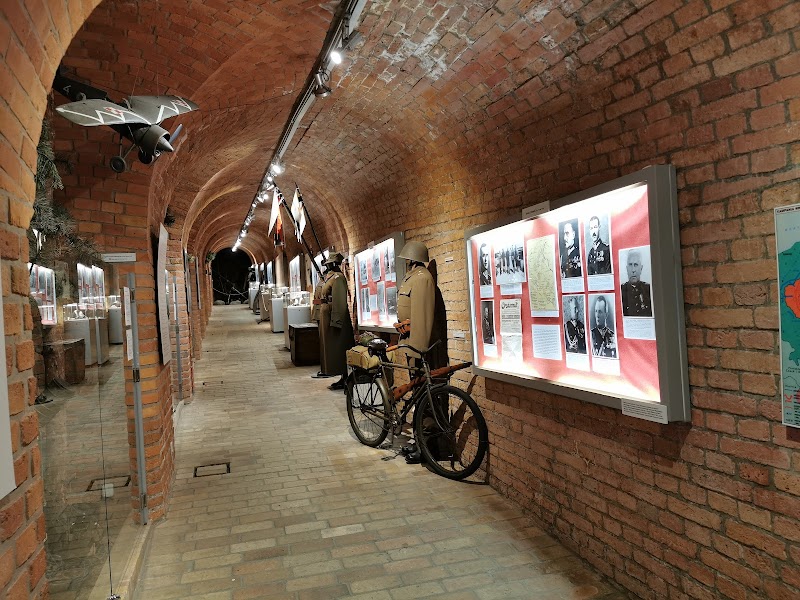
The Army “Poznań” Museum is located in Citadel Park, inside historic casemate corridors known as the “Mała Śluza”, part of the former 19th-century Fort Winiary of the Poznań Fortress. Established in 1982, the museum focuses on the history of the Army “Poznań”, which took part in the Polish campaign of 1939. The permanent exhibition “Faithful to the Oath” presents the army’s combat route, especially the Battle of the Bzura River – the largest military operation of the 1939 campaign – and the story of its commander, General Tadeusz Kutrzeba. Visitors can see military artefacts, photographs and memorabilia from the interwar period and World War II. Ticket Information / Tickets:Regular ticket: approx. 10 PLNReduced ticket: approx. 6 PLNFree admission on Tuesdays👉 Official website / tickets & info: https://www.wmn.poznan.pl/oddzialy/muzeum-armii-poznan/
Address: Park Cytadela, 61-663 Poznań, Poland
- Pomnik gen. Wasilija Czujkowa - Honorowego Obywatela Miasta Poznania
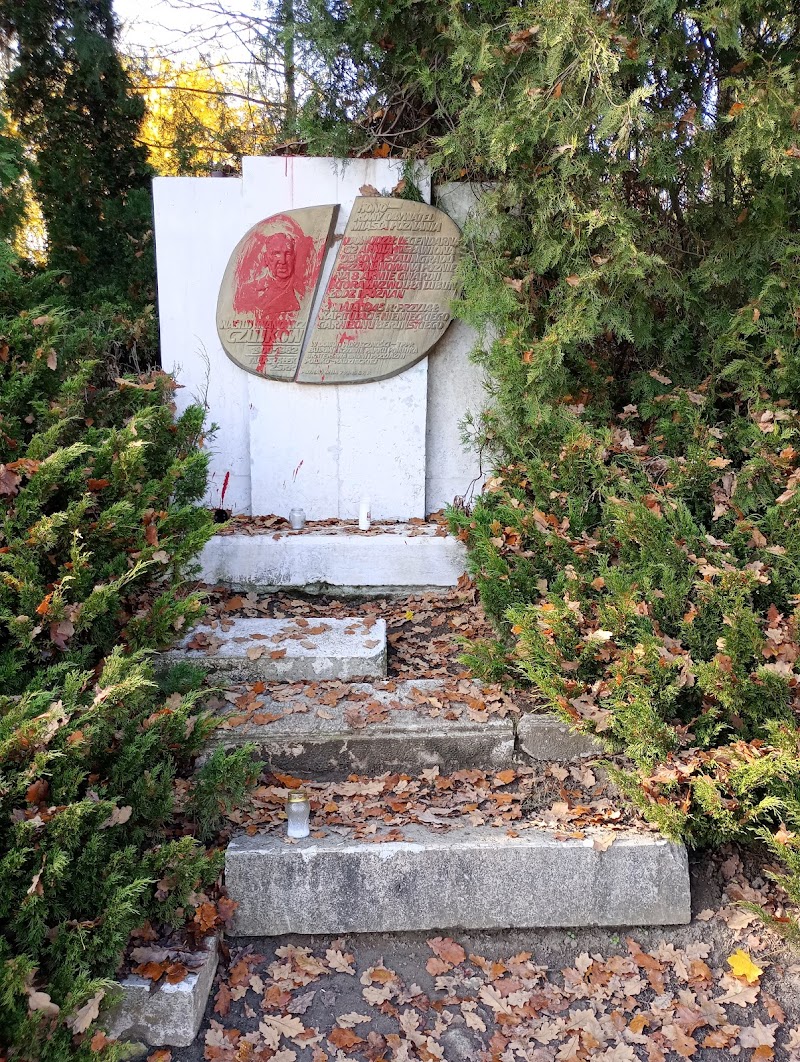
The Monument to Gen. Vasily Chuikov is a modest monument dedicated to the commander of the 8th Guards Army, whose units played a key role in the battle for Poznań in 1945. Chuikov, who was granted the title of Honorary Citizen of the City of Poznań in 1945, is inextricably linked to the siege of the Citadel – the last point of German resistance. The monument, in the form of a classic bust on a plinth, is located near military necropolises, which gives it a significant historical context. Although the general's figure is a subject of historical debate today, the monument remains an important element commemorating the complex history of the city's liberation from Nazi occupation.What is worth seeingThe General's Bust – a realistic sculpture depicting the commander in uniform, an example of traditional monumental art.Proximity to the Cemetery of Soviet Heroes – the monument is situated near the monumental stairs and the necropolis, helping visitors understand the scale of the fighting for the Citadel.Park Surroundings – the monument is integrated into the park's greenery, providing a quiet setting for reflection on World War II history.Practical information The monument is located in the southern part of Cytadela Park, close to the Museum of Armament. Access is free and available 24/7. It is worth visiting during a longer walk through the Citadel, combined with a visit to the military museums. Nearby, you will find the Umberto cafe, a perfect spot to relax after a historical tour.
Address: aleja Cytadelowców, 61-001 Poznań, Poland
- Bell of Peace and Friendship Among Nations
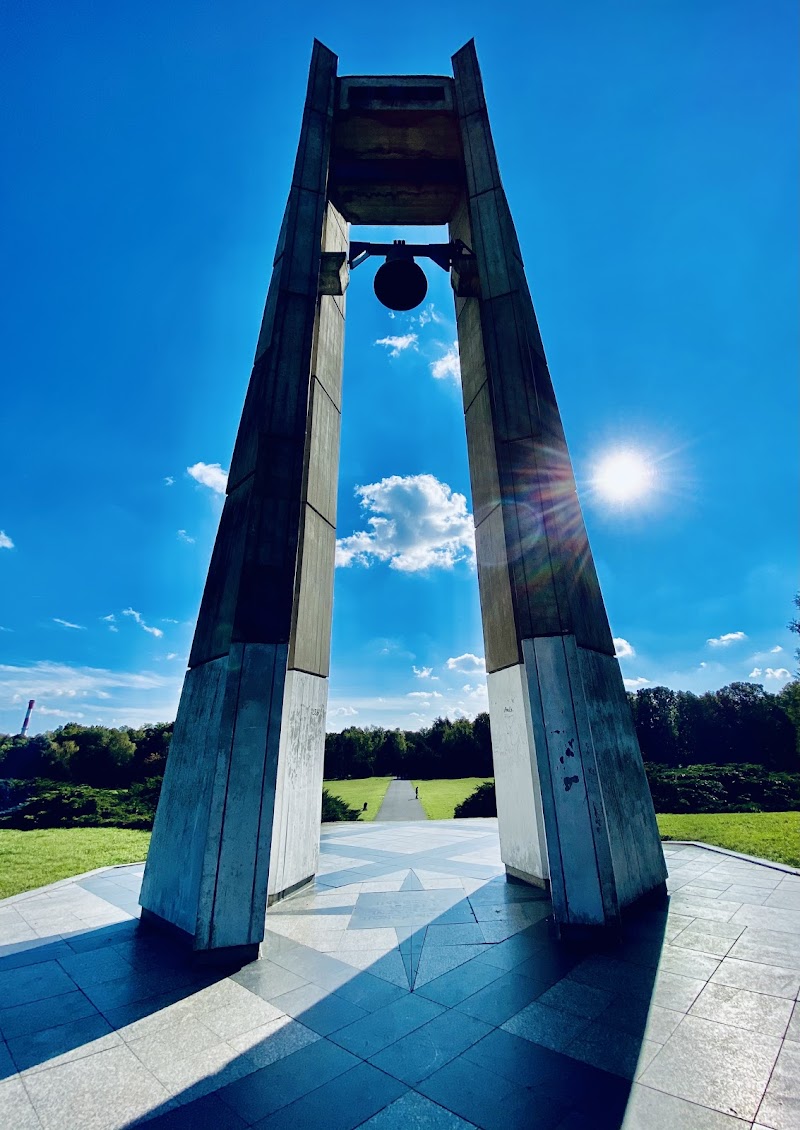
The Bell of Peace and Friendship Among Nations is a symbolic peace monument located in Citadel Park on Winiary Hill, part of the historic Fort Winiary area in Poznań. It was unveiled on October 11, 1986 as a symbol of peace, mutual understanding, and international friendship during the tensions of the late Cold War era and in connection with global diplomatic efforts. The bell has a diameter of 102 cm, weighs around 850 kg, and was cast in a local foundry in Poznań. It is mounted approximately 10 meters above ground on a 16-meter-high structure. Decorative motifs, including doves of peace, are featured on the bell’s surface, reinforcing its message of harmony and cooperation. The bell does not ring daily; instead, it chimes only a few times a year on special occasions and significant anniversaries such as Independence Day, the outbreak of World War II, the global Day of Peace, Liberation Day in Poznań, and Poznań June 1956 commemorations. Under favorable conditions, its sound can carry for several kilometers, underscoring its role as a memorable auditory landmark. The Bell of Peace and Friendship is a meaningful stop during a walk through Citadel Park — a large green space with historic monuments, museums, and remnants of a 19th-century fortress. Visiting this site is free of charge and offers a moment for contemplation amid nature and history.
Address: 60-995 Poznań, Poland
- Museum of Armament
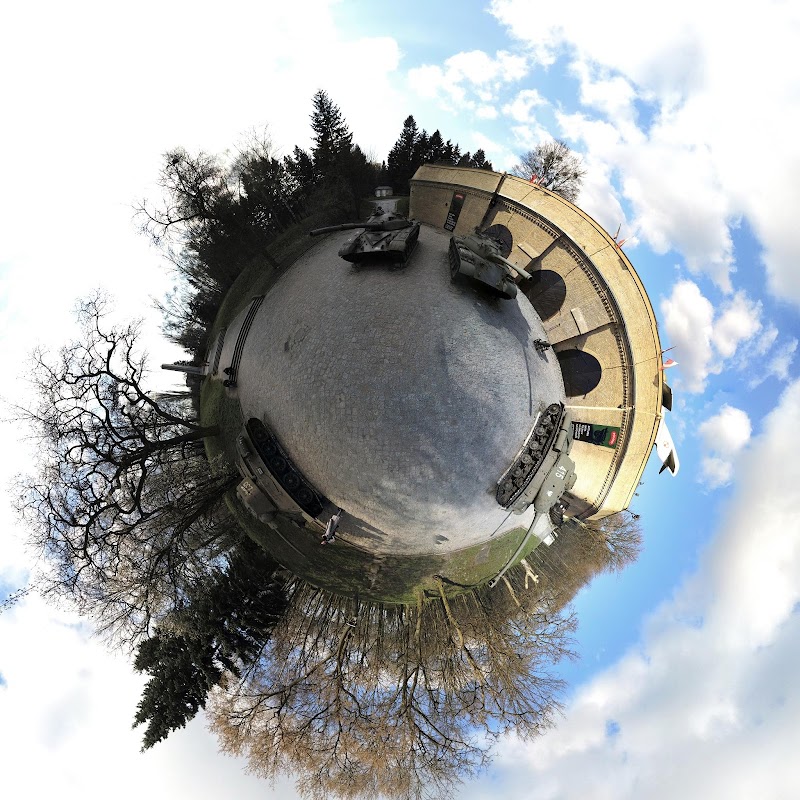
The Museum of Armament is located within the remains of the former Fort Winiary in Cytadela Park. It is a must-visit for military history enthusiasts, housed in authentic 19th-century ammunition bunkers and laboratories. The highlight is the outdoor exhibition of heavy military equipment, where visitors can closely examine tanks, aircraft, helicopters, and artillery pieces. Inside, the museum features extensive collections of firearms, uniforms, documents, and photographs documenting the Battle of Poznań in 1945. The museum blends the history of defensive architecture with an impressive collection of military technology, set within the scenic greenery of the park.What is worth seeingOutdoor equipment exhibition – featuring T-34 tanks, "Katyusha" rocket launchers, and fighter jets.Ammunition bunkers – historic Prussian fortress interiors housing weapons and uniforms.Battle of Poznań documentation – unique photos and memorabilia from soldiers who fought for the Citadel in 1945.Tickets and practical information Admission is ticketed (standard and reduced rates). On selected days (usually Tuesdays), entry to the permanent exhibition is free. The museum honors the Poznań Tourist Card. Due to the outdoor nature of part of the exhibition, it is best visited in good weather. 🌐 www.wmn.poznan.pl
Address: aleja Armii Poznań, 61-663 Poznań, Poland
- Citadel Park
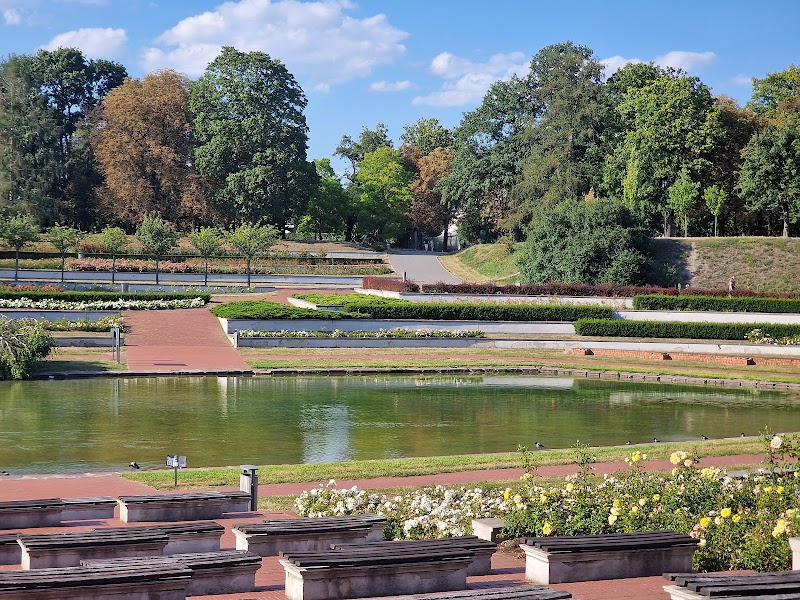
Cytadela Park is a nearly 100-hectare recreational complex located on a hill, on the site of the former Prussian Fort Winiary. Known as the "green lungs" of Poznań, it is a place where the remains of massive fortifications intertwine with vast meadows and walking alleys. The park offers a unique blend of history and culture – housing two military museums, several historic cemeteries, and impressive open-air art installations. It is a favorite spot for locals for picnics, jogging, and rollerblading, and its diverse terrain means you can discover a new hidden corner or bunker with every visit.What is worth seeing"The Unrecognized" by Magdalena Abakanowicz – the artist's largest outdoor sculptural group, consisting of 112 headless iron figures.The Amphitheater and Rosarium – picturesque spots that bloom with thousands of roses in summer and serve as a stage for cultural events.Fortification remains – atmospheric ruins of the former fortress, including gates, trestles, and deep moats now reclaimed by nature.Tickets and practical information Entry to the park is free and open 24/7. Within the park, you can find cafes (like Umberto) and restaurants, where it's worth having a piece of homemade cake or a lemonade after your walk. The park is well-connected to the city center (Armia Poznań tram stop or Cytadela bus stop). Due to its vast size, it is recommended to set aside at least 2–3 hours for a visit.
Address: aleja Armii Poznań, 61-001 Poznań, Poland
- Fort Winiary
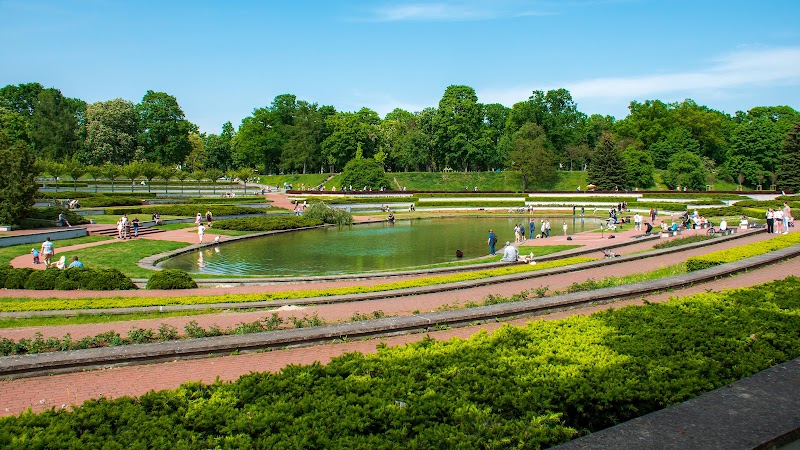
Fort Winiary, today best known as the Poznań Citadel, was the largest and most important element of Poznań’s 19th-century fortification system. Built by the Prussians between 1828 and 1842 on Winiary Hill, it served as the city’s main defensive stronghold and a key strategic military site in the region.The fort was designed as a vast star-shaped bastion fortress, surrounded by earthworks, moats, and numerous auxiliary defenses. Inside were barracks, arsenals, storage facilities, and infrastructure capable of housing thousands of soldiers. For decades, the Citadel symbolized military dominance over the city.One of the most dramatic chapters in the fort’s history occurred during the Battle of Poznań in 1945, when it became the final stronghold of German forces resisting the advancing Red Army. Intense fighting and bombardment caused severe destruction, and after the war the fortress was not reconstructed in its original form.Today, the former Fort Winiary area is Citadel Park, the largest green space in Poznań. It combines recreational areas with historical remembrance and includes the Museum of Armaments, the Poznań Army Museum, several military cemeteries, monuments, and the Bell of Peace and Friendship Among Nations. Preserved fragments of the fortifications still convey the scale and power of the former fortress.
Address: Za Cytadelą 128, 61-659 Poznań, Poland
- Magazyn prochu
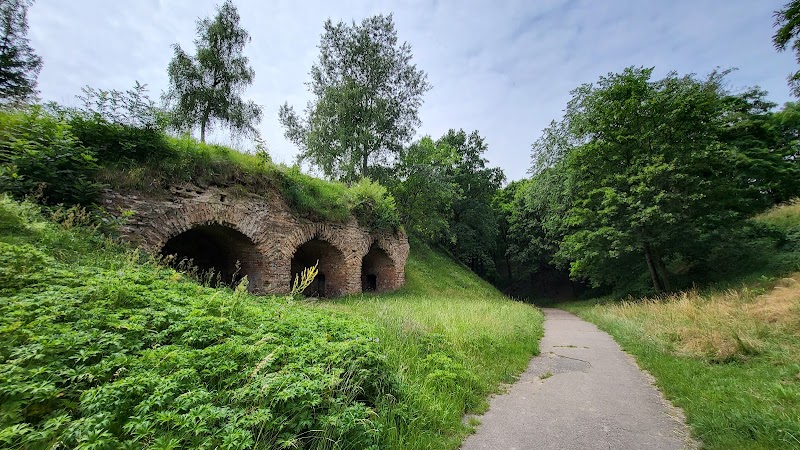
The Powder Magazine is a historic military structure located within the former Fort Winiary — now Park Cytadela — in Poznań. In the 19th century, when Poznań was surrounded by one of Europe’s largest Prussian fortress systems, this building served a vital function as a storage depot for gunpowder and ammunition and as a site for ammunition preparation and elaboration for the fort’s defensive needs. Constructed around 1888–1889, the powder magazine was designed to house explosive materials safely away from main barracks and civilian areas. Later it was used primarily as an ammunition storage facility, and its robust brick architecture makes it one of the few surviving fortification buildings on the site. After World War II much of Fort Winiary was destroyed or dismantled, and the area became a large public green space — Citadel Park. The former powder magazine survived these changes and today houses part of the Museum of Armaments, a branch of the Wielkopolskie Museum Niepodległości. Inside, visitors can see military artifacts, weapons, ammunition, historical documents, and items excavated from the fort, illustrating the operational history of the fortress and the 1945 Battle of Poznań.
Address: CWCH+CM, 61-001 Poznań, Poland
- Pomnik 7 Pułku Strzelców Konnych
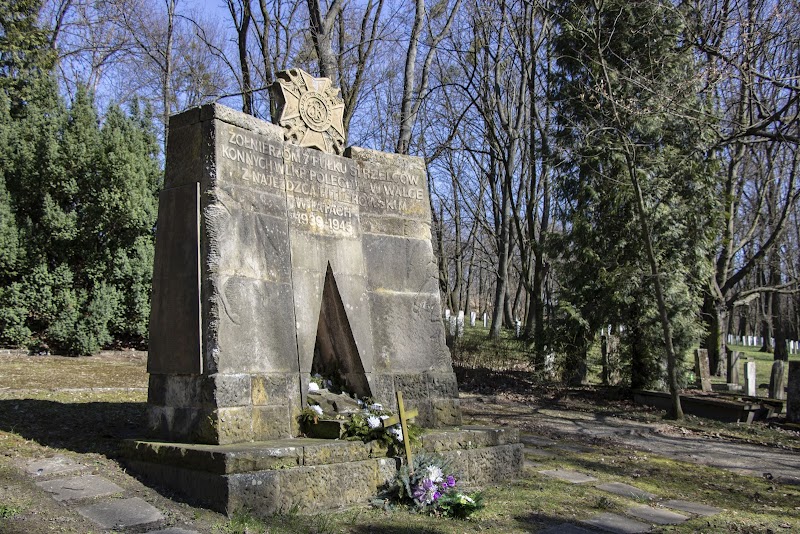
The Monument to the 7th Greater Poland Mounted Rifle Regiment commemorates one of the most distinguished cavalry units in the history of Poznań. Located on Ludwiki Street, it is a reconstruction of the pre-war monument destroyed by the Nazis in 1939. The monument depicts a mounted rifleman, capturing the spirit and tradition of the regiment, which gained fame for its bravery during the Polish-Soviet War and the September Campaign of 1939. Situated in a peaceful, historic part of the city near the Warta River, the monument is not only a tribute to fallen soldiers but also a symbol of Poznań's commitment to preserving its military traditions and restoring lost heritage.What is worth seeingSculptural details – the dynamic figure of the horse and rider, which precisely depicts historical uniforms and cavalry equipment.Commemorative plaques – located on the plinth, featuring information about the regiment's combat path and the names of its commanders.Practical information The monument is located near the Genius Loci Archaeological Reserve and ICHOT Gate of Poznań. Access to the site is free and open 24/7. It is easily reachable while walking from Ostrów Tumski toward Ludwiki Street. It serves as an excellent stop for those interested in military history and the heritage of Greater Poland.
Address: Unnamed Road, 61-001 Poznań, Poland
- Reduta II Fort Winiary
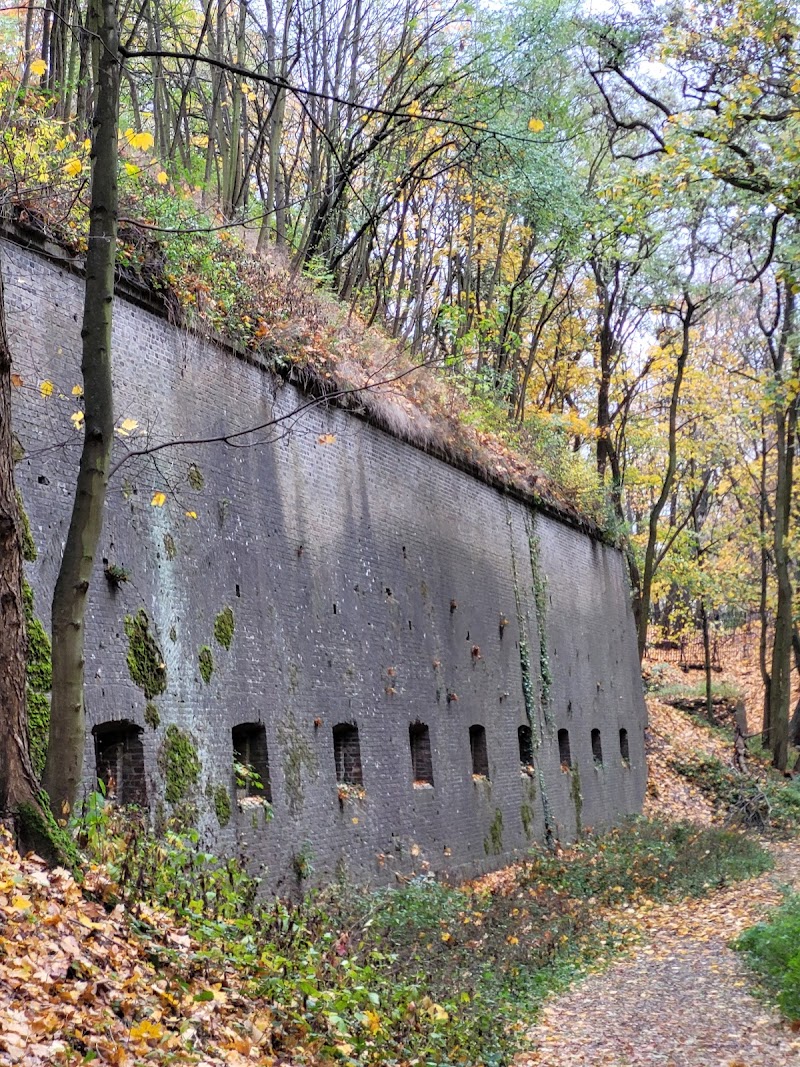
Redoubt II is a massive, brick defensive work that forms an integral part of the Prussian Fort Winiary. Located in the southwestern part of Cytadela Park, it is a prime example of 19th-century military architecture within the Poznań Fortress system. Featuring characteristic brick walls and vaulted ceilings, it once served as both a shelter and a combat post. Today, Redoubt II is a place where history meets alternative culture – for years, its raw interiors have hosted various artistic initiatives, sculpture workshops, and legendary cultural events. It is one of the best spots to experience the sheer scale and power of the fortifications that once dominated the city skyline.
Address: Unnamed Road, 60-101 Poznań, Poland
- JEMRAMEN & CHICKEN

Address: Kościelna 48, 60-538 Poznań, Poland
- Muzeum Martyrologii Wielkopolan Fort VII Wielkopolskiego Muzeum Niepodległości
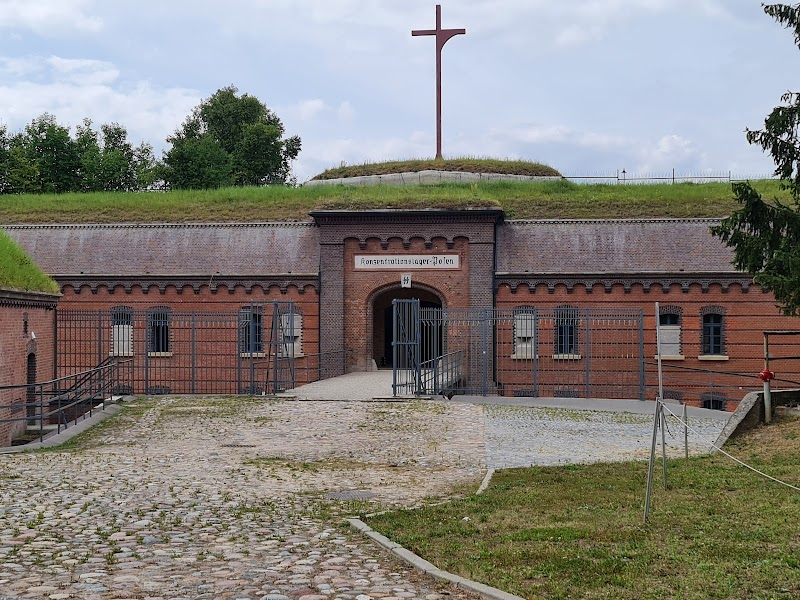
The Museum of the Martyrdom of the People of Greater Poland is located in Fort VII (Fort Colomb), part of the 19th-century Poznań Fortress. It is a site of profound tragedy: in October 1939, German occupiers established Konzentrationslager Fort VII, the first concentration camp on occupied Polish soil. This site witnessed the first experimental mass killings using gas (carbon monoxide). Today, the museum commemorates thousands of Polish citizens—intellectuals, clergy, and insurgents—who were imprisoned, tortured, and executed here.Key HighlightsThe Wall of Death – the execution site in the fort's moat, now a place of remembrance.Prison Cells – dark, damp casemates where prisoners were kept in inhumane conditions.Personal Artifacts – moving displays of items belonging to prisoners, such as secret letters (grypsy) and rosaries made of bread.Historical Exhibits – detailed accounts of the German "Operation Tannenberg" aimed at the Polish elites.
Address: Polska, 61-001 Poznań, Poland
- Muzeum Broni Pancernej w Poznaniu
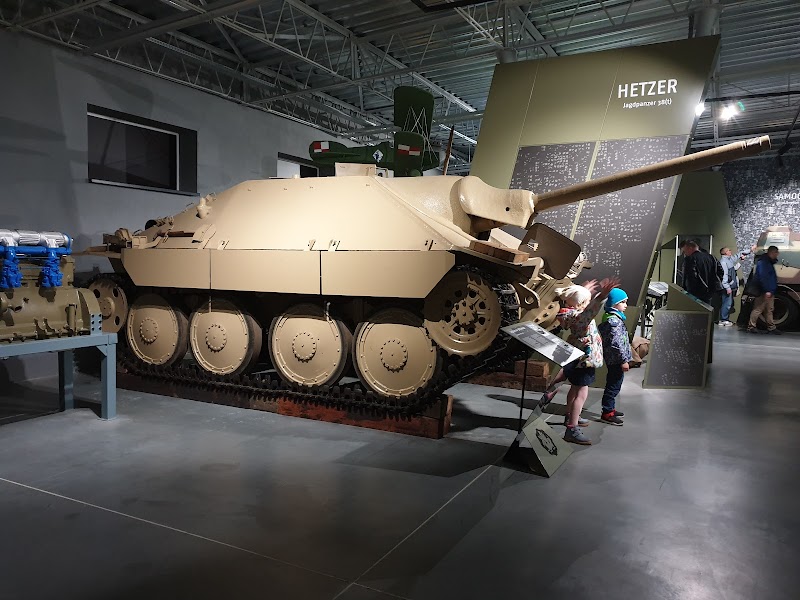
The Armoured Weaponry Museum in Poznań is one of the most impressive military technical museums in Europe. Located in modern hangars near Ławica Airport, the collection features dozens of unique vehicles. The museum is famous for its "living" exhibits—many of the tanks and armored cars have been meticulously restored to full mechanical working order.Key HighlightsThe "Rudy" Tank – a T-34-85 used on the set of the famous Polish TV series Four Tank-Men and a Dog.Sturmgeschütz IV – a world-class rarity, recovered from a riverbed and restored to driving condition.Cold War Collection – including NATO tanks like the Patton, Centurion, and Chieftain.WWII Armour – featuring German tank destroyers and Polish pre-war tankettes.
Address: 3 Pułku Lotniczego 4, 60-421 Poznań, Poland
About this plan
Poznań in 3 days – a step-by-step historical journeyThis 3-day Poznań itinerary is a thematic guide designed for those who want to explore the city through the lens of history. It’s not a random list of attractions – it’s a carefully planned route that takes you step by step through key sites, educating, inspiring, and providing context for the events that shaped the city. The route includes both the most important historic landmarks and spaces, as well as carefully selected spots for breaks or meals, making sightseeing efficient and comfortable. With this approach, exploring Poznań on your own becomes a fascinating journey rather than a chaotic walk.How to use the Itinerary in the App?The itinerary is available as a modern app that guides you through Poznań. You receive a detailed day-by-day breakdown, ready-to-follow routes, and clear instructions that let you follow the plan step by step, without wasting time searching for information. Everything works seamlessly on your smartphone – you can easily check the route, navigate the city, and adjust the pace of your sightseeing to your needs. This ready-made historical Poznań itinerary allows you to make the most of 3 days, combining the exploration of landmarks in a comfortable and well-organized way.